
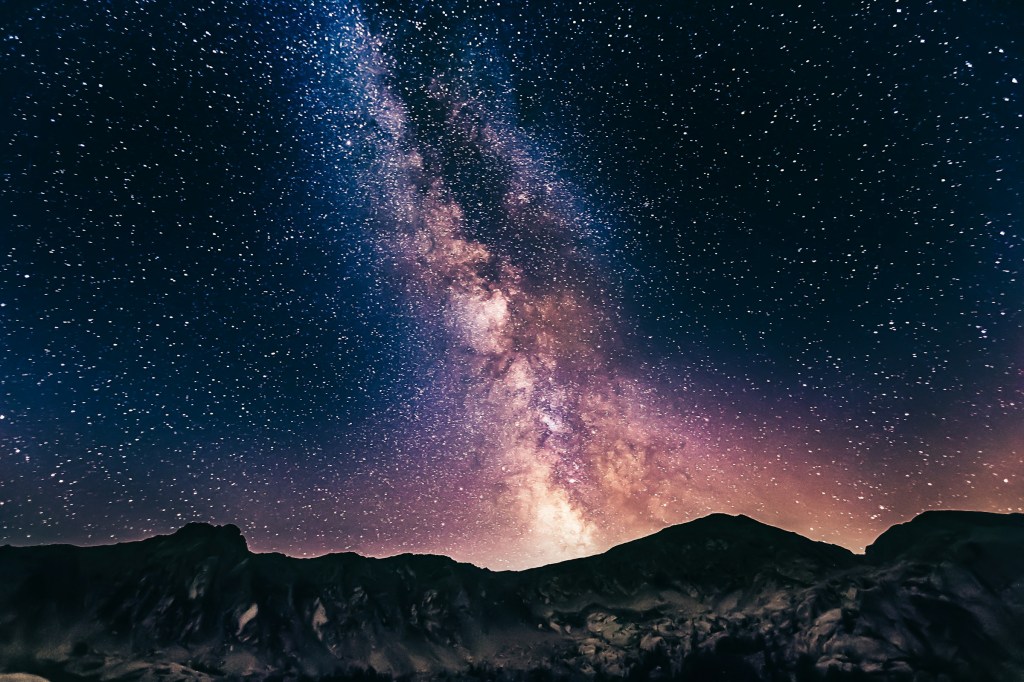
How many stars are in the Milky Way galaxy? The honest answer is that nobody knows for sure. Astronomers estimate that our galaxy holds somewhere between 100 billion and 400 billion stars, and the reasons for such a wide range say a great deal about how science works at the edge of what can be measured.
The short answer: approximately how many stars are in the Milky Way galaxy? Probably a few hundred billion, and every one of them is a sun.
This is the written companion to our video on the same question. Watch it below, then read on for the details.
How big is 100 billion to 400 billion?
The number of stars in the Milky Way is almost too large to picture. If you counted one star every second without ever stopping, 100 billion stars would take about 3,200 years. Counting 400 billion would take about 12,700 years, longer than all of recorded human history.
Why can’t astronomers just count the stars?
We live inside the galaxy, looking out from one small spot in one of its spiral arms. From here, clouds of dust and gas block the view of many stars, especially toward the crowded center. The faintest stars, such as small red dwarfs, give off so little light that they are extremely hard to detect from far away.
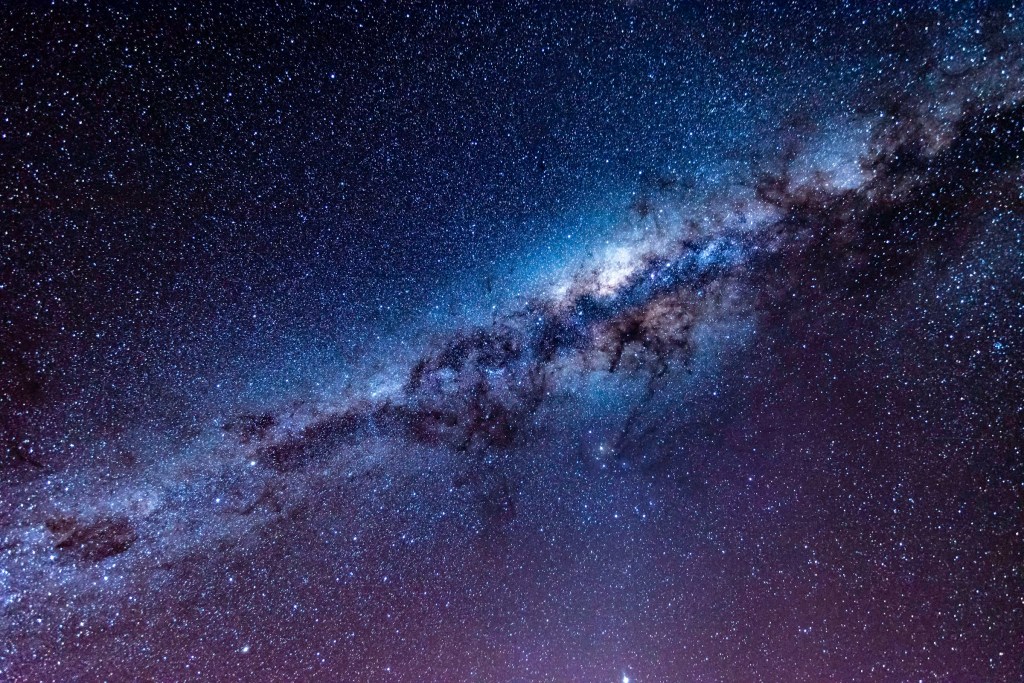
How do astronomers estimate the number of stars in the Milky Way?
Since the stars cannot be counted one by one, astronomers calculate the number in three steps.
- Weigh the galaxy. First, they work out the total mass of the Milky Way. Most of that mass is not stars at all. It is dark matter, an invisible substance that does not shine.
- Find the share that is stars. Next, they estimate how much of the total mass is in the form of stars.
- Divide by the mass of an average star. Finally, they divide the mass of all the stars by the mass of one typical star.
Why is the estimate so wide, from 100 to 400 billion?
The last step is where the big range comes from. If you treat the Sun as the average star, you get one answer. But there are far more small, dim stars than bright ones, and a red dwarf has only a fraction of the Sun’s mass. If the average star is a small red dwarf, the same total mass of stars divides into many more individual stars, and you get a completely different answer. Different models choose different averages, and that choice accounts for most of the spread in the estimates.
How many stars has the Gaia telescope mapped?
A European space telescope called Gaia is helping to narrow the number down. Its third data release, published on June 13, 2022, contains about 1.8 billion stars, with measured brightness for nearly all of them and precise positions and motions for hundreds of millions, making it one of the largest star catalogs ever assembled.
That sounds like a great deal, but it is still less than 2 percent of even the lowest estimate for the number of stars in the Milky Way. Gaia is mapping a small piece of our own galaxy, and astronomers use it to check and improve the larger calculation.
The Milky Way at a glance
| Question | Answer |
|---|---|
| Estimated number of stars | 100 billion to 400 billion |
| Time to count 100 billion at one per second | About 3,200 years |
| Time to count 400 billion at one per second | About 12,700 years |
| Stars in Gaia’s third data release (2022) | About 1.8 billion |
| Share of the lowest estimate that Gaia has catalogued | Less than 2 percent |
Frequently asked questions
How many stars are in the Milky Way?
Astronomers estimate between 100 billion and 400 billion. The exact number of stars in the Milky Way is not known, because the stars cannot be counted directly.
Why can’t scientists count the stars in our galaxy?
We sit inside the galaxy, dust and gas hide many stars from view, and the faintest stars, such as red dwarfs, are extremely hard to detect.
What is the most common type of star in the Milky Way?
Small, dim red dwarfs are far more common than bright stars like the Sun, which is one reason the star count is so uncertain.
How many stars are in the universe?
The Milky Way is only one galaxy among a vast number of others, so the universe holds far more stars than our own galaxy does. This article covers the Milky Way alone.
Shop the Hope and Peace graphic t-shirts
Looking up at the night sky has a way of putting life in perspective. Here are two graphic t-shirts with a message of hope and peace.
Get this Hope graphic t-shirt on Amazon
Get this Peace graphic t-shirt on Amazon
Related reading: What Killed the Dinosaurs? and Atomic Annie: Where the Real M65 Atomic Cannon Is Today. For more of the world’s stories, subscribe to the Mr Global Rankss YouTube channel.


Leave a Reply