
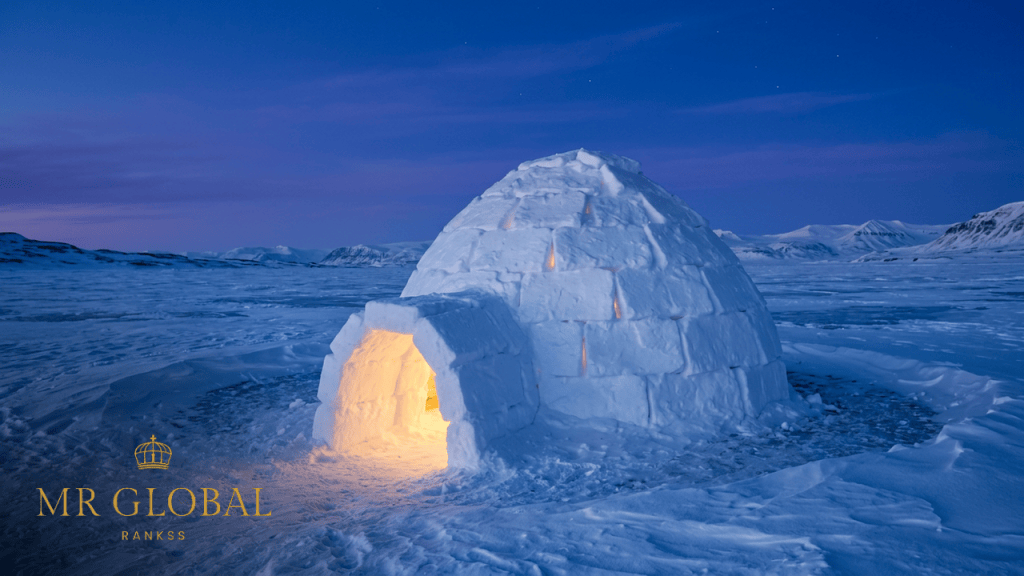
How did ancient Inuit igloos stay warm at -50C (-58F)? The answer is not one trick but a system. If you have ever wondered how igloos stay warm, here is the short version: snow traps air and slows heat, a dome shape keeps the walls strong, a sunken entrance holds back the cold, and one small lamp adds steady warmth. This guide explains how each part works and how Inuit builders put them together, so you can see how an igloo stays warm without melting.
The first secret: snow is mostly air
Snow can be up to 95 percent trapped air, held in tiny pockets between ice crystals. Air that cannot move is a poor conductor of heat, so the walls of an igloo slow the cold outside from getting in and slow the warmth inside from getting out. In other words, an igloo is built from insulation.
A dome that holds itself up
Builders stack dense snow blocks in a rising curve, with no fasteners and no inside supports. The dome shape spreads weight and pressure evenly, which keeps the structure stable. Snow handles squeezing pressure well, and the curve keeps the blocks pressed together in exactly that way.
A low entrance and a raised bed
Cold air is heavy, so it sinks. An igloo uses this on purpose. The entrance is a low, sunken tunnel where the coldest air collects and where wind and snow are kept out of the main room. The living space sits higher, and the sleeping platform is raised above the floor so that the family rests in the warmest layer of air.
The heart of the home: the qulliq
The traditional Inuit lamp, called a qulliq, burned seal oil, because wood was scarce in the Arctic. Its wick was made from moss or Arctic cotton grass. One small flame gave light and heat, and it was also used for cooking and for drying clothing. Body heat from the people inside added to the warmth, and the snow walls held it in.
How warm does an igloo get?
A well-built igloo can be roughly 40 degrees Celsius (about 72 degrees Fahrenheit) warmer inside than the air outside, according to ScienceABC, and Mental Floss gives a similar range. So even when the air outside is as cold as -50C (-58F), the inside can stay far more bearable. The Canadian Encyclopedia says the inside is often just above freezing, around 0C (32F), and can reach about 15C (59F) with enough people and a lamp. The exact gap depends on the weather, how many people are inside and how thick the walls are. That is a large difference for a house made of frozen water.
Frequently asked questions
Why is the igloo entrance so low?
Cold air sinks, so a low, sunken tunnel acts as a trap for it. It also keeps wind and blowing snow out of the main room.
What kept an igloo warm without electricity?
Insulating snow walls, body heat and a small seal oil lamp. Together they warmed the room while the walls held the heat in.
What is a qulliq?
A traditional Inuit stone lamp that burns seal oil with a wick of moss or cotton grass. It provided light and heat, and it was used for cooking and drying clothes.
If you enjoy stories like this, browse more in our Facts section, and subscribe to Mr Global Rankss on YouTube for more of the world’s stories.
The Hope & Peace Collection
Wear what you believe in
Two original designs, two words that say it all.


Leave a Reply