
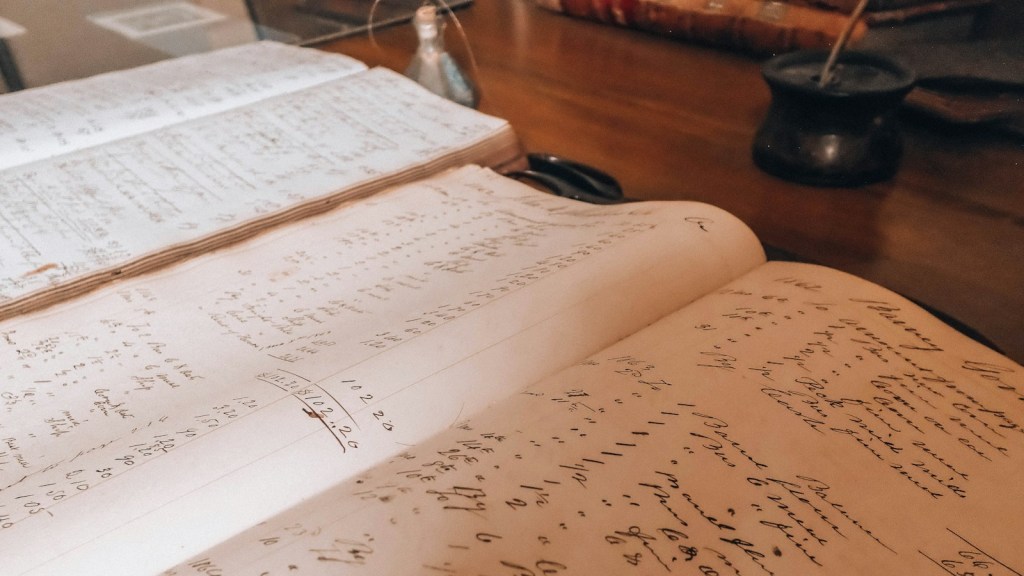
How did early American banks verify your identity before photo IDs? Imagine opening a savings account in 1868. The teller has no driver’s license to examine, no plastic card to swipe and no photograph to hold up beside your face. Early banks solved the problem with records they wrote themselves: a signature kept on file, a handwritten profile of each customer, and a counter staffed by people who often knew the families they served. This history of ID cards and bank records traces that system from the signature book to the first driver’s license and the first photo ID, and then compares it with the identity checks banks must carry out today.
How did early banks verify identity without a photo?
Early banks verified identity by combining three things: the signature a customer left in the bank’s books, the personal details written beside it, and the bank’s own knowledge of who people were. No single document proved identity. The bank assembled its own file on each customer and relied on that file, and on the people behind the counter, each time the customer returned.
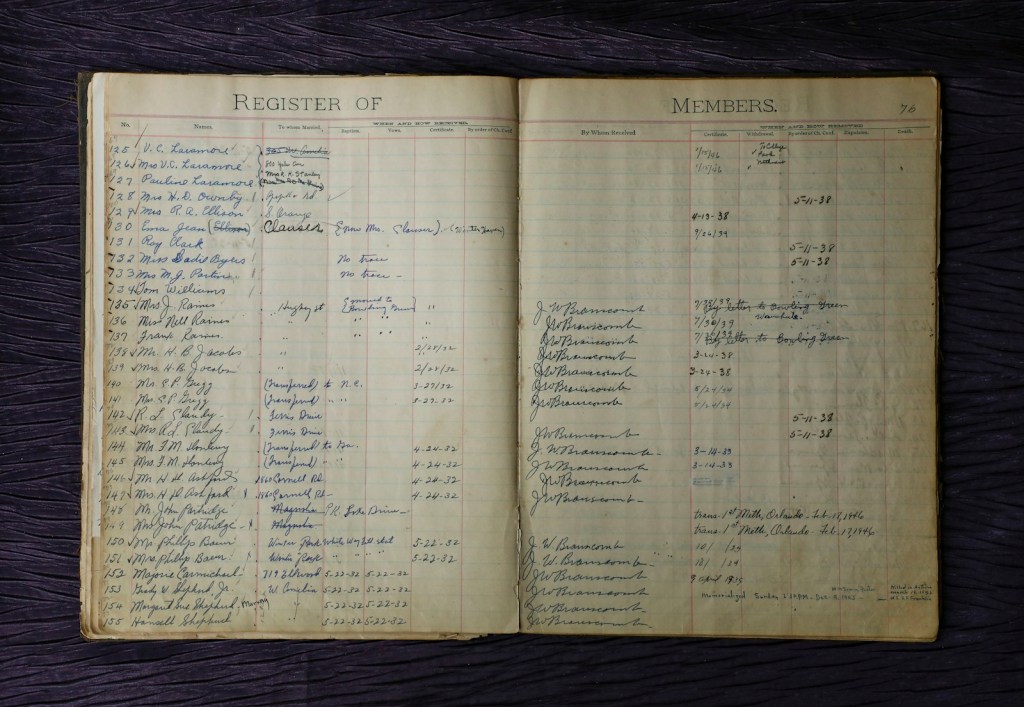
The signature book
Banks kept bound registers in which depositors signed their names and left details about themselves. The best-known example is the set of registers of signatures of depositors kept by the Freedman’s Savings and Trust Company, which has been preserved and microfilmed for researchers. A signature on file meant the bank held a sample of how each person wrote their name, long before fingerprints, magnetic stripes or digital scans existed.
Sources: National Archives, Prologue: Freedman’s Savings and Trust Company; FamilySearch catalog: Registers of signatures of depositors, Freedman’s Savings and Trust Company, 1865-1874.
Inside the Freedman’s Savings Bank records
Congress chartered the Freedman’s Savings Bank in 1865, in the closing weeks of the Civil War, and the bank closed in 1874. In those years it opened 37 branch offices across 17 states and Washington, D.C. About 70,000 people held accounts at some point, and deposits totaled more than $57 million.
The Freedman’s Bank records are remarkable for how much they ask about each depositor. A typical entry gives the account number, the person’s name and age, a written description of their complexion, their birthplace, the place where they were raised, and their occupation. It also lists a spouse, children, parents, brothers and sisters, a remarks column and, finally, the depositor’s signature. Some of the earliest volumes also name the people who had formerly enslaved the depositor. Registers survive for 29 of the branches.
Each page works as a portrait made entirely of words. Today the registers are an important source for African American family history, because they record relatives and birthplaces for families in the years just after the Civil War.
Sources: National Archives, Prologue; New York Public Library: Freedman’s Bank Records, 1865-1874.
Reputation as a form of identification
In a smaller community, a teller often knew a customer personally, or knew someone who did, and a good name carried real weight. That kind of security rests on relationships rather than paperwork. It also worked in reverse: a stranger had a harder time being accepted as a trusted customer.
When was the first driver’s license required in the U.S.?
Massachusetts and Missouri were the first states to require a driver’s license, in 1903. That first driver’s license carried no photograph and involved no test. Rhode Island followed in 1908 as the first state to require an exam as well as a license. The early license was a permit to drive, not an identity document, and it only became the card people carry everywhere over the following century.
Sources: AAA Northeast: The History of the Driver’s License; Wikipedia: Driver’s licenses in the United States.
When did photo IDs start?
For U.S. driver’s licenses, a photograph on the front of the card first appeared in California in 1958. Before that, the license was mainly a permit to drive. Adding the photo is one of the steps that helped turn the driver’s license into the everyday proof of identity it is now.
Sources: Smithsonian Magazine: The Driver’s License Used to Say Who Can Drive. Now It Says a Lot About Who We Are; 911 Driving School: The Driver’s License, Then and Now.
How do banks verify identity today?
Today, banks in the U.S. follow a federal Customer Identification Program rule, adopted in 2003 under the USA PATRIOT Act. Before opening an account, a bank must collect four pieces of information from an individual: a name, an address, a date of birth and an identification number. It must then verify that identity, using documents, non-documentary methods or both.
The comparison with the nineteenth century is striking. The Freedman’s Bank clerks also gathered names, birthplaces and family details. Now the minimum list of what a bank must collect is set by federal rule. The U.S. has no national ID card, so the driver’s license has become the identity document most people use in practice.
Sources: Office of the Comptroller of the Currency, Bulletin 2003-22; FDIC: Customer Identification Programs for Banks, final rule; Wikipedia: Driver’s licenses in the United States.
Watch on YouTube
If you enjoy stories like this, browse more in our History section and subscribe to Mr Global Rankss on YouTube for more of the world’s stories.
Recommended on Amazon
Wear the hope, carry the peace
Two original t-shirt designs, each built on a single word.
Sources
- National Archives, Prologue: Freedman’s Savings and Trust Company
- New York Public Library: Freedman’s Bank Records, 1865-1874
- FamilySearch catalog: Registers of signatures of depositors, Freedman’s Savings and Trust Company
- AAA Northeast: The History of the Driver’s License
- Wikipedia: Driver’s licenses in the United States
- Smithsonian Magazine: The Driver’s License Used to Say Who Can Drive
- 911 Driving School: The Driver’s License, Then and Now
- Office of the Comptroller of the Currency: Bulletin 2003-22
- FDIC: Customer Identification Programs for Banks, final rule (2003)


Leave a Reply