
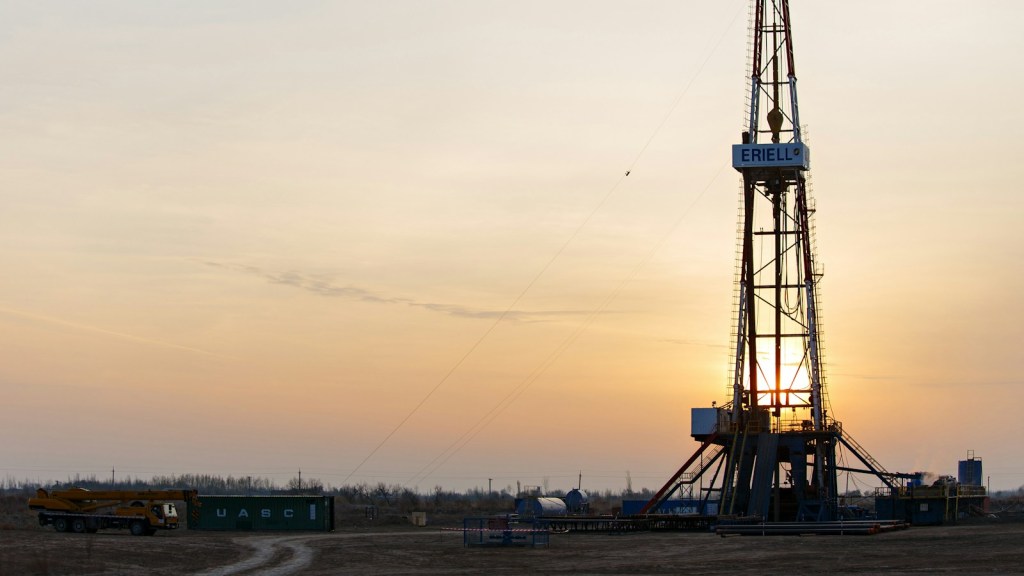
What is the deepest hole in the U.S.? The deepest hole ever drilled in the country is the Bertha Rogers No. 1 well in western Oklahoma, which reached 31,441 feet (9,583 meters), or almost six miles, in April 1974. Oil crews were searching for natural gas when the drill bit hit a pocket of liquid sulfur at the bottom, and the well never went deeper. This guide explains how the hole was drilled, why it stopped, what conditions were like at the bottom, and how it compares with the deepest hole in the world.
The short answer: the Bertha Rogers No. 1 well in Oklahoma’s Anadarko Basin is the deepest hole drilled in the United States, at 31,441 feet (9,583 meters). The deepest hole in the world is the Kola Superdeep Borehole in Russia, at 40,230 feet (about 12,262 meters).
What was the Bertha Rogers well?
The Bertha Rogers No. 1 was an exploration well drilled in the Anadarko Basin, a region of western Oklahoma known for deep natural gas deposits. According to the American Oil and Gas Historical Society, GHK, short for Glover-Hefner-Kennedy, drilled it with its partner Lone Star Producing Company, using Loffland Brothers Rig 32. Drilling began in November 1972, and the well reached its total depth of 31,441 feet on April 13, 1974.
Sources disagree on exactly where the well sits. The American Oil and Gas Historical Society and a report from KRMG place it in Washita County, while the Oklahoma Historical Society’s encyclopedia lists Beckham County. All of them describe the same well in western Oklahoma, and WorldAtlas places it near the towns of Elk City and Burns Flat, so we say simply that it is in western Oklahoma.
Why did drilling stop at 31,441 feet?
At the bottom, the drill bit encountered liquid sulfur. According to the historical society, the estimated bottom-hole conditions were 475 degrees Fahrenheit (246 degrees Celsius) and a pressure of 24,850 pounds per square inch. Corrosive pockets of hydrogen sulfide and other dangerous conditions made it unsafe to go any deeper, so the well was completed at a shallower depth instead.
WorldAtlas adds that the sulfur hardened around the drill string, the pipe twisted off, and part of the drilling assembly was left in the hole. That detail helps explain why the project ended at that depth, although the exact sequence is reported slightly differently from source to source.
Did the well find gas?
Only a limited amount. The well cost about $7 million in 1970s money and produced relatively little. Because the deepest rock did not yield commercial gas, some observers called it an “ultradeep dry hole.” The well was completed in the Granite Wash formation, at roughly 11,000 to 13,200 feet, and it produced natural gas from about 13,000 feet until July 1997. Oklahoma Corporation Commission records show that gas production stopped in July 1997, and the well was then plugged and abandoned.
That outcome is a useful reminder of why very deep wells are rare. Drilling almost six miles down costs far more than a typical well, and the conditions at the bottom, with extreme heat, pressure and corrosive gas, can damage equipment and make the work dangerous. The Bertha Rogers well was a record achievement, but it was not a commercial success.
Is it still the deepest hole in the U.S.?
Most sources say yes, but the wording needs care. The Oklahoma Historical Society says the well held the record at the turn of the twenty-first century as the world’s deepest producing well. The American Oil and Gas Historical Society says it was the deepest well in the United States for three decades, until 2004, though the same article also states that it remains the deepest well ever drilled in the country. WorldAtlas reports that some sources claim a later well exceeded it in 2004, but only by the measured length of the hole and not by vertical depth.
In other words, “deepest” depends on how depth is measured. A well that is drilled at an angle can have a longer total length without going deeper below the surface. By vertical depth, Bertha Rogers is still the figure that most sources cite for the deepest hole in the United States.
How does it compare with the deepest hole in the world?
The Kola Superdeep Borehole, on a remote peninsula in Russia, is the deepest hole ever drilled, at 40,230 feet (about 12,262 meters), reached in 1989. Bertha Rogers is about three-quarters of that depth. The Russian team drilled roughly 7.5 miles by 1989, according to KRMG, and near its planned depth of 49,000 feet the hole was already 356 degrees Fahrenheit (180 degrees Celsius). Rock with a plastic-like texture made further drilling nearly impossible, drilling stopped in 1994 for lack of funds, and the project was abandoned in 2008.
The American Oil and Gas Historical Society notes that Bertha Rogers was the world’s deepest well when it was drilled, until a Soviet well surpassed it several years later. The two projects had different goals: Bertha Rogers was a search for natural gas, while Kola was a scientific project. Both reached the limit of what drilling technology of their time could handle.
What other “deepest holes” might people mean?
The word “hole” is flexible. This article covers the deepest hole drilled into the Earth, which is what most people mean. Caves, mines, canyons and lakes are different questions with different answers, and we have not ranked them here.
Frequently asked questions
What is the deepest hole in the U.S.?
The Bertha Rogers No. 1 well in western Oklahoma, drilled to 31,441 feet (9,583 meters) in 1974.
Why did the Bertha Rogers well stop?
The drill bit reached liquid sulfur at the bottom, where the temperature was about 475 degrees Fahrenheit (246 degrees Celsius) and corrosive hydrogen sulfide made deeper work unsafe.
What is the deepest hole in the world?
The Kola Superdeep Borehole in Russia, at 40,230 feet (about 12,262 meters).
Is the Bertha Rogers well still open?
No. It produced gas until July 1997 and was then plugged and abandoned.
If you enjoy explainers like this, browse more in our Facts section and subscribe to Mr Global Rankss on YouTube for more science, history and rankings.
Related reading: how many active volcano zones Iceland has, how big the U.S. is compared to Europe and how many stars are in the Milky Way.
Also read: What happened to the Edmund Fitzgerald?


Leave a Reply