
People preserved meat before refrigeration by removing, binding or blocking the water that spoilage microbes need, or by making the meat an unfriendly place for them to live. The main tools were salting and curing, drying, smoking, brining, sealing meat under fat, fermenting it and, where winter ice was available, keeping it cold. So how did they preserve meat before refrigeration in practice? Almost always with several methods at once: a cut might be salted, then smoked, then hung to dry. This article explains each method, the science that makes it work, and the safety lessons that still apply today.
Why does meat spoil, and what does preserving it change?
Meat spoils because bacteria, yeasts and molds grow in it, and they need available water to do so. Food scientists measure that available water as water activity, on a scale from 0 (completely dry) to 1.0 (pure water). Drying, salting and sweetening all lower it. Kansas State University Extension notes that most spoilage bacteria need a water activity of about 0.90 or higher, and that the hardiest molds and yeasts stop only near 0.61. Clemson University’s Home and Garden Information Center gives very similar figures, places the bacterium that causes botulism at roughly 0.91 to 0.93, and sets a drying target of below 0.60. In plain terms, every traditional method below is a way of pushing meat out of the range where microbes thrive.
How did salting and curing preserve meat?
Salt was the foundation. It draws moisture out of meat and binds much of the water that remains, so microbes cannot use it. The Wylie House Museum at Indiana University, in its account of nineteenth-century food preservation, describes straightforward salt curing as the technique most often used for meat. The U.S. Department of Agriculture’s Food Safety and Inspection Service calls salt one of the most effective ways to inactivate and destroy spoilage organisms, and it notes that early cures were simple: cuts were either submerged in a salt solution or packed in dry salt (FSIS guide to cured meat and poultry operations).
Curers also made use of nitrate and nitrite salts, which University of Wisconsin Extension discusses as curing agents in meat products. The FSIS guide explains that nitrate acts as a reservoir from which nitrite is produced over time, which is why it suits long dry cures, and that these compounds give cured meat its stable red color.
How did drying work?
Drying attacks the same problem from the other direction: instead of binding water, it removes it. Wylie House describes meat dried into jerky and notes that removing the water keeps bacteria from growing, while The Collector explains that many of the microorganisms that cause decay need water to survive. Drying was often combined with salting or smoking, which is why so many traditional preserved meats go through more than one of these steps.
Did smoking really preserve meat?
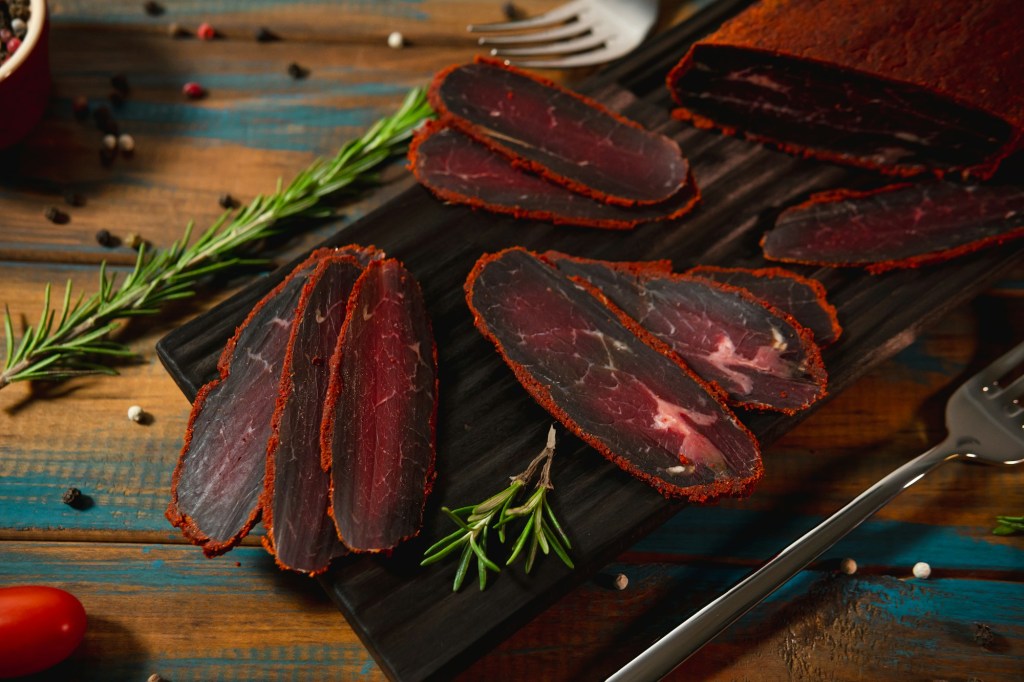
Smoking helped, but not by itself. The National Center for Home Food Preservation states that smoke on its own, without proper cooking, is not an effective preservative. What smoke does is help in smaller ways. The FSIS describes it as somewhat bacteriostatic and bactericidal to organisms on the surface, partly because it dries the surface and leaves compounds that form a chemical barrier, and Wylie House notes that it helps protect the outer fat from going rancid. The Collector adds that smoke from burning wood was used to dry meat faster and to help kill harmful germs. Smoking worked best as one step in a chain, usually alongside salt curing or drying.
What were brining and confit?
Brine, which is simply heavily salted water, was used to pickle certain cuts of meat, according to Wylie House, and the FSIS also lists submerging meat in a salt solution as one of the earliest cures. Fat worked differently. In Gascony, in southwestern France, cooks made confit by salting duck or goose, cooking it slowly in fat and then storing it submerged. Fine Dining Lovers says the layer of fat protected the meat from air and let it keep for months, and D’Artagnan describes how duck fat was poured over the meat in crocks, topped with pork fat and kept in a cool cellar, forming a firm seal that protected it through winter and into spring.
Did people ferment meat?
Yes, most famously in dry sausages such as salami. In fermented sausage, lactic acid bacteria feed on sugar and produce acid, which lowers the pH. Meats and Sausages describes this as one of several hurdles, stacked with salt, nitrite and slow drying, whose combined strength is greater than any one alone, and it gives a pH of 5.3 or lower as a benchmark for keeping pathogens such as Staphylococcus aureus in check. A 2019 study of traditionally made pork salami in Food Protection Trends found the same pattern: the salamis fermented to a pH near 4.9 and were dried until water activity fell below 0.88, and the authors credit the safety results to several hurdles working together. The lesson is consistent across methods. No single step does the whole job, but the combination does.
How did ice and cold storage help?
Cold was the one method that did not change the meat itself. According to Smithsonian Magazine, icehouses were a standard feature of estates in Europe and the colonies by the eighteenth century, with ice cut from frozen ponds and lakes in winter and stored for the warm months. Wylie House describes the same practice, packing the ice in straw or sawdust so that it lasted many months, and calls it essential for storing perishables such as milk or meat. Ice melts at 32°F (0°C), which is why the insulation mattered so much.
For more on how households kept food cold in that era, including ice harvesting and iceboxes, see our article on keeping food cold in the 1800s.

Was preserved meat safe to eat?
Usually, when the method was sound, but the risks were real, and they still apply to anyone who preserves food at home. The Centers for Disease Control and Prevention says that foodborne botulism most often comes from homemade foods that were improperly canned, preserved or fermented, and both the CDC and Ohio State University Extension stress that botulinum toxin cannot be seen, smelled or tasted. Ohio State adds that the spores are common in soil and that the right conditions allow them to produce toxin, which is why tested recipes matter. The CDC’s advice is blunt: if in doubt, throw it out.
What was left out, and why?
Several popular claims about old food preservation rest on a single source, or on sources that disagree, so they are left out here. They include exact dates for when salting, smoking or confit began, claims about how many thousands of years salt preservation goes back, the shelf life of any traditional product, and exact water-activity cutoffs, since the two sources used here differ slightly on figures such as the level at which the botulism bacterium stops growing. Where numbers are given, they are shown as ranges. As elsewhere on this site, the evidence is strongest where independent sources agree.
Frequently asked questions
How did people preserve meat before refrigeration?
Mainly with salting and curing, usually combined with drying or smoking, along with brining, sealing under fat, fermenting and, where winter ice could be cut and stored, cold storage.
Why does salt preserve meat?
Salt draws out moisture and binds the water that remains, which lowers water activity so that bacteria, yeasts and molds cannot grow as easily.
Is smoking enough to preserve meat?
No. Smoke alone is not an effective preservative. It helps most when it is combined with salt curing or drying.
Did people use ice to keep meat fresh?
Yes, where it was available. Ice was cut from frozen ponds and lakes in winter and packed in straw or sawdust in icehouses, where it could last for months.
Is it safe to preserve meat at home the old way?
Only with tested methods. Botulinum toxin cannot be seen, smelled or tasted, so health agencies advise using tested recipes and discarding food if you are in doubt.
If you enjoy history and everyday science like this, browse more in our History and Facts sections and subscribe to Mr Global Rankss on YouTube (https://www.youtube.com/@mrglobalrankss) for more science, history and rankings.
Related reading: How Did People Keep Food Cold in the 1800s? Ice Harvesting, Iceboxes and Springhouses Explained
Sources
- Kansas State University Extension: Water Activity of Foods
- Clemson HGIC: Available Moisture in Foods
- Indiana University, Wylie House Museum: Food Preservation in the Nineteenth Century
- USDA FSIS: Cured Meat and Poultry Operations
- University of Wisconsin Extension: What’s the Deal With Nitrates and Nitrites Used in Meat Products
- National Center for Home Food Preservation: Cure and Smoke Review, Preservation
- The Collector: How Was Food Preserved Before Fridges?
- Fine Dining Lovers: Confit, the French Preservation Technique
- D’Artagnan: What Is Confit?
- Meats and Sausages: Fermented Sausages and Safety Hurdles
- Food Protection Trends: Pathogen Reductions During Traditional Fermentation and Drying of Pork Salamis
- Smithsonian Magazine: The Ice King Cometh
- CDC: Preventing Botulism
- Ohio State University Extension: Botulism


Leave a Reply