
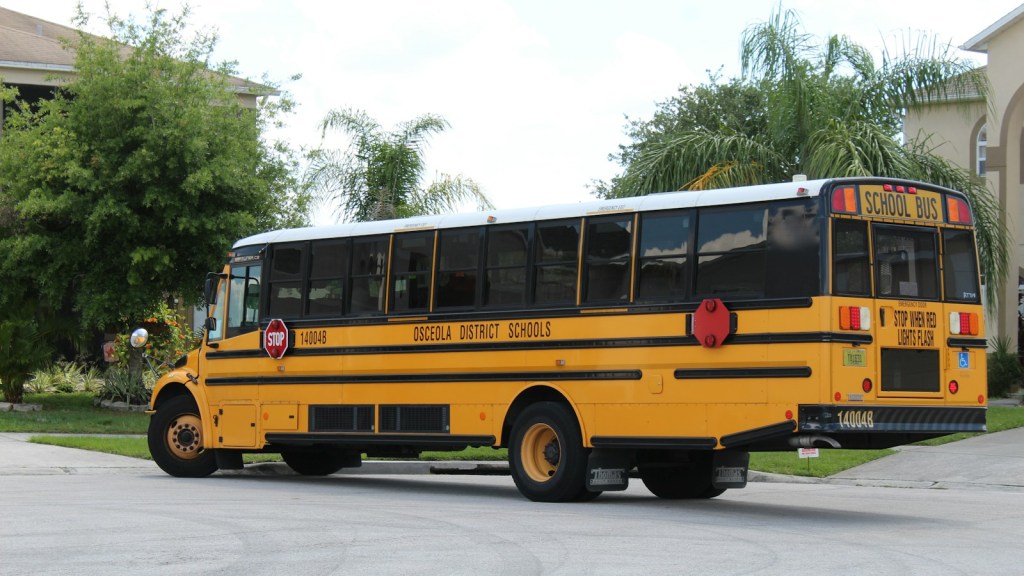
Why are school buses yellow? The short answer: in 1939, a national conference organized by Dr. Frank Cyr of Teachers College, Columbia University, chose a yellow-orange shade because drivers notice it quickly, even in the dim light of early morning and late afternoon and at the edge of their vision, and because black lettering stands out clearly against it. Before that meeting, children rode to school in vehicles of almost every color and design. Today the shade carries the official name National School Bus Glossy Yellow, and it has become one of the most recognizable colors on the road. This article explains when school buses became yellow, what color they were before, why the paint is paired with black, whether the color is required by law, and whether other countries use it. Every claim below was checked against at least two independent sources, which are linked in the text and listed at the end.
What color were school buses before they were yellow?
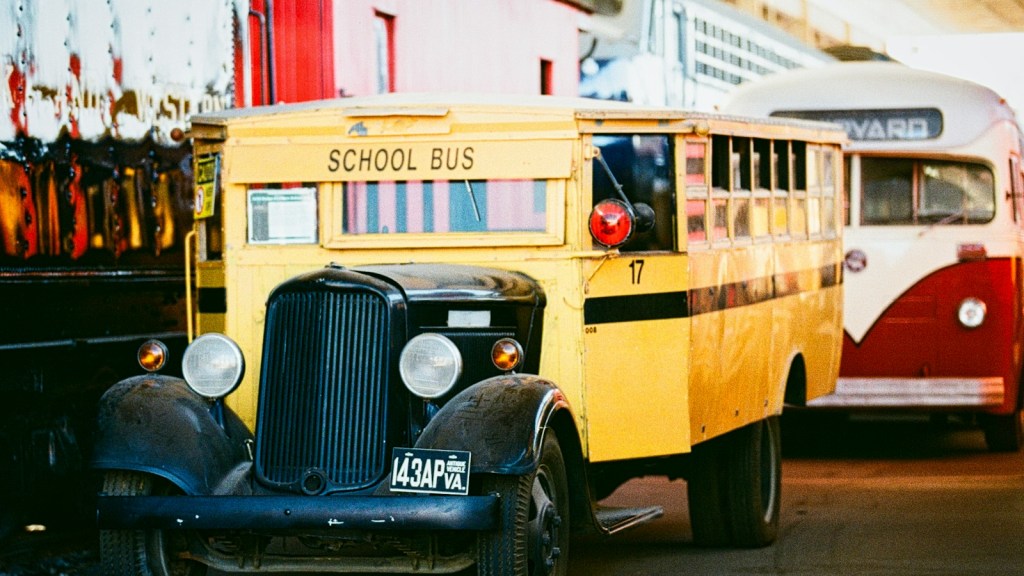
There was no standard color, and in many places there was no standard vehicle either. In 1937, Frank Cyr began studying how rural children traveled to school. He found them riding in trucks, in buses painted many different colors and, in one Kansas district, in horse-drawn wagons. Both Smithsonian Magazine and Teachers College, Columbia University describe these findings, and Reader’s Digest likewise notes that children rode buses, trucks and wagons of many colors, shapes and sizes.
Patriotic color schemes were part of the mix. Teachers College, Columbia University reports that one district painted its buses red, white and blue to encourage patriotism. The same combination was proposed for the national standard and rejected: Smithsonian Magazine reports that Cyr considered it poor for visibility, and Reader’s Digest reports that the proposal was voted down quickly. The underlying problem was practical: without a common look, other drivers could not easily tell which vehicles were carrying children, a point Reader’s Digest makes directly.
Manufacturers had their own complaint. Because every district set its own requirements, builders could not mass-produce school buses on an assembly line, which kept prices high. Standard specifications promised to lower costs for districts, a motive described by Smithsonian Magazine, Teachers College, Columbia University and Reader’s Digest.
When did school buses become yellow?
School buses became yellow as a national standard in 1939. That year, Cyr brought transportation officials from every state together with representatives of the bus manufacturing industry at Teachers College in New York, according to Smithsonian Magazine and Teachers College, Columbia University. At the time the country had 48 states, a figure given by both Teachers College, Columbia University and Today I Found Out; our article on why the U.S. has 50 states explains how the count later rose. Teachers College, Columbia University and HandWiki both date the meeting to April 1939.
The conference was funded by a $5,000 grant from the Rockefeller Foundation, a figure reported by Teachers College, Columbia University, Mental Floss and Reader’s Digest. Participants deliberated for seven days, according to Smithsonian Magazine, Teachers College, Columbia University and The Children’s Museum of Indianapolis, and voted on 44 standards covering features such as body length, ceiling height, door design and aisle width. The figure of 44 appears in Smithsonian Magazine, Teachers College, Columbia University and Mental Floss. Safety came first in those discussions: Teachers College, Columbia University records that the most frequent question in the room was whether a proposed standard would improve it.
Choosing the paint was a hands-on exercise. Strips of color ranging from pale lemon yellow to deep orange-red were hung on a wall, and the group narrowed them to three closely related shades of yellow, as described by Teachers College, Columbia University and Mental Floss. Smithsonian Magazine and Reader’s Digest confirm that the range under consideration ran from lemon yellow to deep orange-red. Allowing slight variation made sense because paint makers could not always mix an exact match, a detail Teachers College, Columbia University records.
Adoption did not happen overnight. About 35 states adopted the standard color soon after the conference, and by 1974 every state was using it, according to both Mental Floss and Today I Found Out. Most of the 1939 construction standards have since been revised, but the color has remained, a point made by Teachers College, Columbia University and The Children’s Museum of Indianapolis.
Why does yellow make a school bus easier to see?
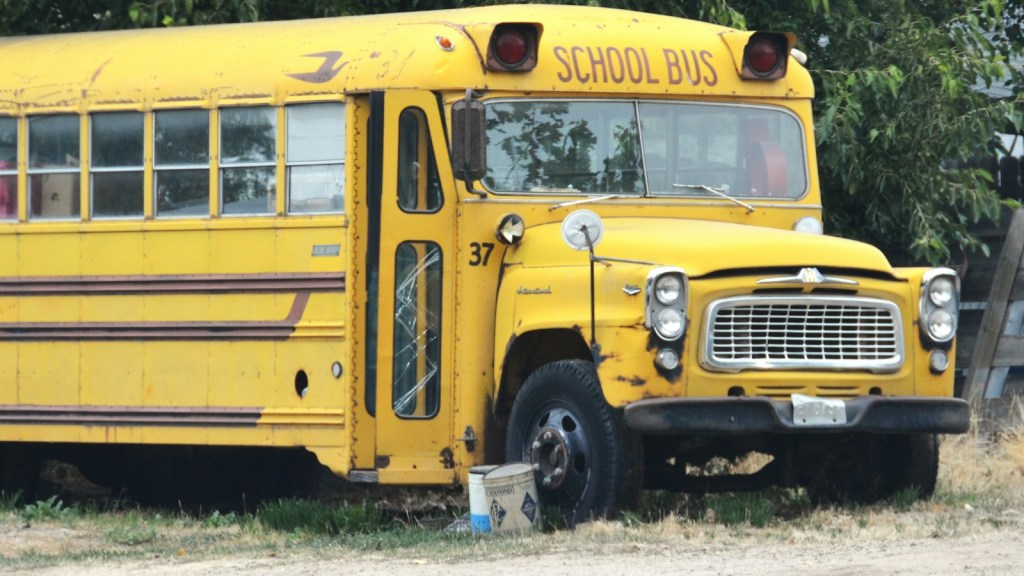
The main reason is visibility at the times of day when school buses operate. The chosen shade is easy to see in the half-light of early morning and late afternoon, when children are picked up and dropped off, according to Teachers College, Columbia University, Mental Floss and Reader’s Digest. Wonderopolis adds that yellow is also easier to notice in dim surroundings in general.
The color also works well with the way the human eye is built. Smithsonian Magazine explains that the wavelength of school bus yellow falls between the peak sensitivities of the eye’s red-detecting and green-detecting cone cells, which means it stimulates both types at once. Reader’s Digest describes the same effect and says the resulting signal is roughly twice as strong as that of a color stimulating only one type of cone. Both sources add that the color is noticed in peripheral vision, which matters to a driver whose eyes are on the road ahead rather than on a bus approaching from the side.
A specific figure is often quoted for that advantage. The Children’s Museum of Indianapolis, citing research reported by the website ColorMatters, states that lateral peripheral vision detects yellow 1.24 times better than red, and Wonderopolis gives the same figure. Readers should treat the number as a widely repeated estimate rather than a precise measurement, since neither source presents the underlying study. Visibility is a theme across road design in general; our article on why highway exit ramps are shaped like a cloverleaf looks at another feature shaped by traffic safety.
What is school bus yellow called, and is it yellow or orange?
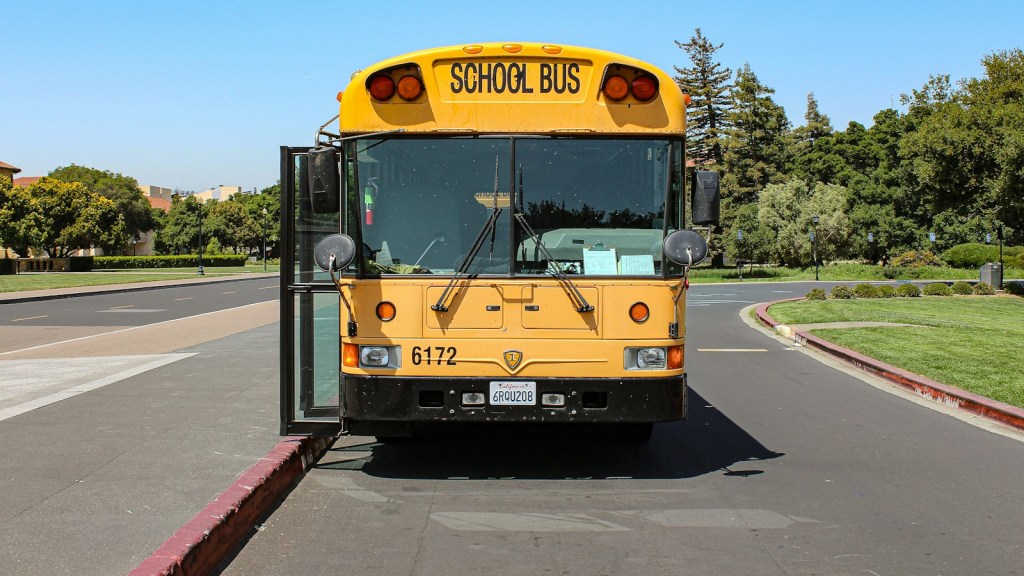
The color was originally named National School Bus Chrome. Smithsonian Magazine and Reader’s Digest explain that the word chrome referred to the lead chromate pigment in the original paint. The same shade is now called National School Bus Glossy Yellow, the name used by Smithsonian Magazine, Mental Floss, Reader’s Digest and NHTSA’s Highway Safety Program Guideline No. 17. It is registered as Color 13432 in Federal Standard No. 595a, a designation confirmed by Smithsonian Magazine, Mental Floss and the NHTSA guideline itself.
The question of whether school buses are yellow or orange has a reasonable answer: the official shade is a blend of the two. Smithsonian Magazine describes it as an orangish yellow, and Wonderopolis calls it a mix of yellow and orange that is not found in an ordinary box of crayons. The name says yellow, but the paint sits noticeably toward orange, which is why some people see it as one color and some as the other.

Why are school buses yellow and black?
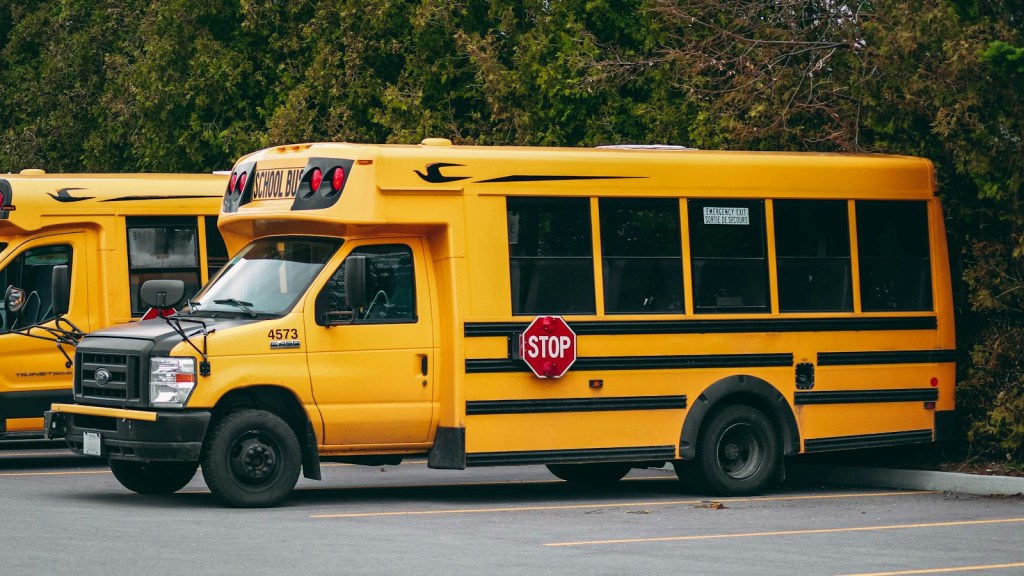
Black was chosen as the partner color for legibility. The 1939 group selected its yellow in part because black lettering on that background is easy to read in semi-darkness, according to Teachers College, Columbia University and HandWiki. Teachers College, The Children’s Museum of Indianapolis, Mental Floss and Reader’s Digest likewise describe bold black lettering as part of the design’s purpose. Official specifications continue the pairing: NHTSA’s Highway Safety Program Guideline No. 17 calls for glossy black bumpers, and Quebec’s school bus regulation requires black inscriptions, rub rails and chassis on buses painted chrome yellow.
The black horizontal stripes along the sides have a separate, structural job. They are rub rails, metal strips that strengthen the body and help protect it in a collision, according to both Snopes and Mental Floss. The two sources also agree that the rails line up only roughly with the floor and seat levels inside the bus, and that their exact placement varies from one bus to another.
Do school buses have to be yellow?
Not under federal law. Smithsonian Magazine reports that NHTSA, the National Highway Traffic Safety Administration, says no federal law requires school buses to be yellow, and Teachers College and Reader’s Digest make the same point. Instead, the federal government recommends the color. NHTSA’s Highway Safety Program Guideline No. 17 states that each state “should” establish a pupil transportation safety program and lists National School Bus Glossy Yellow among its recommendations. The authority to set school transportation policy, including how buses are identified, rests with state and local governments, according to Smithsonian Magazine and the guideline itself.
Some popular sources say otherwise. The Children’s Museum of Indianapolis and Wonderopolis both state that federal law requires the color, but that claim conflicts with NHTSA’s own guidance and with the reporting of Smithsonian Magazine, Teachers College and Reader’s Digest. This article follows the better-supported position: the color is a federal recommendation that every state has adopted, not a federal mandate. Teachers College confirms that all states adopted the standard, and Reader’s Digest and Today I Found Out both attribute the color’s survival to safety and to how widely the public recognizes it. Our article on how traffic lights detect motorcycles covers another example of how road rules and equipment are set at the state and local level.
Are school buses yellow in other countries?
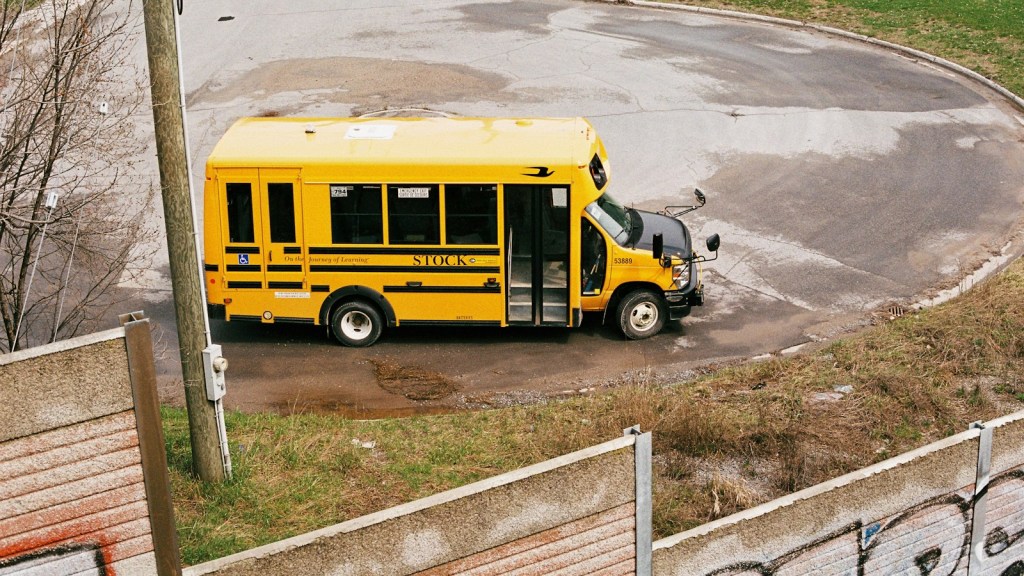
Yes, although the practice is far from universal. Canada is the clearest example. Quebec’s school bus regulation requires the body of a school bus to be painted chrome yellow, with a black hood, black inscriptions and black rub rails. School Transportation News describes the vehicles that carry Canadian students every day as yellow school buses, and Today I Found Out reports that some Canadian regions adopted the color soon after the 1939 conference.
Beyond Canada and the U.S., the color appears less often. Today I Found Out and HandWiki both report that yellow buses in the style used in the U.S. have been introduced in parts of the United Kingdom. Beyond these cases, the sources reviewed for this article did not provide reliable, consistent information about school bus colors in other countries, and no further claims are made here.

What was left out, and why?
Several details were left out because only one source supported them or because the sources disagreed. Smithsonian Magazine says Cyr hung 50 paint strips; other sources describe dozens of shades without a count, and the exact number is not stated here. Cyr’s personal view that the color was closer to orange than yellow appears in only one source. The claim that the paint was renamed specifically to distance it from lead paint, the estimated number of school buses in the U.S., the exact number of buses and riders in Canada, and NHTSA’s minimum letter height for the words “School Bus” were each found in a single source. Mental Floss reports that Minnesota once painted its buses a distinct golden orange and that some states require glossy black rub rails, but no second source confirmed either point. The popular claim that rescuers use the black stripes to decide where to cut into a bus was disputed by Snopes and is not repeated. One source said buses were a pure lemon yellow before 1939, which conflicts with the better-supported accounts of many colors. The question of why some buses have white roofs was not researched for this article, and the 1.24 peripheral-vision figure is included only as a widely repeated estimate.
Frequently asked questions
Why are school buses yellow and not red?
The 1939 conference chose a yellow-orange shade because it is noticed readily in peripheral vision, stands out in the dim light of early morning and late afternoon, and gives black lettering strong contrast. Sources that compare the two colors report that yellow is detected in peripheral vision more readily than red.
When did school buses become yellow?
The national standard dates to 1939, when a conference organized by Frank Cyr at Teachers College, Columbia University, chose the color. About 35 states adopted it soon afterward, and by 1974 every state was using it.
Are school buses yellow or orange?
The official shade, National School Bus Glossy Yellow, is a blend of the two. It is a yellow that leans noticeably toward orange, which explains why people describe it both ways.
Do school buses have to be yellow?
No federal law requires it. NHTSA recommends National School Bus Glossy Yellow in its Highway Safety Program Guideline No. 17, and every state has adopted the color, while states and local governments set the actual policy.
What is school bus yellow called?
It was first named National School Bus Chrome, after the lead chromate pigment in the original paint. It is now called National School Bus Glossy Yellow and is listed as Color 13432 in Federal Standard No. 595a.
For more clear, sourced answers to everyday questions about history and how things work, browse our Facts and History sections and subscribe to Mr Global Rankss on YouTube (https://www.youtube.com/@mrglobalrankss) for rankings, history and science explained.
Related reading: Why are highway exit ramps in the U.S. shaped like a curved cloverleaf design?, How do city traffic lights automatically detect motorcycles sitting at a left turn lane?, Why are there 50 states in the U.S.?
Sources
- Smithsonian Magazine: The history of how school buses became yellow
- Teachers College, Columbia University: Frank W. Cyr, Father of the Yellow School Bus, dies at 95
- Teachers College, Columbia University: School bus yellow
- NHTSA: Highway Safety Program Guideline No. 17, Pupil Transportation Safety (2009)
- Mental Floss: Why are school buses yellow?
- Mental Floss: The clever reason school buses have those black stripes
- Reader's Digest: Why school buses are always yellow
- The Children's Museum of Indianapolis: Why is the school bus yellow?
- Wonderopolis: Why are school buses yellow?
- Today I Found Out: Why school buses are yellow
- HandWiki: School bus yellow
- Snopes: What are the black lines on a school bus for?
- LegisQuebec: Regulation respecting school buses (Quebec)
- School Transportation News: School transportation in Canada


Leave a Reply