
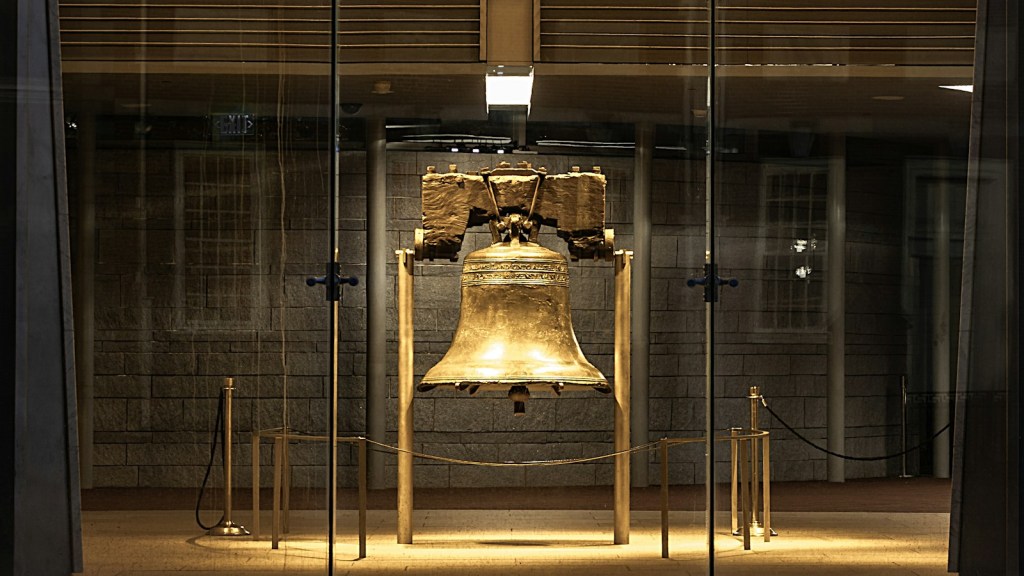
Why was the Liberty Bell cracked? The question has a longer answer than most people expect, because the bell failed more than once. The short answer: the original bell cracked during its first test after arriving from London in 1752, local craftsmen recast it twice, and the recast bell later developed a thin crack after decades of use; a repair attempted in 1846 widened that crack, and when the bell was rung for Washington’s Birthday, a new fracture spread and silenced it for good. No surviving record states exactly when or why the final crack began, and several popular stories about it do not hold up. This article sets out what the National Park Service, major encyclopedias and respected history publishers agree on, where they differ, and how the bell became one of the best-known symbols of freedom in the U.S.
Why was the Liberty Bell made, and where was it cast?
The bell began as a practical purchase. In 1751, the Pennsylvania Assembly ordered a large bell for the tower of its State House in Philadelphia, the building now known as Independence Hall, according to the National Park Service, History.com and Britannica. The order was placed by Isaac Norris, Speaker of the Assembly, a detail confirmed by the National Park Service and Wikipedia.
The bell was cast in London at the Whitechapel Foundry, as the National Park Service, History.com and Britannica all report. Its inscription comes from the Book of Leviticus, chapter 25, verse 10, and reads “Proclaim LIBERTY throughout all the Land unto all the Inhabitants thereof.” Both the National Park Service and Wikipedia give that wording. The Park Service adds that the verse refers to the biblical Jubilee, a time when property was returned and people held in bondage were freed, a meaning that would matter a great deal to later generations.
When was the Liberty Bell first cracked?
The first crack came almost immediately. The bell reached Philadelphia in 1752, and it cracked during a test strike shortly after it arrived. History.com, Mental Floss and Britannica all describe the failure in those terms, and the National Park Service says the bell cracked on its first test ring.
Two local metalworkers, John Pass and John Stow, took on the work. They melted down the cracked bell and recast it using the original metal, according to the National Park Service, Britannica and Mental Floss. Their names, the city and the year 1753 appear on the front of the bell, as the National Park Service and its visitor fact sheet both note.
How many times did the Liberty Bell crack and get recast in this early period? History.com, Mental Floss and Wikipedia state that Pass and Stow recast it twice. Their first attempt produced a bell that did not break but sounded poor, and the crowd at its public test was unimpressed; the pair then recast it a second time, a sequence described by both Wikipedia and Encyclopedia.com. The National Park Service and Britannica summarize the work as a single recasting dated 1753. This article follows the more detailed account of two castings, which three independent sources support.
What caused the crack in the Liberty Bell?
The most common explanation is the metal itself. History.com and Mental Floss both state that the original bell was made from metal that was too brittle. Pass and Stow tried to correct the problem by adding copper to the mix, a step reported by Mental Floss, Encyclopedia.com and Wikipedia.
The finished bell is made of bronze that is roughly 70 percent copper and 25 percent tin, with small amounts of lead, zinc, arsenic, gold and silver. The National Park Service, History.com and Mental Floss all give this composition. The National Park Service and History.com put its weight at about 2,080 pounds (about 943 kilograms).
Age and hard use are the other half of the story. The National Park Service states that no one recorded when or why the bell first cracked in its later life, and it describes a narrow split that developed in the early 1840s, after nearly 90 years of service, as the most likely explanation. HowStuffWorks reports the same view and notes that some historians attribute the crack to the bell’s metallic makeup, its long use, or both. In plain terms, a bell cast from a difficult alloy and rung for decades eventually gave way.
When did the Liberty Bell get the crack it has today?
This is where popular history and the documented record part ways. A widely repeated story says the bell cracked in 1835 while tolling for the death of Chief Justice John Marshall. History.com and Mental Floss both point out that Philadelphia newspaper accounts of the funeral do not mention the bell, and Wikipedia describes the evidence for the story as thin. Other accounts link the damage to events in 1824, including the Marquis de Lafayette’s visit to Philadelphia, but History.com, Mental Floss and Wikipedia treat those claims as unproven as well.
What the sources do agree on is 1846. By then the bell already had a thin crack that was affecting its sound, according to the Park Service fact sheet. Workers tried to repair it before the Washington’s Birthday holiday that February. The National Park Service explains that they used a method called stop drilling, widening the hairline crack to halt its spread and restore the bell’s tone. HowStuffWorks describes the same repair and adds that the wider gap was meant to keep the two sides from touching and buzzing, while Mental Floss reports that the edges of the old fracture were filed for a similar reason. Readers curious about how the holiday is observed today can find it in our guide to U.S. federal holidays.
The repair did not last. The bell was rung on February 23, 1846, and after a period of ringing a new crack opened and spread, a date and sequence given by the Park Service fact sheet and Wikipedia. History.com, Mental Floss and the National Park Service all agree that this second fracture left the bell unable to ring properly again.
Is the Liberty Bell still cracked, and why was it never fixed?
Yes, the Liberty Bell is still cracked, and the line that visitors see today is largely the result of the 1846 repair rather than the original hairline split. The National Park Service and HowStuffWorks both explain that the wide, visible gap is the drilled channel that workers cut in an effort to save the bell’s tone.
The bell has not been rung since 1846, a point made by the Park Service fact sheet, Britannica and Mental Floss. On rare ceremonial occasions it has been tapped gently instead; HowStuffWorks and Wikipedia both describe it being struck with a mallet in 1915.
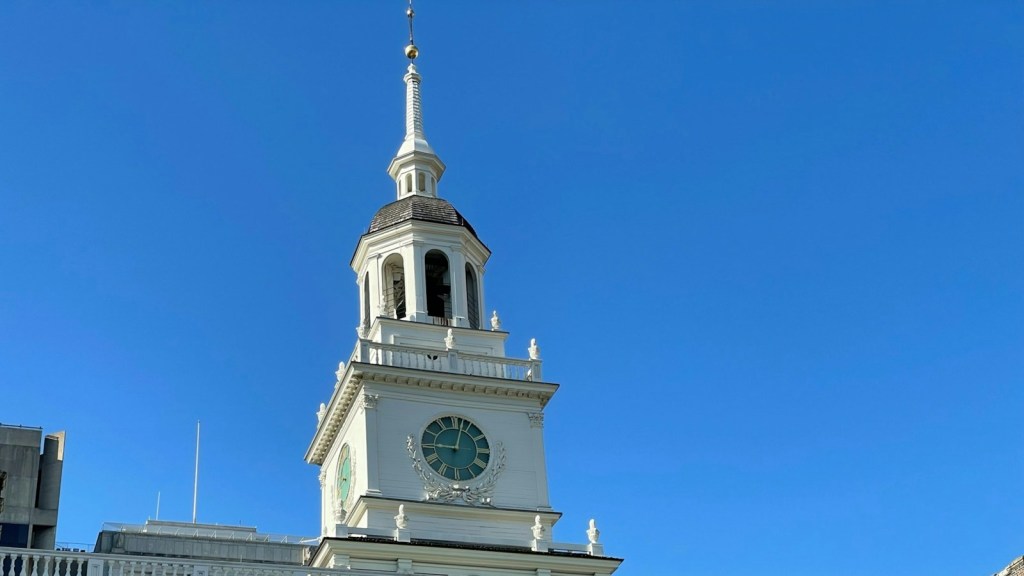
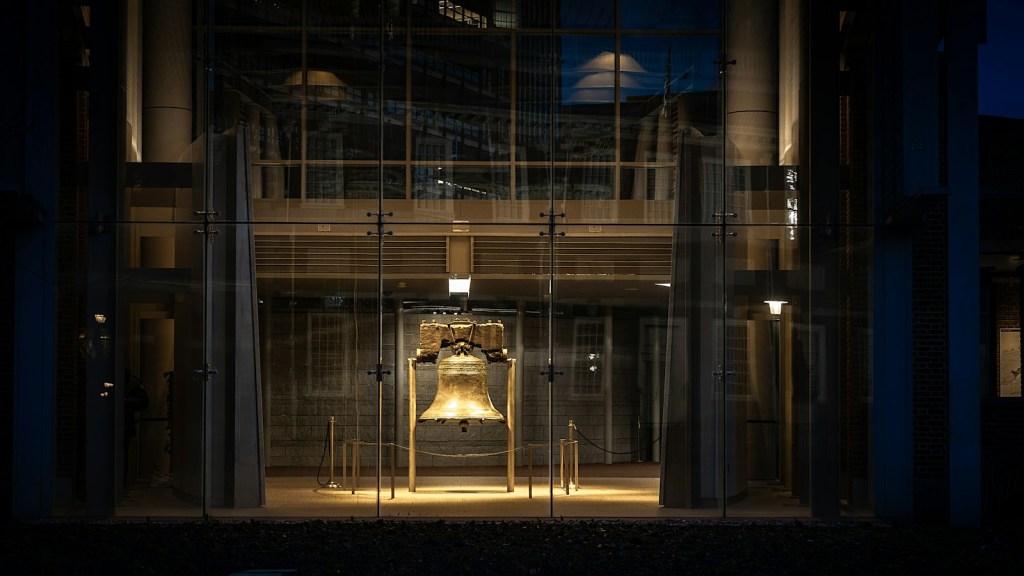
Today the bell is displayed in the Liberty Bell Center in Independence National Historical Park, near Independence Hall in Philadelphia. History.com, Britannica and Wikipedia all report that the center opened in 2003, and History.com and Britannica note that the bell had been moved in 1976 to a pavilion near Independence Hall before that. The park is run by the National Park Service, which directs visitors to the center to see the bell.
What does the crack in the Liberty Bell represent?
For its first decades, the bell was known simply as the State House bell. Its famous name came later, from the movement to end slavery. In the 1830s, abolitionists adopted the bell as a symbol of their cause and began calling it the Liberty Bell, according to the National Park Service, History.com and Wikipedia. The National Park Service explains that they were inspired by the inscription’s message of liberty for all inhabitants of the land, and Wikipedia adds that they argued the bell had not lived up to its own words while many people remained enslaved.
The sources reviewed for this article do not assign an official meaning to the crack itself. Its significance is historical: a flawed object that was repaired, failed again and was kept anyway has become a lasting reminder that the ideals written on its surface took generations to pursue. The same national debate over slavery that drew abolitionists to the bell later reshaped elections, as our article on why Lincoln was absent from the ballot in ten slave states describes.
What was left out, and why?
Several details were left out because only one source supported them or because sources disagreed. The month the bell arrived in Philadelphia is given as August by two sources and September by another, and one encyclopedia entry dates the first crack to March 1753 rather than 1752. The price paid for the bell differs between sources. The claim that the 1846 repair left more than 40 drill marks appears only in the National Park Service account, and a 1975 laboratory analysis that blamed poorly mixed pewter for the bell’s brittleness appears only in Wikipedia. Two sources mention a second replacement bell ordered from London, but they disagree about where it hung. The sources also differ on which abolitionist publication first used the name Liberty Bell: the National Park Service and Wikipedia credit the Anti-Slavery Record, while Mental Floss and an entry on Encyclopedia.com point to The Liberator, and this article therefore names neither as the first. The 1824 and 1835 cracking stories are mentioned only as disputed claims, and Mental Floss’s lower weight figure of 2,000 pounds was set aside in favor of the 2,080 pounds given by the National Park Service and History.com.
Frequently asked questions
How did the Liberty Bell crack?
The original bell cracked during a test strike soon after it arrived from London in 1752. The recast bell later developed a thin crack after decades of use, and when it was rung for Washington’s Birthday in February 1846, following a repair, a new fracture spread and left it unable to ring.
How many times did the Liberty Bell crack?
The bell is known to have failed at least twice: once during its first test in 1752 and again in 1846, when a new fracture spread from an earlier crack. Between those events, Pass and Stow recast it twice in Philadelphia.
When was the Liberty Bell first cracked?
The bell first cracked in 1752, during a test strike shortly after it reached Philadelphia from the Whitechapel Foundry in London.
Was the Liberty Bell cracked on purpose?
No. The original cracks were accidental. In 1846, however, workers deliberately widened an existing thin crack by stop drilling in an attempt to protect the bell’s tone and keep the damage from spreading; the wide line visible today largely reflects that repair.
Why was the Liberty Bell never fixed?
After the 1846 repair failed, the bell was taken out of regular service. It has not been rung since then, and it is preserved as a historic object in the Liberty Bell Center in Philadelphia rather than recast.
If you enjoy clear, sourced answers to history questions, browse more in our History section and subscribe to Mr Global Rankss on YouTube (https://www.youtube.com/@mrglobalrankss) for more history, science and rankings.
Related reading: Why was Lincoln absent from the ballot in ten slave states?, US Federal Holidays: All 11 Official Holidays Explained
Sources
- National Park Service: The Liberty Bell
- National Park Service: Liberty Bell fact sheet (PDF)
- History.com: Why is the Liberty Bell cracked?
- Mental Floss: Who cracked the Liberty Bell?
- HowStuffWorks: Why is there a crack in the Liberty Bell?
- Britannica: Liberty Bell
- Encyclopedia.com: Liberty Bell
- Wikipedia: Liberty Bell


Leave a Reply