
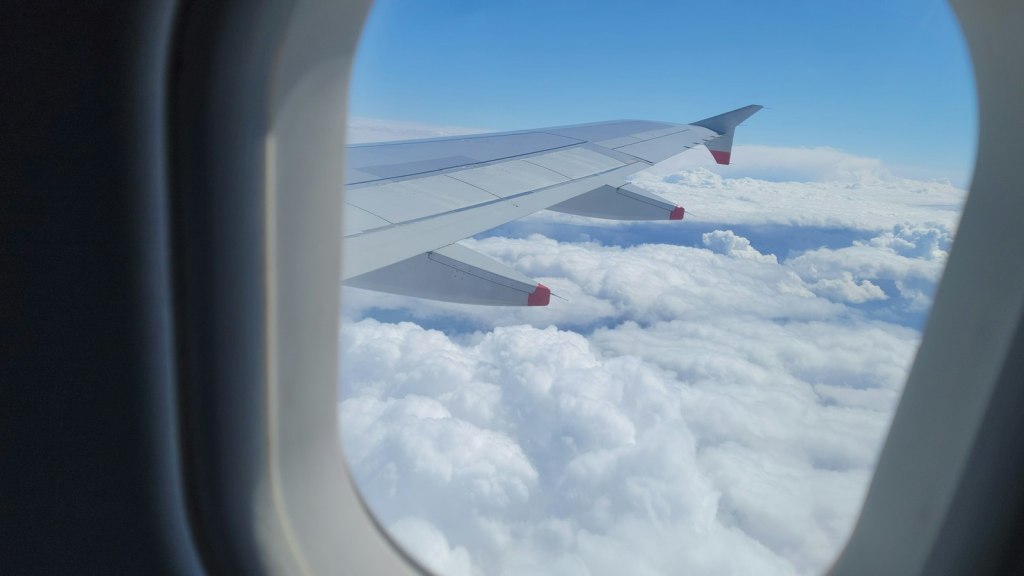
Why do airplane windows have a tiny hole? The airplane window hole is a small opening, usually called a bleed hole or breather hole, cut through the middle layer of a three-layer window. It lets cabin air reach the gap beside the middle pane, so the outer pane carries the pressure load, and it lets moisture escape so the glass stays clear. Below, we explain how the three panes work together, why the design is fail-safe, and why you sometimes see frost around the hole.
What is the hole, exactly? Why does it sit in the middle pane? What does it do at 35,000 feet? Each section answers one of those questions in turn.
What is the hole in an airplane window?
It is a deliberate, tiny opening in the middle of three panes. According to Afar and Mental Floss, a passenger window is built from an outer pane, a middle pane and an inner pane, and the bleed hole is cut through the middle one. Afar describes the inner layer as a scratch pane that protects the others from everyday wear, while Mental Floss describes it as the layer passengers actually touch.
Writers use several names for the same feature. You will see it called the airplane window tiny hole, the bleed hole or the breather hole. According to Fox News and Mental Floss, “bleed” and “breather” are interchangeable terms for it. The hole is not a flaw or a manufacturing leftover. It is part of the window design.
Why is there a small hole in an airplane window?
The short answer is pressure. The cabin is pressurized so that passengers can breathe comfortably, while the air outside at cruising altitude is far thinner, and that difference pushes outward on every window. According to Mental Floss and GlobalAir, the hole equalizes pressure between the cabin and the gap between the panes, so the outer pane bears the main pressure load.
Without the hole, the sealed gap would act like a pocket of trapped air. Mental Floss explains that this air would expand and compress as the plane climbs and descends, straining the inner layers. IFLScience makes the same point and adds that the stress could crack or warp the panes. The hole prevents this by letting the air in the gap follow the cabin as altitude changes.
How large is the pressure difference?
Airliners do not hold the cabin at sea-level pressure. Under the U.S. rule 14 CFR 25.841, published by Cornell Law School, cabin pressure altitude under normal operating conditions must be no more than 8,000 feet (about 2,400 meters). The aviation safety reference SKYbrary likewise says a pressurized cabin is normally kept at 8,000 feet or less. Meanwhile, Fox News and IFLScience both place typical cruising altitude at about 35,000 feet (roughly 10,700 meters). The window therefore has to hold back a large and constant difference between the cabin and the sky.
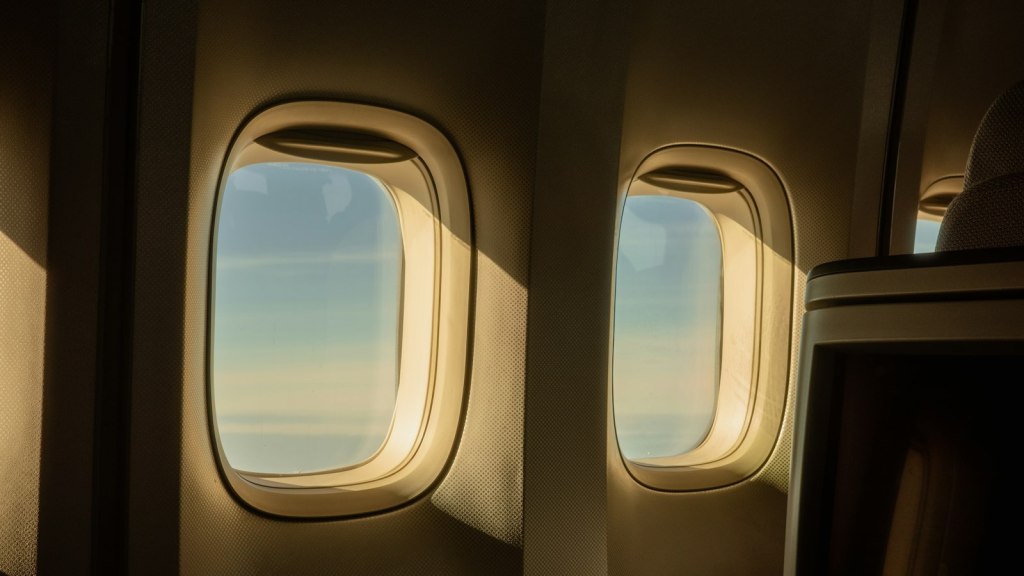
Why is the airplane window hole a fail-safe design?
Engineers plan for the unlikely case that one layer is damaged, and the extra pane is the backup. According to Afar and Mental Floss, the middle pane is there as a safeguard in case something goes wrong with the outer one. IFLScience adds that the middle pane is strong enough to take over the pressure load if the outer pane fails.
The hole supports that backup role. BGR explains that because the pressure between the layers has already been equalized, the middle pane would not face a sudden pressure change if the outer pane cracked. Afar quotes a pilot who says rapid descents and pressure changes could otherwise place significant stress on the windows, and Sciencing names rapid descents after a loss of cabin pressure as a moment when equalization matters most. In short, the tiny hole keeps the backup layer ready instead of leaving it to absorb a shock.
Why does the hole stop an airplane window from fogging?
Pressure is the main job, but the hole has a second one. Afar, Mental Floss, Fox News and BGR all say that it helps keep moisture from building up between the layers. Mental Floss notes that without the hole, moisture could be trapped between the panes and turn into fog. Because air can move through the opening, condensation has a way out, and the view stays clear even high above the clouds.
Why do you sometimes see frost around the hole?
Even a good vent does not remove every trace of moisture. Fox News says the hole reduces frost and condensation that could block the view, and IFLScience notes that a few ice crystals occasionally gather around the hole. So a small patch of frost near the hole does not mean the window has failed. It shows that the opening is dealing with moisture at the point where it is meant to.
Several of the same sources describe the effect of the hole rather than the exact physics of why frost forms right there. For that reason, we describe what is observed and avoid guessing at the mechanism. Readers who enjoy this kind of hidden engineering may also like our explanation of why airlines fly empty ghost planes and our look at how traffic lights detect motorcycles.
What was left out, and why?
We left out the diameter of the hole, because none of the sources we opened give a measurement. We also left out exact pressure figures in pounds per square inch, which appeared in only one source. Sources differ on which panes count as structural, with some describing the outer pane as the main load-bearing layer and others describing both the outer and middle panes as pressure-containing, so we kept to the points they agree on. Claims that the outer pane is designed to be the one that fails, that seal wear raises maintenance costs, and that clear windows help crews check for fire during evacuations each came from a single source, and we omitted them. Finally, we did not explain why frost forms specifically at the hole, because the sources do not explain it.
Frequently asked questions
What is the tiny hole in an airplane window called?
It is called a bleed hole or a breather hole. Fox News and Mental Floss both use the two names for the same opening.
Which pane has the hole?
The hole is cut through the middle pane of the three, according to Afar and Mental Floss.
Does the hole keep the window from fogging?
Yes. Afar and Mental Floss both say it lets moisture escape from between the panes, which prevents fog and keeps the view clear.
Why is there sometimes frost around the hole?
The hole reduces frost and condensation, but Fox News and IFLScience indicate that a few ice crystals can still gather around it from time to time.
Is the hole a safety feature?
Yes. Mental Floss and IFLScience describe it as part of a layered, fail-safe design in which the outer pane carries the load and the middle pane is the backup.
Now you know what the little hole beside your seat is doing, and if you enjoy answers like this, subscribe at https://www.youtube.com/@mrglobalrankss.
Related reading: Why do major airlines fly completely empty ghost planes? | How do traffic lights detect motorcycles?
Sources
- Afar: Why Is There a Tiny Hole in the Airplane Window?
- Mental Floss: Why Airplane Windows Have Tiny Holes
- Fox News: Why do airplane windows have tiny holes?
- BGR: Why Airplane Windows Have Tiny Holes
- IFLScience: Why Is There A Tiny Hole In Airplane Windows?
- GlobalAir: Why Do Airplane Windows Have Tiny Holes?
- Sciencing: The Unexpected Reason Airplane Windows Have Those Tiny Holes
- Cornell Law School Legal Information Institute: 14 CFR 25.841, Pressurized cabins
- SKYbrary: Cabin Altitude


Leave a Reply