
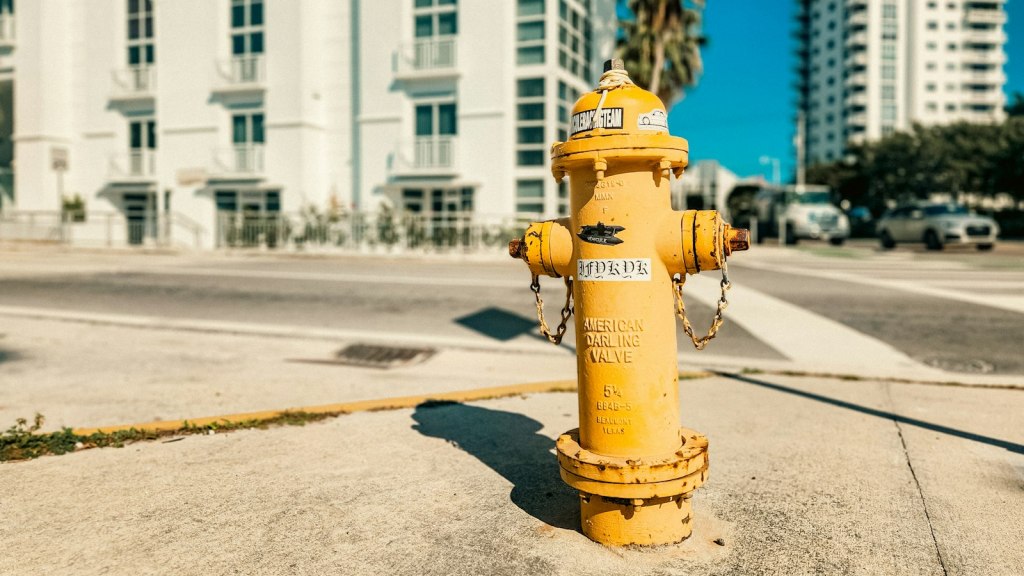
Why are fire hydrants different colors? Fire hydrants are painted in different colors because each color carries information. Under the voluntary fire hydrant color code in NFPA 291, the top of the hydrant (the bonnet) and the nozzle caps show how much water the hydrant can deliver, while the body color is usually chosen by the local water utility or fire department. Colors on a hydrant are therefore a quick message to firefighters, not decoration.
This article explains the fire hydrant colors and what they mean, including the flow ranges tied to each cap color, the role of the body color, the special color used for non-drinking water, and why practice varies from one U.S. community to the next.
What is the fire hydrant color code?
The fire hydrant color code most often cited in the United States comes from NFPA 291, a recommended practice from the National Fire Protection Association. According to the University of Tennessee Municipal Technical Advisory Service and Mueller Co., the standard sets colors for the bonnet and nozzle caps based on the flow a hydrant can supply, measured in gallons per minute (gpm) at a residual pressure of 20 pounds per square inch (psi), which is about 138 kilopascals.
The code is a recommendation, not a law. Family Handyman describes NFPA 291 as guidance rather than law, and Mueller Co. states that no federal law mandates hydrant colors. Many communities follow the scheme closely, others adapt it, and some use their own systems, and the same color can occasionally mean something slightly different from one place to another.
What do fire hydrant colors mean for water flow (gpm)?
The cap colors rank a hydrant by the water it can deliver, and the NFPA 291 flow classes are consistent across sources. The National Fire Sprinkler Association and Autodesk both list the same four tiers, and the University of Tennessee Municipal Technical Advisory Service and Mueller Co. give the same ranges in a table.
Blue (Class AA): 1,500 gpm or more, roughly 5,680 liters per minute or more. Some sources call this color light blue. Green (Class A): 1,000 to 1,499 gpm, or roughly 3,785 to 5,675 liters per minute. Orange (Class B): 500 to 999 gpm, or roughly 1,890 to 3,780 liters per minute. Red (Class C): fewer than 500 gpm, or less than about 1,890 liters per minute.
In plain terms, the higher the flow, the more useful the hydrant is for a large fire. JEA, a Florida utility, labels blue as very good flow, green as good for residential areas, orange as adequately marginal and red as inadequate, and Mueller Co., a hydrant manufacturer, makes the same point when it says the colors let crews quickly find a water source that can meet their needs. This is also why searches for fire hydrant colors and gpm lead to the same table: the cap color is a shorthand for the flow rating.
Why does the hydrant body have its own color?
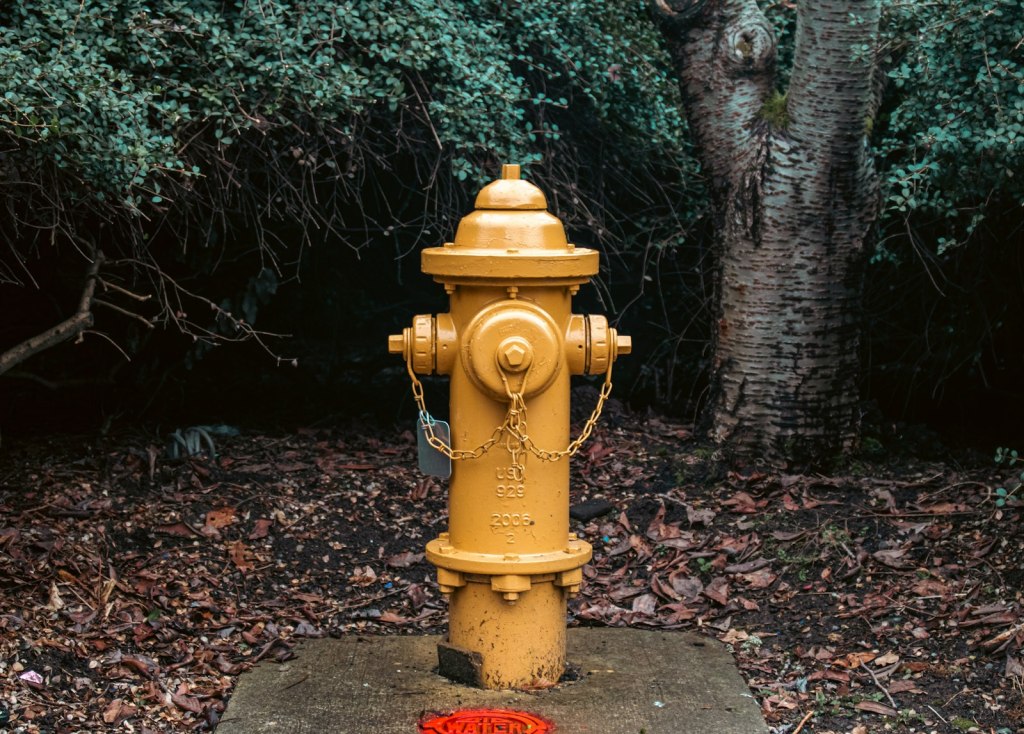
The body, also called the barrel, follows a separate logic. According to the University of Tennessee Municipal Technical Advisory Service and Mueller Co., the barrel of a municipal hydrant should be chrome yellow unless the jurisdiction has adopted another color, and the National Fire Sprinkler Association and Family Handyman likewise note that hydrants commonly leave the factory chrome yellow. Many communities repaint the body in a locally chosen color, and Family Handyman adds that some cities do so for appearance or branding, which is why crews need to know local conventions.
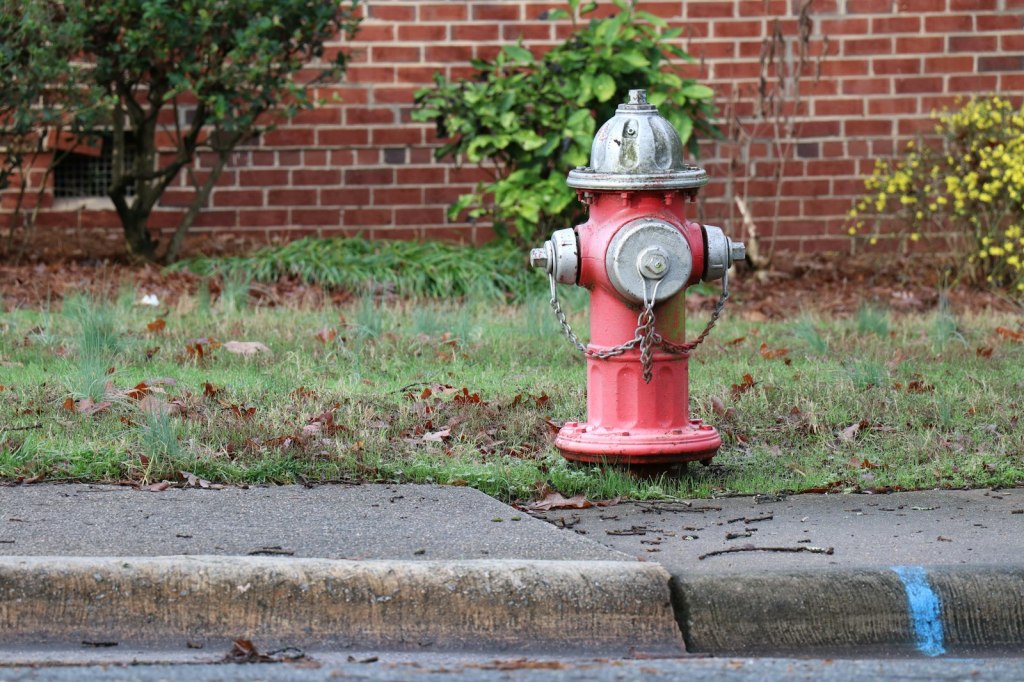
Body color can also indicate who owns the system. Hydrants on private systems are commonly painted red, according to the University of Tennessee Municipal Technical Advisory Service and Mueller Co. This explains why the classic red hydrant is not always the municipal one, and why a red body does not by itself say anything about flow. That information, where the code is followed, is carried by the cap.
What does a violet or purple hydrant mean?
A violet, or light purple, hydrant is supplied by a non-potable source, meaning water that is not safe to drink. The University of Tennessee Municipal Technical Advisory Service states that hydrants supplied by non-potable sources should be painted violet, and Mueller Co. describes violet as the color for a reclaimed, non-potable system. Today I Found Out adds that OSHA recommends violet for any non-potable source. The color works as a warning that the water is not intended for drinking.
Why does hydrant color matter to firefighters?
Speed and certainty are the reasons. According to Family Handyman and JEA, the colors give firefighters an immediate visual indication of available flow, which helps them choose a suitable hydrant quickly, including when smoke limits visibility or digital tools are unavailable. Mueller Co. and Today I Found Out make the same case, noting that crews need a source that can supply their needs.
Flow is not the only factor. Today I Found Out explains that hydrants are assumed to provide at least 20 psi and that NFPA recommends stenciling a rating on hydrants that fall below that level or run at extremely high pressure, a point also made by Family Handyman. Both sources also mention a bag placed over a hydrant, which signals that it is out of service or defective and should not be used. Reflective paint is another common feature, since Autodesk and Family Handyman both note that visibility at night matters.
Who decides the colors, and does NFPA 291 apply everywhere?
Local authorities decide, which is the most important caveat for anyone reading a hydrant. Mueller Co. notes that municipalities commonly follow NFPA 291 but many use their own systems, and the National Fire Sprinkler Association says that color consistency varies widely by locality and jurisdictional preference. Family Handyman adds that state and local governments set their own requirements.
For residents, the practical advice is simple. Treat the NFPA 291 cap colors as a useful general guide, but do not assume that a hydrant in another town follows the same pattern. The local fire department or water utility is the best place to confirm what a particular color means in your area. Readers who enjoy everyday infrastructure questions may also like our articles on why U.S. highway exit ramps are cloverleaf shaped and on how traffic lights detect motorcycles.
What was left out, and why?
Several details were left out because only one source supported them or because sources conflicted. The common claim that black marks an inoperable hydrant appeared in only one source we could confirm and is therefore omitted. Specific local schemes, such as one Florida utility using chrome silver bodies and one Florida county reversing the usual red and yellow ownership colors, each rested on a single source and are not presented as fact. A reported 2005 poll on how many fire departments follow the color code, a claim that most municipalities do not follow NFPA 291, and the use of blue pavement reflectors beside hydrants were each supported by only one source or by none we could open, and are also left out.
Frequently asked questions
What is the fire hydrant color code?
It is the NFPA 291 recommendation that colors the bonnet and caps by flow: blue for 1,500 gpm or more, green for 1,000 to 1,499, orange for 500 to 999 and red for under 500. It is voluntary and local practice varies.
What do the different fire hydrant colors mean?
Cap colors usually show flow capacity, body colors often show ownership or local style, and violet indicates non-potable water. Because local rules differ, the local fire department is the final authority.
What do NFPA fire hydrant colors say about water pressure?
The flow classes are measured at a residual pressure of 20 psi (about 138 kPa). Hydrants that fall below that level, or run at extremely high pressure, may carry a stenciled rating.
Are all fire hydrants painted the same way in the United States?
No. The standard is a recommendation, and municipalities may adopt their own colors for bodies and sometimes for caps.
Why are some hydrants red and others yellow?
Chrome yellow is the recommended body color for municipal hydrants, while red is commonly used for private systems. Many communities choose their own body color, and either can appear on a public street.
Fire hydrant colors are a small system that quietly helps firefighters make fast decisions, and you can find more clear explanations on our channel at https://www.youtube.com/@mrglobalrankss. Subscribe there for new videos.
Related reading: Why U.S. highway exit ramps are cloverleaf shaped and How traffic lights detect motorcycles.
Sources
- National Fire Sprinkler Association: Why aren’t all Fire Hydrants Red?
- Autodesk: How do fire hydrants work, and why are they sometimes different colors?
- University of Tennessee MTAS: Marking all fire hydrants
- Family Handyman: Fire hydrant color meaning
- JEA: Fire hydrant colors
- Today I Found Out: Fire hydrant colors actually mean something
- Mueller Co.: Painting fire hydrants (white paper)


Leave a Reply