
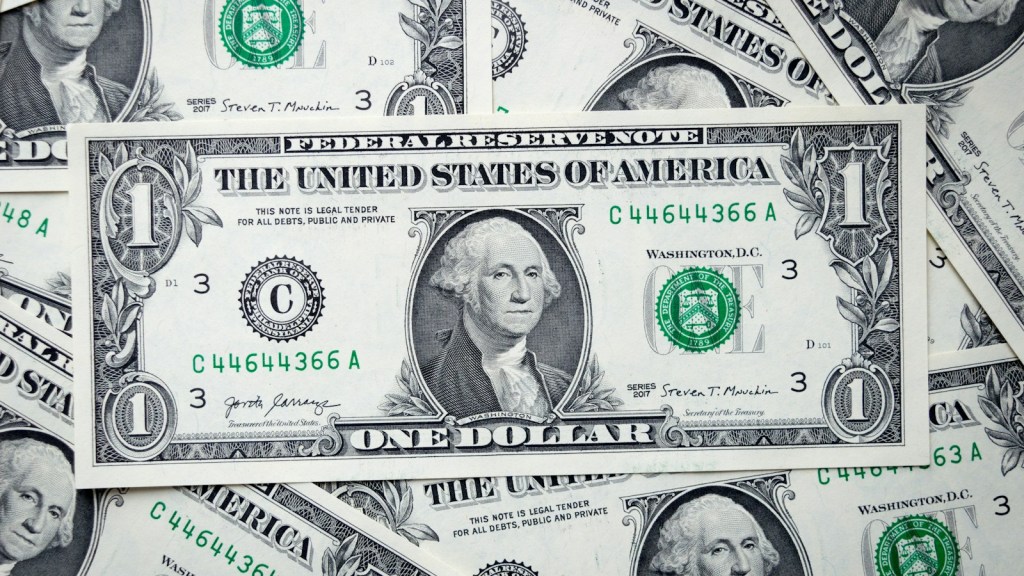
Why are U.S. dollars green? The back of the first federal paper money, the Demand Notes of 1861, was printed in green ink, and the notes were nicknamed “greenbacks.” The government kept the color because the pigment was plentiful, held up well and suggested stability. The original reason for choosing green is less certain, and the most common explanation is that it made notes harder to copy with early photography. This article explains the history in order, covers how modern bills add other colors, and answers a few common questions, including what a star on a bill means.
Why are dollar bills called greenbacks?
The name comes from the Civil War. According to the Federal Reserve Bank of Atlanta and Wikipedia’s entry on the greenback, Demand Notes were first issued on August 10, 1861, to help finance the war, and they paid no interest. The Federal Reserve Bank of New York describes them as the first general circulation of federal paper money.
The reverse side of the notes was printed in green ink. Wikipedia and History.com both report that this is why the notes were dubbed greenbacks. The nickname did not stay with one kind of note. According to Wikipedia’s entry on the Demand Note and the Bank of Canada Museum, it later spread to other U.S. paper money, and it remains a common word for dollars today.
Why was green ink chosen in 1861?
The most widely repeated explanation is anti-counterfeiting. History.com and Mental Floss both say the green ink was meant to frustrate photographic copying, because the cameras of the era recorded only black and white. A colored feature, in theory, would lose its distinctiveness in a photograph. The New York Fed presents the idea more cautiously, noting that the Bureau of Engraving and Printing says it is “believed” to be the reason. That wording is worth keeping in mind, because the sources describe a likely motive and not a documented decision.
A second, more specific thread concerns the ink itself. Coin World and the Bank of Canada Museum describe a chromium-based green ink developed in 1857 by Dr. Thomas Sterry Hunt, a professor at Laval University in Quebec. The Montreal City Bank, whose notes were being counterfeited, had asked for it, and the ink was mixed with linseed oil. Because Hunt was not a British subject, a chemist named George Matthews filed the patent for him. The Coin World article notes that Demand Notes carry a patent date of June 30, 1857, which refers to this kind of ink. Money Digest finds Hunt’s account more credible than other stories about where the ink came from.
The ink was not a perfect defense. Both Coin World and the Bank of Canada Museum report that in August 1857 the executive committee of the Association of Banks for the Suppression of Counterfeiting decided not to recommend it to member banks, and that other chemists found ways to remove it. Even so, as the Bank of Canada Museum explains, U.S. bank note printers still used the ink on the government’s Civil War notes, most notably on the back.
One popular claim should be treated with caution. Mental Floss says the ink was “said to be made from palm juice,” and Money Digest notes that historians disagree on the ink’s origin, preferring Hunt’s chromium-based account. In other words, the palm juice story is a disputed claim and not an established fact.
Why are dollar bills still green today?
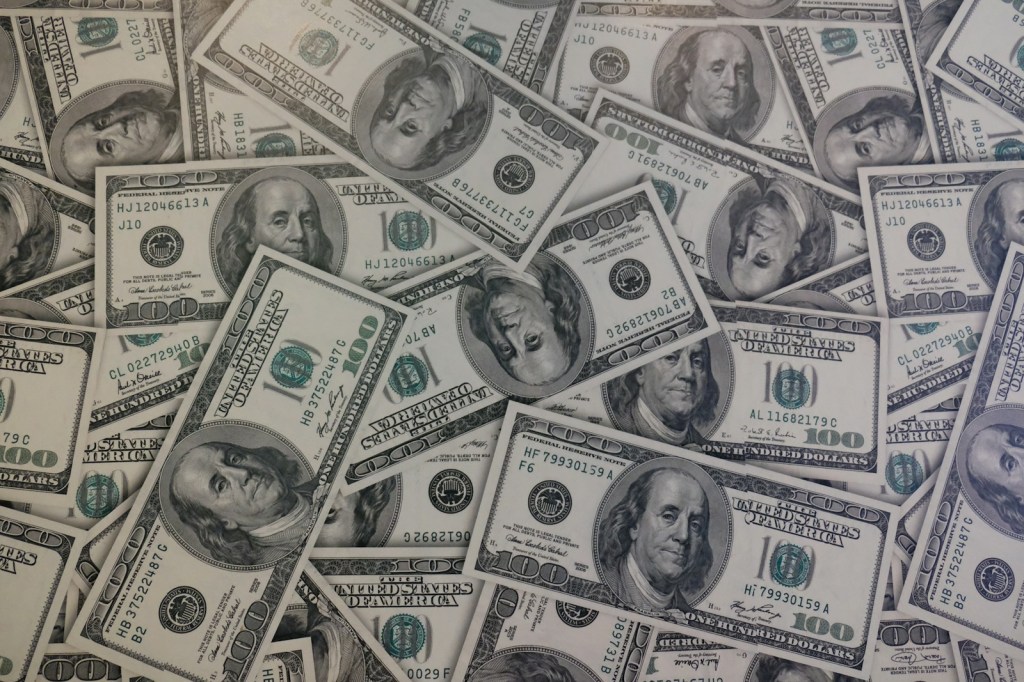
In 1929 the government made all U.S. paper money smaller and standardized the designs. History.com and Mental Floss both say the change was meant to cut manufacturing costs. The smaller notes kept the green ink, and the reasons are well documented. According to the New York Fed, which cites the Bureau of Engraving and Printing, the green pigment was readily available in large quantity, it resisted chemical and physical change, and the public psychologically associated the color with the strong and stable credit of the government. Money Digest and Mental Floss give the same three reasons, in slightly different words.
These reasons explain why a tradition that began in a war became a standard. A bill that circulates for years needs ink that does not fade or react easily. A currency also benefits from being instantly recognizable. Readers interested in how other lasting features of the country trace back to historical decisions may enjoy the site’s article on why there are 50 states.
Are all U.S. bills still only green? Why are 10 dollar bills yellow?
No. Late in the twentieth century the government began adding new defenses against counterfeiting. The Federal Reserve Board and uscurrency.gov both describe a watermark, a security thread and color-shifting ink on the 2003 $20 note, and the Federal Reserve says these were carried over from features introduced in the late 1990s. Color was added on top of them. The redesigned $20 note, introduced in 2003, added subtle green, peach and blue background tones, according to the Federal Reserve Board, uscurrency.gov and CBS News.
The $10 note followed in 2006. The Bureau of Engraving and Printing and uscurrency.gov both say it has subtle background colors in shades of orange, yellow and red, which explains the question of why 10 dollar bills look yellow. The bill is not printed solid yellow, since the colors are faint backgrounds behind the usual design. Both sources also describe a color-shifting numeral in the lower-right corner that changes color when the note is tilted.
Officials are careful to say that color is not the main protection. The Federal Reserve Board, uscurrency.gov and CBS News each state that people should not rely on color alone to check whether a note is genuine. The real tests are features such as the watermark, the thread and the color-shifting ink. Hence the green on a bill is mostly a matter of tradition and identification, and not a security guarantee.
Why are some 100 dollar bills green?
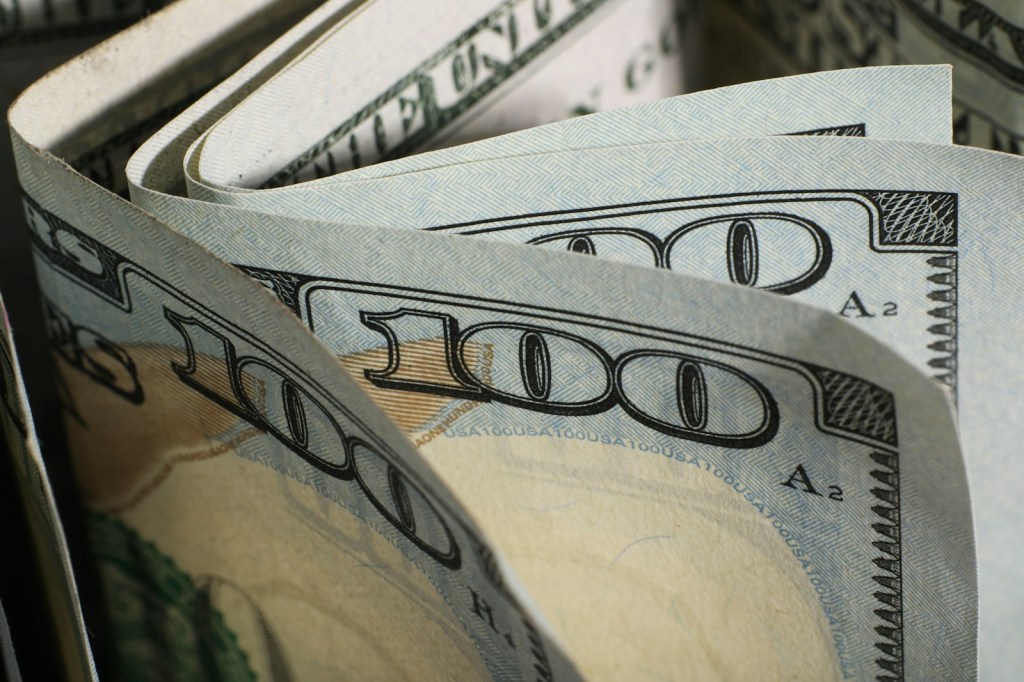
The Federal Reserve began supplying a redesigned $100 note on October 8, 2013, according to the Federal Reserve Board. It added a blue 3-D security ribbon with images of bells and 100s, along with a color-changing bell in an inkwell. uscurrency.gov confirms both features. The earlier design does not have them, and the two versions look different side by side; both may still turn up in a wallet.
What does a green star on a dollar bill mean?
A star at the end of a serial number marks a replacement note, according to uscurrency.gov and APMEX. APMEX adds that the Bureau of Engraving and Printing issues these to replace error or faulty notes, and that they are printed in small numbers, which lets the government track how many notes it has issued. The star has nothing to do with why the bill is green. Collectors sometimes pay more than face value for star notes, but according to APMEX, modern examples are usually worth about face value or slightly more.
What was left out, and why?
Several details appeared in only one source we could open, or were described differently by different sources, so they were left out. These include the claim that the American Bank Note Company printed every Demand Note, the names of individual engravers and Treasury officials, and any mention of iron-based (ferric) pigments. The statement that green ink could not be removed without disturbing the black ink was also left out, because only one source gave it. Details such as the exact denominations and total value of Demand Notes, the later Legal Tender Act, the colors of the $50 note, the color of the star on a star note, the cost of printing a bill and the share of counterfeits made with digital tools were likewise left out. The palm juice story is mentioned above only as a disputed claim, and the true origin of the first green ink may never be settled with certainty.
Frequently asked questions
Why are dollar bills green?
The first federal notes of 1861 had green ink on the back, and the government kept the color after 1929 because the pigment was plentiful, durable and associated with stable credit.
Why are dollar bills called greenbacks?
The nickname comes from the green reverse of the Civil War Demand Notes, and it later spread to other U.S. paper money.
Why are 10 dollar bills yellow?
They are not solid yellow. The 2006 design adds faint background colors in shades of orange, yellow and red to the usual design.
Why are some 100 dollar bills green?
It depends on the design. The 2013 note adds a blue 3-D security ribbon and a color-changing bell in an inkwell, while the earlier design does not.
What does a green star on a dollar bill mean?
A star at the end of the serial number marks a replacement note, issued to take the place of a faulty one.
Thank you for reading, and you can subscribe to our channel at https://www.youtube.com/@mrglobalrankss for more explanations like this.
Related reading: Why are there 50 states? and The oldest city in the U.S.
Sources
- Federal Reserve Bank of New York: Historical Echoes, It’s Not Easy Being Green
- Federal Reserve Bank of Atlanta: Battle of the Bills, Demand Note
- History.com: Why is U.S. paper money green?
- Mental Floss: Why Is U.S. Currency Green?
- Money Digest: The Real Reason US Money Is Green
- Coin World: When green ink served as an anti-counterfeiting device
- Bank of Canada Museum: The Canadian roots of the greenback
- Wikipedia: Greenback (1860s money)
- Wikipedia: Demand Note
- Federal Reserve Board: 2003 press release on the new $20 note
- uscurrency.gov: New $20 note features
- CBS News: Dash of Color Added to U.S. Cash
- Bureau of Engraving and Printing: Redesigned $10 note starts circulating today
- uscurrency.gov: Archived history of currency redesigns
- Federal Reserve Board: October 8, 2013 press release on the redesigned $100 note
- uscurrency.gov: Banknote identifiers and symbols
- APMEX: What is a star note?


Leave a Reply