
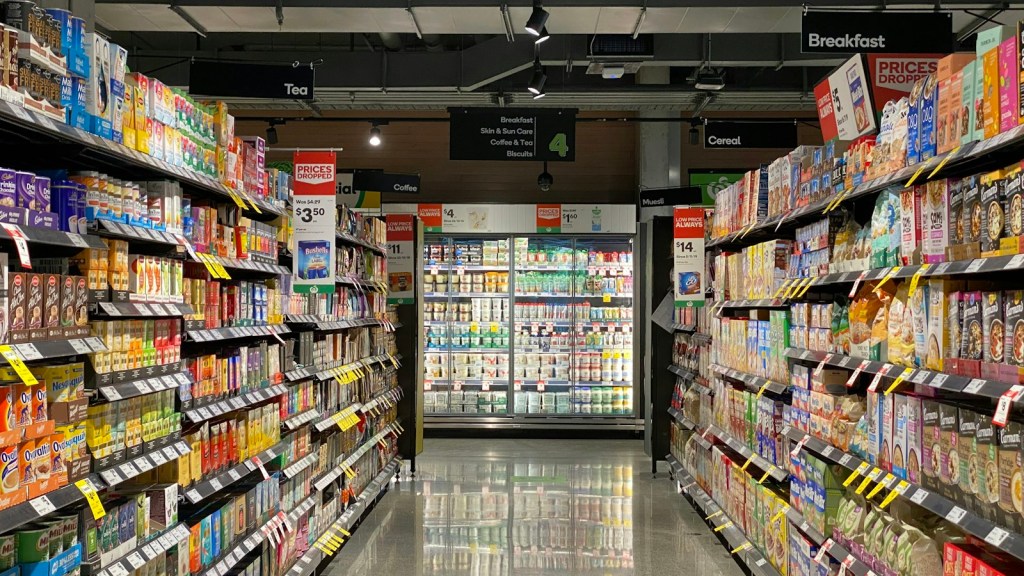
Why do grocery stores put milk in the back? Most likely for more than one reason. Milk must stay cold from the dairy to the shopper’s cart, and the refrigerated trucks, walk-in coolers and stocking areas of most stores sit at the back, which makes the back wall a practical home for it. Retailers also acknowledge a second benefit: a staple placed far from the entrance draws shoppers past other products, although no study has measured how much that adds to sales. This article looks at the question many people type as “why is milk in the back of the store,” weighs the competing explanations, and uses what is known about grocery store layout to explain why produce, bakery items and candy are treated differently.
The shopper-flow theory: does a long walk sell more groceries?
The most familiar explanation is that stores place the items almost everyone buys far from the door, so that shoppers must pass many other products on the way. Virginia Weber, a marketing lecturer at Deakin University, describes essentials such as meat and milk as being placed at the back so that shoppers walk past other items to reach them, according to Deakin University and Virginia Cooperative Extension, which lists dairy, eggs and meat along the back wall, farthest from the entrance.
Some people in the industry say the same. Rob Olsen, a dairy buyer for BJ’s Wholesale Club, told reporters that one goal is “building the basket,” meaning drawing shoppers past other goods, as reported by NPR’s Planet Money and Mental Floss. Food writer Michael Pollan has called this explanation plausible and suspects that stores aim to influence shoppers without their noticing, according to NPR and Mental Floss.
The cold-chain explanation: refrigeration and dairy deliveries
The competing explanation is logistics. Milk and other dairy products need an unbroken chain of refrigeration from the processing plant to the shelf, usually called the cold chain, and delivery trucks generally unload at the back of a building. Economist Russ Roberts argues that milk arrives in refrigerated trucks at the back loading dock and goes into a large refrigerated room there, as described by the Foundation for Economic Education and NPR’s Planet Money. Pollan acknowledged the cold chain as a likely factor in an NPR interview, according to Mental Floss and NPR.
The temperature requirement behind it is real. Guidance from Clemson Cooperative Extension and the Connecticut Department of Agriculture says milk should be kept below 40°F (4°C), and both explain that bacteria in milk multiply faster as it warms. Olsen cited keeping milk cold during delivery alongside the shopper-flow reason, according to Planet Money and Mental Floss. Our article on what happens to unsold cruise ship food shows how much planning perishable food requires in another setting.
Walk-in coolers and the back wall: what the equipment suggests
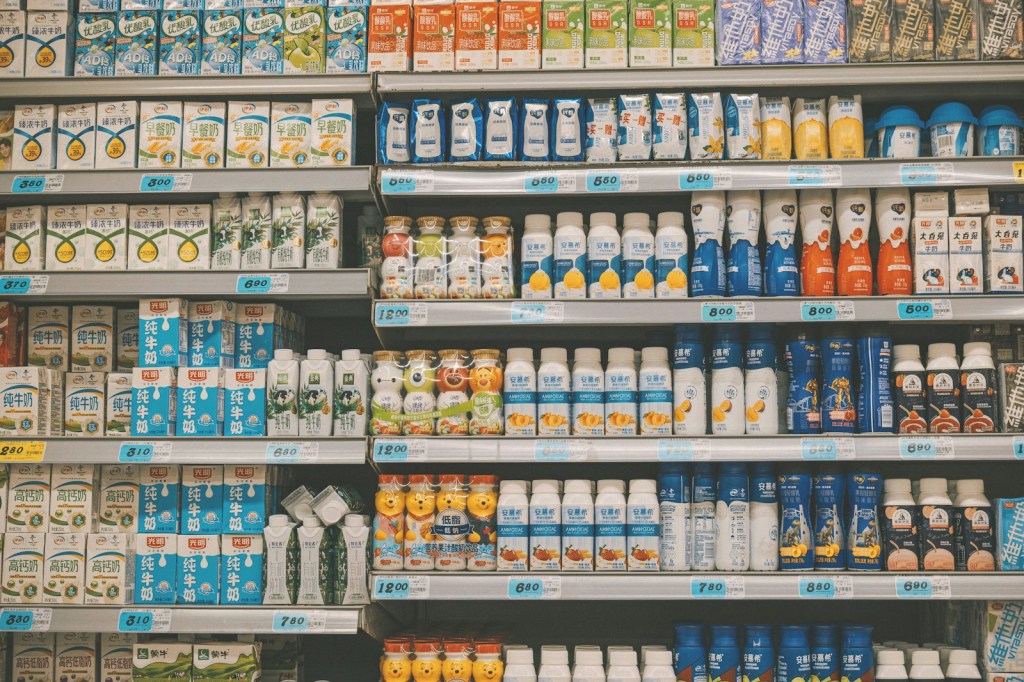
In many supermarkets the dairy case is the front of a larger cold room. The equipment supplier KPS Global says dairy walk-in coolers are primarily positioned at the back of the store, with employee access for stocking and glass reach-in doors for customers. Consumerist, summarizing the Planet Money reporting, says many stores place dairy coolers at the back or side next to a walk-in cooler, so milk can move from a refrigerated truck to the cooler and stay cold until it reaches the cart.
Roberts adds a cost argument: moving milk to the front would add expense, and competition among stores pushes them toward layouts that customers will accept, according to the Foundation for Economic Education and Planet Money. Pollan disagrees about how strongly competition shapes layouts, as both of those sources report.
Milk is not always at the back. Choice, an Australian consumer organization, says some supermarkets keep a limited selection of bread and milk near the front for quick trips and a fuller range at the back. Consumerist likewise notes that some chains keep a small dairy cooler at the front for shoppers in a hurry.
What do retail researchers actually know about grocery store layout?
Tracking studies show that shoppers do not walk a store in an orderly way. A study of cart movements by Wharton School researchers, reported by Knowledge at Wharton, and shopper research by Herb Sorensen, reported by Phys.org, both found that shoppers favor the store’s outer edge, often called the “racetrack,” and make short trips into aisles rather than walking each one in full. Designers in other fields also shape how people move through space; our article on why U.S. highway exit ramps are cloverleaf shaped is one example.
The direct test of the milk theory has not been done. The Wharton study examined travel paths, not purchases, and one of its authors raised the question of whether placing popular items such as milk at the back leads to more impulse purchases as an open one, according to Knowledge at Wharton. Mental Floss reached a similar view, saying the evidence on both sides is anecdotal and no empirical study is cited. The Planet Money episode, which tested both theories mainly through interviews, ended by calling the debate a draw, as NPR and Mental Floss both report.
Even consultants disagree with the common practice. Burt Flickinger, a supermarket consultant, told Planet Money that he advises stores to put milk at the front, yet they keep it at the back and cite delivery, stocking and cost, according to NPR and Mental Floss. The honest summary is that both explanations are credible, and no public research separates their effects.
Why are produce, bakery items and candy placed differently?
Items that do not need a cold room follow a different logic. Virginia Cooperative Extension describes flowers near the entrance, produce just beyond them and near the bakery to signal freshness, a bakery in a corner past the entrance, and candy and magazines near the checkouts, which it calls the store’s most profitable area. Choice reports that produce is placed first to put shoppers in a good mood, citing Jana Bowden of Macquarie University, who suggests that buying healthy food early can give shoppers a kind of approval to buy snacks later.
Deakin’s Weber says pleasant scents near the entrance can lift mood and that chocolate sits at the checkout because shoppers waiting in line are using up limited self-control. These are descriptions of retail practice and intent. The sources do not present test results for each effect, so they are best read as the industry’s reasoning.
Staples are often kept apart, too. Choice says bread, milk and eggs are frequently separated so shoppers see more products, and Weber describes eggs as being placed in an out-of-the-way spot for the same reason. End-of-aisle displays are another feature: Sorensen’s research, as reported by Phys.org, says they see the most foot traffic, and Virginia Cooperative Extension says manufacturers pay for them to feature new or popular products.
What was left out, and why?
Several claims were dropped because only one source supported them or because the support was weak. These include Pollan’s statements about the share of unplanned purchases and about store music and blink rates; a remark by Roberts that milk loses about a day of shelf life for each degree it warms, which he did not source; a reader comment that refrigerant safety determines the position of coolers; the claim that convenience stores place milk at the back but soda at the front; statistics that few shoppers walk every aisle and that a store carries about 30,000 items; a claim that end-of-aisle displays sell up to eight times better; a research figure on impulsive decisions after 23 minutes of shopping; and the idea that stores omit windows and clocks. Details of the Wharton cart-tracking method and the claim that milk has been at the back for 70 to 80 years were also set aside. The legal temperature limit for milk was left out because the sources give different figures, 45°F (7°C) in one and 40°F (4°C) in another, so only the shared guidance appears above.
Frequently asked questions
Is milk placed at the back to make me buy more?
It may be one reason. A BJ’s dairy buyer cited “building the basket,” according to NPR and Mental Floss, but both note that no study has tested how much the placement adds to sales.
What temperature should milk be kept at?
Below 40°F (4°C), according to Clemson Cooperative Extension and the Connecticut Department of Agriculture. Both say bacteria multiply faster as milk warms.
Is milk in the back of every grocery store?
No. Choice and Consumerist both say some stores keep a limited supply of milk near the front for quick trips.
What is the “racetrack” in a grocery store layout?
It is the store’s outer loop, which shoppers tend to use as their main route while dipping into aisles, according to Knowledge at Wharton and Phys.org.
Why are eggs and milk often far apart?
Retail experts quoted by Choice and Deakin University say staples are often separated so that shoppers see more products on the way.
The placement of milk is best understood as a layout shaped by both cold storage and selling, with the weight of each still unsettled. If you enjoy explainers like this one, subscribe to Mr Global Rankss on YouTube at https://www.youtube.com/@mrglobalrankss.
Related reading: What happens to unsold cruise ship food, Why airlines fly empty ghost planes and Why U.S. highway exit ramps are cloverleaf shaped.
Sources
- NPR: Planet Money Episode 555, Why Is The Milk In The Back Of The Store?
- NPR: Everyone goes to the store to get milk, so why is it way in the back? (transcript)
- Mental Floss: Why grocery stores put dairy in the back
- Foundation for Economic Education: Why is milk in the back of the store?
- Consumerist: Everyone knows why milk is in the back of the grocery store
- Knowledge at Wharton: Tag team, tracking the patterns of supermarket shoppers
- Phys.org: Shoppers’ movements in supermarkets (June 2018)
- Virginia Cooperative Extension: Grocery store layout (AAEC-190)
- Deakin University: How supermarkets encourage you to buy more
- Choice: Supermarket psychology, tactics to get you to spend more
- KPS Global: Common grocery store coolers and freezers
- Clemson Cooperative Extension: Safe handling of milk and dairy products
- Connecticut Department of Agriculture: Milk storage recommendations


Leave a Reply