
Is there any land in the U.S. that is not owned? The sources reviewed for this article describe no land in the U.S. that belongs to no one. Land is held by private owners, state governments, tribes or the federal government. When people ask about land that is “not owned,” they usually mean land that is not privately owned, and the largest share of that is federal public land, which the government manages on behalf of the public. This article explains how much land the federal government holds, which states have the most of it, whether free land can still be claimed, and which popular details could not be confirmed. The figures come from the Congressional Research Service, Ballotpedia, the Bureau of Land Management and the National Archives.
Is any land in the U.S. truly unowned?
Not according to the material reviewed here. Neither the Congressional Research Service nor Ballotpedia identifies any territory in the U.S. without an owner. Both instead describe land in terms of who holds it, and the largest single holder is the federal government. That is why the question has a more useful answer than a simple yes or no. Land that looks empty, remote or unused is still held by someone, even when no one lives on it, farms it or builds on it.
The same is true of land that carries no fence and no sign. A wide desert valley, a mountain slope or a stretch of forest may be open to visitors, but open does not mean ownerless. In most of these places the owner is a public agency, and the public is allowed to enter under rules that agency sets.
How much land in the U.S. does the federal government own?
Roughly 640 million acres, or about 28 percent of the country. The Congressional Research Service reports that figure from data current to September 30, 2024, out of about 2.27 billion acres in total. Ballotpedia gives the same approximate numbers and adds that the federal government manages this land on behalf of the American people.
The Bureau of Land Management is the largest single manager. The Bureau of Land Management says it oversees about 245 million surface acres, which it describes as about one tenth of the nation’s land base, and the Congressional Research Service lists a very similar total of about 244 million acres. The remainder is spread among other agencies, including the Forest Service, the Fish and Wildlife Service, the National Park Service and the Department of Defense.
Which states have the most federal land?
The largest federal shares are in the West. The Congressional Research Service ranks Nevada, Utah, Idaho and Alaska among the states with the highest portion of federal land, and Ballotpedia places Nevada at the top as well. In Nevada, federal agencies hold roughly 80 to 85 percent of the land, depending on which year’s data is used.
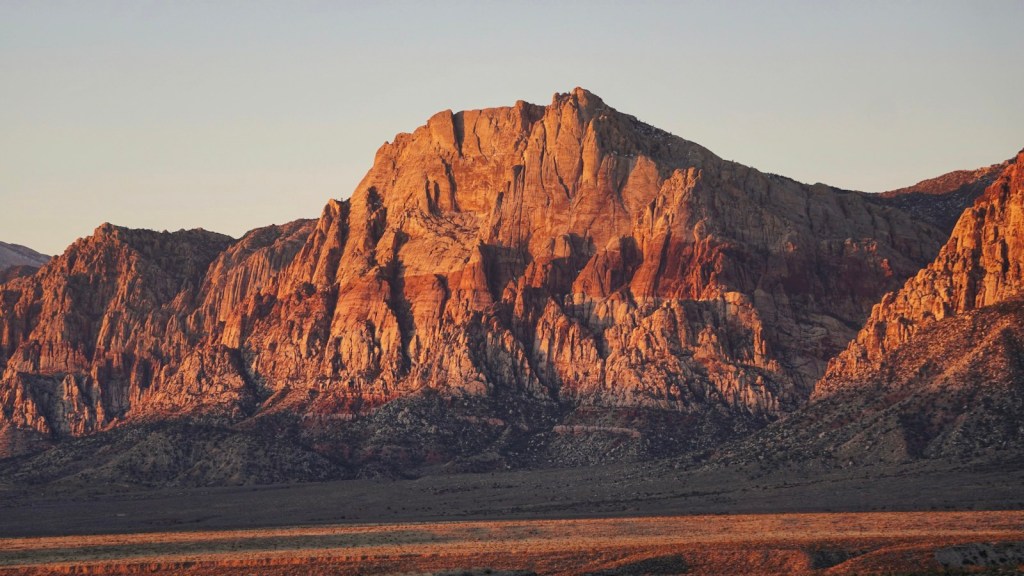
That helps explain why the idea of “unowned” land is so common in places such as Nevada. A traveler can drive for hours through country with no town, farm or fence, and most of it belongs to the public rather than to a private landowner. The photograph at the top of this page shows Red Rock Canyon National Conservation Area, one such example in Nevada.
Can anyone still claim free land through homesteading?
No. Homesteading, the process by which settlers could claim federal land by living on and improving it, ended nationally in 1976 when Congress passed the Federal Land Policy and Management Act. The Bureau of Land Management’s history of homesteading gives October 21, 1976 as the date, and notes that Alaska continued until 1986. The National Archives and the National Park Service both describe Alaska as the last place where homesteading was possible.
This means the idea of free land, available to whoever arrives first, belongs to history. Anyone who wants land today buys it from a private owner or, in limited cases, obtains rights to use public land through the agency that manages it.
What does “land not owned” usually mean?
In everyday speech, “not owned” usually means “not owned by a private person.” Under that meaning, the answer is yes: about 28 percent of the country is public land held by the federal government, according to both the Congressional Research Service and Ballotpedia. The key difference is that public land has an owner, and the owner is the federal government acting for the public. Rules about camping, grazing, mining, hunting and building on it come from the agency in charge, which is why the answer to “can I use this land?” varies from one place to the next.
It is also worth separating “owned by the government” from “owned by no one.” The first means a recognized holder with legal responsibilities. The second would mean land with no holder at all, and the sources reviewed here describe nothing of that kind.
What was left out, and why?
Several figures were dropped because only one source supported them. They include the amount of land held in trust for tribes, the share of the country that was federally owned in 1867, a claim about which lands were meant to stay federal under the 1976 law, and the name and date of the last person to receive a homestead patent in Alaska. The exact percentage for Nevada also differs between sources and years, so this article gives a range. The state with the smallest federal share was left out for the same reason. These details may be accurate, but none could be confirmed by a second source here.
Frequently asked questions
Is all land in the U.S. owned?
The sources reviewed describe all land as held by private owners, governments or tribes, and none identifies land without an owner. See the Congressional Research Service and Ballotpedia.
How much land in the U.S. is owned by the government?
About 640 million acres, or roughly 28 percent, is federal land, according to the Congressional Research Service and Ballotpedia.
Can you still homestead in the U.S.?
No. The Bureau of Land Management says homesteading ended in 1976, and the National Archives describes Alaska as the last place it was possible.
Which state has the most federal land?
Nevada has the highest share, roughly 80 to 85 percent depending on the year, according to the Congressional Research Service and Ballotpedia.
Thanks for reading. If you enjoy clear explanations of how the world works, subscribe on YouTube at https://www.youtube.com/@mrglobalrankss.
Related reading: Why does Michigan have an Upper Peninsula? and What is the tallest waterfall in the U.S.?


Leave a Reply