
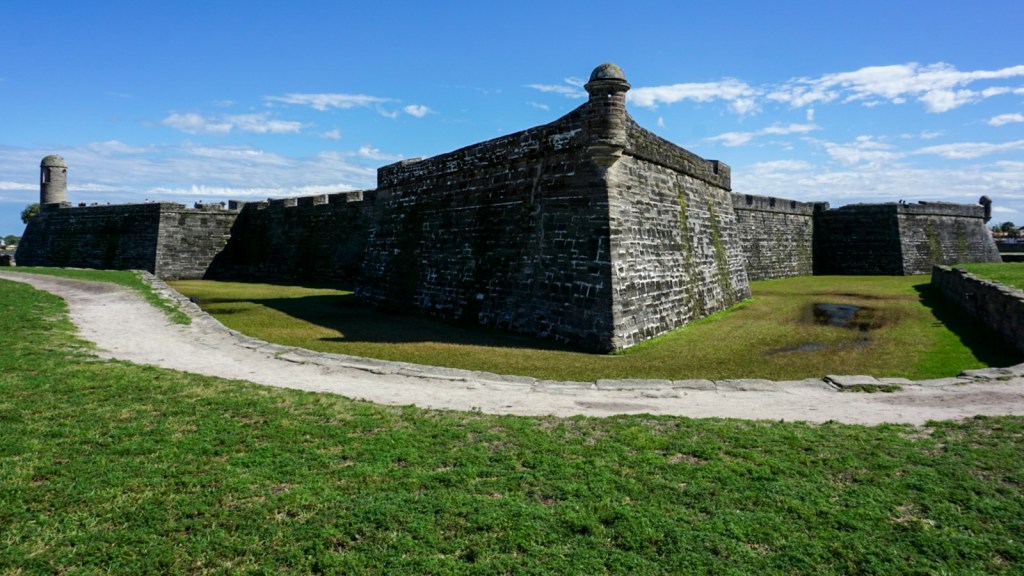
What is the oldest city in the U.S.? The usual answer is St. Augustine, Florida, founded by Spain on September 8, 1565. It is described by the National Park Service as the oldest continuously occupied European settlement in the continental United States, and it was established 42 years before Jamestown and 55 years before Plymouth. The full answer is a little more interesting, because Native American communities in the Southwest were settled centuries earlier. This guide explains why St. Augustine holds the title, what the title really means, and which other places have a claim.
The short answer: St. Augustine, Florida, founded in 1565, is the oldest city in the U.S. founded by Europeans and still occupied today. Native American communities such as Acoma Pueblo in New Mexico and Old Oraibi in Arizona have been inhabited for roughly a thousand years or more.
Why is St. Augustine called the oldest city in the U.S.?
The claim rests on two ideas: a European founding date and continuous occupation. Spanish admiral Pedro Menéndez de Avilés sailed into Matanzas Bay in 1565 under orders from King Philip II of Spain, and he founded the settlement on the land of the Timucua people. The date most often given for the landing is September 8, 1565, and he named the place after Saint Augustine of Hippo. Spain had claimed Florida in 1513, when Ponce de León explored the coast, but Menéndez’s mission was the first to create a permanent Spanish colony.
According to the National Park Service, St. Augustine has been continuously occupied ever since. That is the difference between St. Augustine and earlier European attempts in North America, which did not last. The Park Service describes it as the first European colony in what is now the continental United States, founded 42 years before Jamestown and 55 years before Plymouth.
What was early St. Augustine like?
The colony began as a military outpost and a base for Catholic missionary work. The town layout, a grid of streets around a central plaza, began in 1603 and followed Spanish colonial planning law. St. Augustine remained the seat of Spanish power in Florida through the sixteenth, seventeenth and eighteenth centuries. Construction of the Castillo de San Marcos, a stone fortress that still stands, began in 1672.
The city’s earliest buildings did not survive. The National Park Service notes that a British attack in 1702 destroyed the rest of the city’s earliest architecture. By 1764 the town had about 342 dwellings. Britain ruled Florida for a time after the Treaty of Paris in 1763, and Spain regained it in 1784. The street pattern, the fort and the long record of occupation are the reasons the downtown area is recognized as a historic district.
Why is Jamestown not the oldest?
Jamestown, Virginia, settled in 1607, was the first permanent English colony in North America, and that is the source of many school lessons. It was founded 42 years after St. Augustine, so it is younger. The same is true for Plymouth, settled in 1620. The phrase “first permanent English colony” is accurate for Jamestown, but it is a different claim than “oldest city.” St. Augustine’s claim depends on being European-founded and continuously occupied, and it predates both English settlements.
Are there older towns in the United States?
Yes, and that is why the question needs qualifiers. Mental Floss, in its article on the oldest city in America, notes that the Spanish explorers were far from the first people to settle the land, and that the Timucua people had lived in the area of St. Augustine for thousands of years before the Spanish arrived. In the Southwest, several Native American communities have been occupied for far longer than any European-founded town.
Acoma Pueblo, on a mesa in northern New Mexico, is a National Historic Landmark. The National Park Service says archaeological and historical evidence dates the pueblo’s oldest remains to about 1100 C.E., and it calls Acoma one of the oldest continuously occupied communities in what is now the United States. The Park Service also notes that traditional Acoma oral history describes a much older city, and that opinions differ about its exact age. The mesa rises 357 feet above the surrounding desert.
Old Oraibi, a Hopi village in Arizona, is another candidate. Wikipedia reports that it was founded sometime before 1100 A.D. and describes it as possibly the oldest continuously inhabited settlement in the United States. The word “possibly” is important: the claim depends on how continuous habitation is defined and documented, and scholars and communities do not always agree.
So which place is really the oldest?
It depends on what you count. If you mean the oldest city founded by Europeans that is still occupied, the answer is St. Augustine. If you mean the oldest continuously inhabited community of any kind, the answer is probably one of the Southwestern pueblos, such as Acoma or Old Oraibi, although the exact dates are less certain than those of a written Spanish founding. Both answers are correct, and a good source will tell you which question it is answering.
Our recommendation for the plain question “What is the oldest city in the U.S.?” is to answer St. Augustine, Florida, and to add the qualifier “founded by Europeans.” That wording matches how the National Park Service describes the city and keeps the answer accurate without overstating it.
Frequently asked questions
What is the oldest city in the U.S.?
St. Augustine, Florida, founded by Spain in 1565, is generally recognized as the oldest European-founded city in the United States.
Who founded St. Augustine?
Spanish admiral Pedro Menéndez de Avilés founded it in 1565 under orders from King Philip II of Spain.
Is Jamestown older than St. Augustine?
No. Jamestown was settled in 1607, which is 42 years after St. Augustine.
What is the oldest continuously inhabited community in the U.S.?
Southwestern Native American communities such as Acoma Pueblo in New Mexico and Old Oraibi in Arizona have been inhabited for roughly a thousand years or more, so they are older than any European-founded city, though their exact ages are debated.
If you enjoy explainers like this, browse more in our History and Travel sections and subscribe to Mr Global Rankss on YouTube for more science, history and rankings.
Related reading: the top 5 places to visit in Florida, why there are 50 states in the U.S. and how early banks verified your identity before photo IDs.
Also read: What happened to the lost colony of Roanoke?


Leave a Reply