
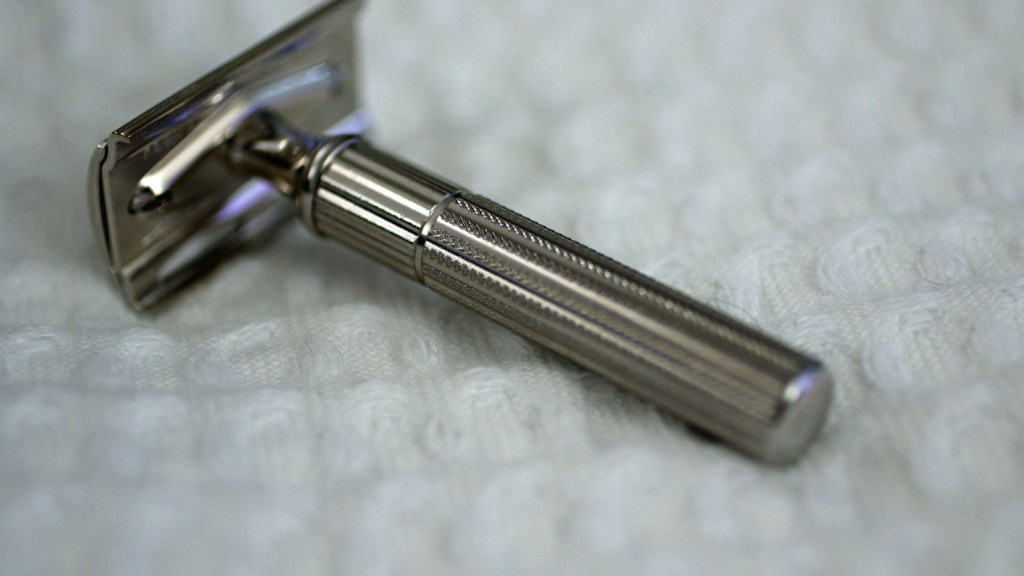
People in ancient Greece shaved with metal razors, often at a barber’s shop, but for most of Greek history an adult man was expected to wear a beard. Clean-shaven faces became fashionable only in the late 4th century BC, after the portraits of Alexander the Great showed him beardless and his successors copied the look.
So the question is really two questions: how did Greeks remove hair when they chose to, and why did so many of them choose not to? This guide covers the razors that survive in museums, the barbers who used them, the shop where men went to talk, the story of Alexander’s shaved face, and the very different rules for women and for mourners.
Key facts at a glance
- Bronze razors were already in use in Greece in the Late Bronze Age, about 1400 to 1060 BC.
- The Greek word for a razor was xyron, and razors were kept in a case called a xyrotheke.
- A beard signaled adulthood, and the heroes of Homer’s poems are shown bearded.
- Alexander’s portraits show him beardless, and many successor kings copied the look.
- Barbers (koureus in Greek) worked in shops near the agora, which were known for gossip.
- The strigil that Greek athletes used cleaned oil and sweat from the skin. It was not a razor.
Did ancient Greek men wear beards?
Most did. Smarthistory notes that in Greek tradition a beard signaled maturity and that Greek men were usually shown bearded before Alexander. Smith’s classic Dictionary of Greek and Roman Antiquities points out that the Homeric heroes Agamemnon, Ajax, Menelaus and Odysseus are all bearded, and an open university textbook on dress in ancient Greece likewise says the beard marked adulthood (Smarthistory; Smith’s Dictionary; Dress and Adornment in Ancient Greece).
Boys were different. Long hair marked a young Greek as not yet grown. In the Iliad, Achilles keeps a long lock of hair that his father vowed to a river god, to be cut when the hero came home. Harvard’s Center for Hellenic Studies discusses the passage, and the text itself is available at Perseus (Center for Hellenic Studies; Iliad 23 at Perseus).
Why did philosophers wear beards?
For philosophers the beard became a badge. A proverb recorded by Roman writers said that growing a beard does not make you a philosopher, which tells us how closely the two were linked. A scholarly chapter on Roman and Greek beards adds that the philosopher Epictetus refused to shave and that the satirist Lucian mocked fake philosophers. Both writers belong to the Roman era, so this is best read as a long tradition rather than a rule from classical Athens (Smith’s Dictionary; Stephens, chapter on beards and barbers).
What did ancient Greeks shave with?
The answer is a metal razor. The British Museum holds bronze razors from Greece dated to the Late Bronze Age, including one from Ialysos on Rhodes and a curved blade that may also have been a razor, and an archaeological study of Aegean razors places this type across the Aegean from roughly 1400 to 1060 BC (British Museum, razor; British Museum, blade; Gur and Aydin, OLBA).
Later, ancient writers and modern studies describe razors of bronze or iron. Smith’s dictionary gives the Greek word as xyron and notes that a razor was kept in a case, the xyrotheke, a word that appears in the comedies of Aristophanes. The open textbook on Greek dress agrees that razors were bronze or iron (Smith’s Dictionary; Dress and Adornment in Ancient Greece).
Was the strigil a razor?
No, and the confusion is common. Greek athletes rubbed olive oil on the body and then scraped it off with a curved bronze tool called a strigil, which cleaned away oil, sweat and dirt. The Metropolitan Museum describes a bronze strigil and a vase that shows an athlete using one, and neither page says the tool removed hair (Met Museum, strigil; Met Museum, vase).
Why did Alexander the Great make shaving fashionable?
Alexander’s portraits changed the look of the Greek world. Smarthistory explains that the sculptor Lysippos made a beardless image of him, breaking with the Greek habit, and that the National Gallery of Art also describes Lysippos creating a clean-shaven portrait. Smarthistory and an article in The Archaeologist add that many of the kings who followed him copied the look in their portraits and on coins (Smarthistory; National Gallery of Art; The Archaeologist).
Did Alexander order his soldiers to shave?
The ancient writer Plutarch reports that Alexander told the Macedonians to shave because a beard is the easiest thing for an enemy to grab in a fight. Plutarch tells a similar story about a people of Euboea called the Abantes, who cut their hair at the front for the same reason. Modern historians treat the Alexander story as a tradition. A peer-reviewed study of the anecdote finds it in sources written long after his death, so whether it was the real reason is uncertain. The portraits may also have aimed at a youthful, heroic image (Plutarch, Sayings of Kings and Commanders; Plutarch, Life of Theseus; Djurslev, Karanos; The Archaeologist).
Where did Greeks get shaved?
At the barber’s. Smith’s dictionary names the Greek barber as the koureus and says he shaved with the razor and pulled stray hairs with tweezers. The barbershop was also a social space. A scholarly article on the barbershop cites a speech by the orator Lysias showing that Athenians of the late 5th and 4th centuries BC spent time in shops near the agora, and records Theophrastus calling the barbershop a “wineless symposium” (Smith’s Dictionary; Scripta Classica Israelica).
The most famous barbershop story comes from Plutarch. After the Athenian disaster in Sicily in 413 BC, a stranger in a barber’s shop at Piraeus spoke about the defeat as if the city already knew. The barber ran to tell the city’s magistrates. A University of California classics journal and Britannica both describe the shop as a famous place for gossip (Plutarch, Life of Nicias; Berkeley Classics Journal; Britannica).
How did Greek women remove hair?
Greek comedy mentions women singeing body hair with a lamp, and a red-figure cup of about 500 BC shows a nude woman doing exactly that. In Aristophanes’ Thesmophoriazusae, a man disguised as a woman is shaved and singed. Scholars urge caution, because comic scenes are poor evidence for everyday life, and they disagree about how much hair women actually removed. One scholar argues that Athenian women shaped hair rather than removing all of it, while the open textbook says women were expected to be smooth (Kilmer, Journal of Hellenic Studies; Dress and Adornment in Ancient Greece; World History Encyclopedia).
Did Greeks cut their hair for mourning?
Yes, in myth and ritual. In the Iliad, Achilles and the Myrmidons cut their hair for their friend Patroklos, and Harvard’s Center for Hellenic Studies and the Kosmos Society both discuss hair cutting as a ritual of grief (Iliad 23 at Perseus; Center for Hellenic Studies; Kosmos Society).
Frequently asked questions
Did ancient Greek men have beards?
Mostly yes. A beard marked adulthood, and Homer’s heroes are bearded. Alexander’s beardless image then started a new fashion.
Why did Alexander the Great shave?
Plutarch reports that he wanted soldiers to shave so enemies could not grab their beards. Scholars treat this as a tradition, and he may also have wanted a youthful, heroic image.
What did the Greeks shave with?
Metal razors. Bronze examples from about 1400 to 1060 BC are in the British Museum, and later writers describe razors of bronze or iron, called xyron.
Where did Greek men get shaved?
At a barber’s shop, often near the agora. The barbershop was known for conversation and gossip.
Was the strigil used to shave?
No. It scraped oil, sweat and dirt from the skin after exercise, and museum descriptions do not say it removed hair.
How did Greek women remove body hair?
Sources mention singeing with a lamp and plucking, but how much hair women removed is debated among scholars.
Want more stories about how people lived in the past? Watch the Mr Global Rankss YouTube channel for new history and science videos.
Related reading: How people shaved before razors | Victorian hair care in the 1800s
Sources
- Smarthistory: Portraits of Alexander the Great
- National Gallery of Art: Alexander and his successors
- The Archaeologist: The Legacy of Alexander the Great’s Clean-Shaven Image
- Smith’s Dictionary of Greek and Roman Antiquities: Barba
- Stephens: scholarly chapter on beards and barbers
- Dress and Adornment in Ancient Greece: Hair Removal
- Djurslev, Karanos: Bulletin of Ancient Macedonian Studies
- Plutarch, Sayings of Kings and Commanders (Perseids)
- Plutarch, Life of Theseus
- Plutarch, Life of Nicias
- British Museum: bronze razor
- British Museum: bronze blade
- Gur and Aydin, OLBA XXVII: Aegean-type bronze razor
- Scripta Classica Israelica: the barbershop
- Berkeley Classics Journal: barbers in Terence’s Phormio
- Britannica: barber
- Met Museum: bronze strigil
- Met Museum: Athlete with strigil at post
- Kilmer: Genital Phobia and Depilation, Journal of Hellenic Studies
- World History Encyclopedia: Thesmophoriazusae
- Homer, Iliad 23 (Perseus)
- Harvard CHS: A Haircut for Achilles
- Kosmos Society: Hair, part 3


Leave a Reply