
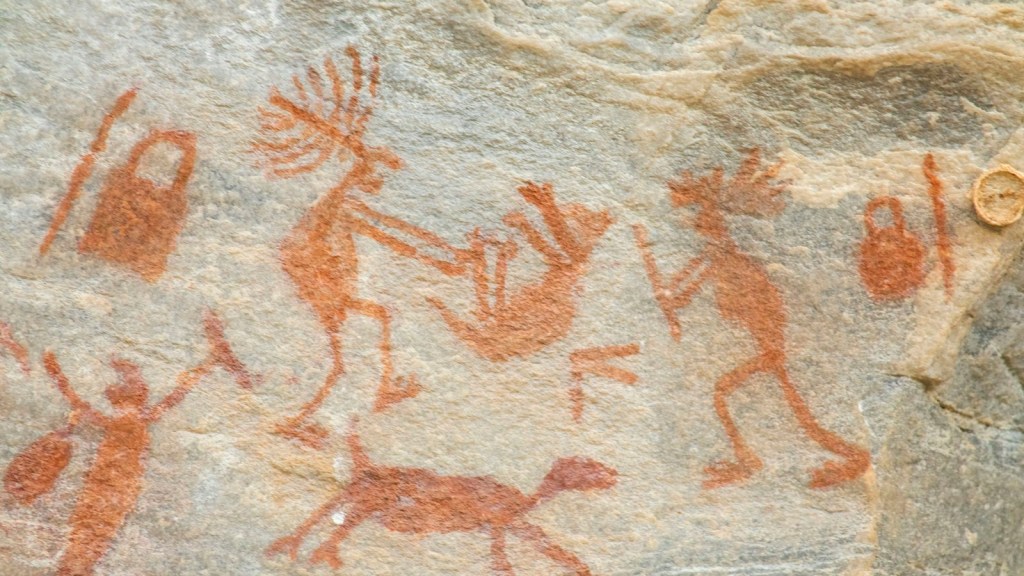
What did ancient humans do for pleasure? According to the archaeological record, they made music on bird-bone flutes, played board games, brewed fermented drinks, painted caves, wore jewelry and tattoos, and let their children play. Some of this is firmly documented. Some of it, such as dance and storytelling, is interpretation rather than proof. This article separates the two, so you can see what ancient humans did for pleasure and how we know.
Did ancient humans make music?
Yes. In the summer of 2008, a team led by Nicholas Conard of the University of Tübingen excavated a flute at Hohle Fels cave in the Swabian Jura of Germany. It was carved from the wing bone of a griffon vulture, has five finger holes and a V-shaped notch at the mouthpiece, and was recovered in 12 pieces. It was originally about 34 centimeters (13 inches) long. The same layer also held fragments of at least two flutes made of mammoth ivory, so both bone and ivory were used.
These instruments are about 40,000 years old. Re-dating of nearby Geißenklösterle cave, published in 2012 by Thomas Higham and Nicholas Conard, placed the layers holding similar flutes at roughly 42,000 to 43,000 years ago. The originals are displayed at the Museum of Prehistory in Blaubeuren, Germany. One caution applies: organic mouthpieces would not have survived, so researchers cannot say for certain whether these were simple flutes or reed instruments, and no one can reconstruct the music that was played.
What games did ancient people play?
Board games are among the best documented pleasures of the ancient world. The Royal Game of Ur, also called Twenty Squares, appears among personal items placed in the Royal Graves of Ur in southern Mesopotamia around 2600 BC, and the game later spread as far as Egypt, Turkey and the Iranian plateau. The famous inlaid board was excavated by Sir Leonard Woolley around 1928 and is now in the British Museum.
In Egypt, people played senet, a game on a board of three rows of ten squares with an S-shaped path. It was popular from the Predynastic Period to at least the Late Period (664 to 332 BC), and by the New Kingdom it carried meaning about the afterlife. The Metropolitan Museum of Art holds a senet board from a tomb at Abydos dated to about 1479 to 1425 BC. Which game is the oldest in the world is contested, so it is safer to say that senet is among the earliest.
Chance was part of the fun. Egyptians used throw sticks from the Predynastic Period, and the knucklebones of sheep and goats, which have four distinct faces, were thrown like dice. A large cache of worked knucklebones about 2,300 years old, used for both gaming and divination, was found in the caves beneath Maresha in southern Israel. For a much more recent board game with its own surprising origin story, read Who Invented Monopoly?
Did ancient people drink alcohol?
Chemical evidence says some did. Pottery from Jiahu, a Neolithic village in Henan, China, carried residues of a drink made from rice, honey and fruit about 9,000 years ago. At Raqefet Cave near Haifa, Israel, stone mortars about 13,000 years old held traces of wheat or barley that match the residues of experimental brewing, which the researchers link to ritual feasts for the dead. Because the two sites are described differently, it is best not to rank them as the “oldest alcohol” but to say that Raqefet shows the earliest traces of a beer-like drink and Jiahu a mixed rice, honey and fruit drink.
Göbekli Tepe in Turkey is often quoted too. Six limestone vessels there hold up to 160 liters each, and some residue tests were positive for calcium oxalate, which forms when grain is soaked, mashed and fermented. The excavators themselves, however, call the results preliminary, so Göbekli Tepe does not prove Stone Age beer.

How did ancient humans decorate themselves and their world?
Art and adornment go back much further than most people expect. At Blombos Cave in South Africa, a cross-hatched ochre drawing on a stone flake dates to about 73,000 years ago and is described as the oldest known drawing by Homo sapiens. Thirty-three perforated sea-snail shell beads from Bizmoune Cave in Morocco are at least 142,000 years old, which makes them some of the oldest known jewelry. Grooming and appearance have long mattered, as you can see in How Did People Shave Before Razors? and How Did People in Ancient Greece Bathe?
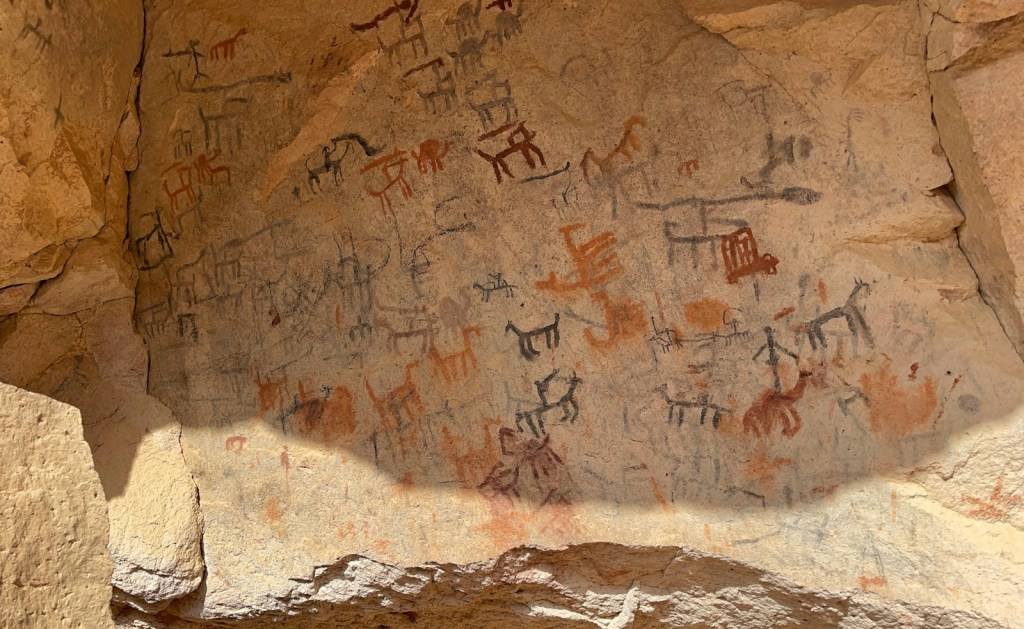
Later came the great painted caves. Chauvet Cave in France holds wall drawings of about 36,000 years ago, the oldest known in Europe, and was found on 18 December 1994. Lascaux, found in 1940, holds roughly 600 painted and drawn animals and symbols plus nearly 1,500 engravings, with a charcoal date of about 17,000 years that specialists treat as uncertain. Closer to the body, Ötzi the Iceman, who died around 3250 BC, carries 61 tattoos made by cutting fine lines and rubbing in charcoal.
Did ancient children play?
They seem to have. In Rouffignac Cave in France, finger markings made about 13,000 years ago have been attributed to children aged roughly three to seven, including a girl of about five. Indus Valley sites have produced bird-shaped whistles, rattles and small wheeled carts, among them a terracotta ram-headed bird about 5 centimeters (2.5 inches) long from Mohenjo-daro. Scholars warn that labeling an object a toy is problematic, since the age of its user is often uncertain.
Humor survives too. A Sumerian proverb about a young woman and her husband’s embrace is recorded in the Oxford corpus of Sumerian literature. It is often called the oldest joke, but that label comes from a single 2008 study, so it is better described as an early surviving joke.
What about dance, stories and rest?
Here the evidence is thin. The earliest known picture story, three human-like figures with a wild pig at Leang Karampuang cave in Indonesia, is dated to at least 51,200 years ago, though that is a minimum age taken from the mineral crust over the paint. Dance has left no direct trace: the Göbekli Tepe team suggest that dancing and feasting built community, but that is their interpretation of the site. A 2017 study of five Spanish caves found paintings slightly more likely in resonant spots, yet called the link statistically weak, and an acoustician notes that smooth rock both preserves paint and reflects sound.
Rest matters too. The idea that hunter-gatherers worked only a few hours a day is debated: older studies suggested about 20 hours a week of food work, while critics point to short surveys and fuller counts above 40 hours a week. A 2019 study of 359 Agta people in the Philippines found foraging-focused adults worked about 20 hours a week against about 30 for farming-focused adults. Among Hadza children, resting or eating took roughly half or more of in-camp observations. Anthropologist Robin Dunbar argues that laughter, singing and dancing helped groups bond, much as grooming does for other primates.
Frequently asked questions
What is the oldest known musical instrument?
The bone and ivory flutes from the Swabian Jura caves in Germany, about 40,000 years old, are among the oldest widely accepted instruments.
What did cavemen do for fun?
Evidence points to music, art, ornaments, shared meals, play and social time, though the exact activities are partly inferred.
Did ancient people have free time?
Yes, but how much is debated. Modern studies of foragers show meaningful leisure, while critics say early figures were too optimistic.
Is there proof that ancient people danced?
Not direct proof. Dancing is an interpretation of art and gathering sites, not a recovered find.
If you enjoy history like this, browse more in our History and Facts sections and subscribe to Mr Global Rankss on YouTube (https://www.youtube.com/@mrglobalrankss) for more science, history and rankings.
Related reading: Who Invented Monopoly?, How Did People Shave Before Razors?, How Did People in Ancient Greece Bathe?, What Did People in Ancient Rome Actually Do All Day?, how people in the Stone Age cut their nails and how people in the Stone Age cut their hair
Also read: What happened to the Library of Alexandria?
Sources
- Science News: Stone Age flutes found in Germany
- Museum of Prehistory Blaubeuren (Ice Age Europe)
- Ice Age Europe: The music of the Swabian Jura
- Live Science: Ancient bone flute
- Metropolitan Museum of Art: Board games from ancient Egypt and the Near East
- Museum Wales: Royal Game of Ur
- The Past: Astragali from Maresha
- Penn Today: 9,000-year history of Chinese fermented drinks
- Stanford News: Raqefet Cave beer
- German Archaeological Institute: Göbekli Tepe
- University of Bergen: Blombos Cave drawing
- Smithsonian Magazine: Bizmoune Cave beads
- French Ministry of Culture: Chauvet Cave
- Britannica: Lascaux
- South Tyrol Museum of Archaeology: Ötzi
- University of Cambridge: Prehistoric pre-school
- World History Commons: Indus Valley wheeled ram toy
- Oxford ETCSL: Sumerian proverbs
- Griffith University: Oldest known picture story
- Acoustical Society of America: Cave art and acoustics
- University of Cambridge: Agta leisure study
- American Journal of Human Biology: Hadza children’s activity
- Scientific American: Dunbar on grooming and bonding


Leave a Reply