
What happened to the Edmund Fitzgerald? On the evening of November 10, 1975, the 729-foot (222-meter) ore carrier sank in a violent storm on Lake Superior, taking all 29 crew members with her. No distress call was ever sent, and no one saw her go down. Official investigators blamed flooding through the cargo hatches, but other experts point to a grounding on a shoal or to extreme waves, and the exact cause has never been settled. This article walks through the Edmund Fitzgerald sinking, where the wreck lies, how deep it is, and what each theory says, so you can see what is known and what is still debated.
When did the Edmund Fitzgerald sink?
The Edmund Fitzgerald sank on the evening of November 10, 1975. The ship, which was launched in 1958, had left Superior, Wisconsin, on November 9 with a full load of taconite pellets, an iron ore product, headed for an ironworks near Detroit. The cargo weighed roughly 26,000 tons. At about 7:10 p.m., Captain Ernest McSorley radioed the nearby freighter Arthur M. Anderson and said, “We are holding our own.” No further message followed. The ship never sent a distress call, which is one reason the sinking remains so puzzling.
How bad was the storm that night?
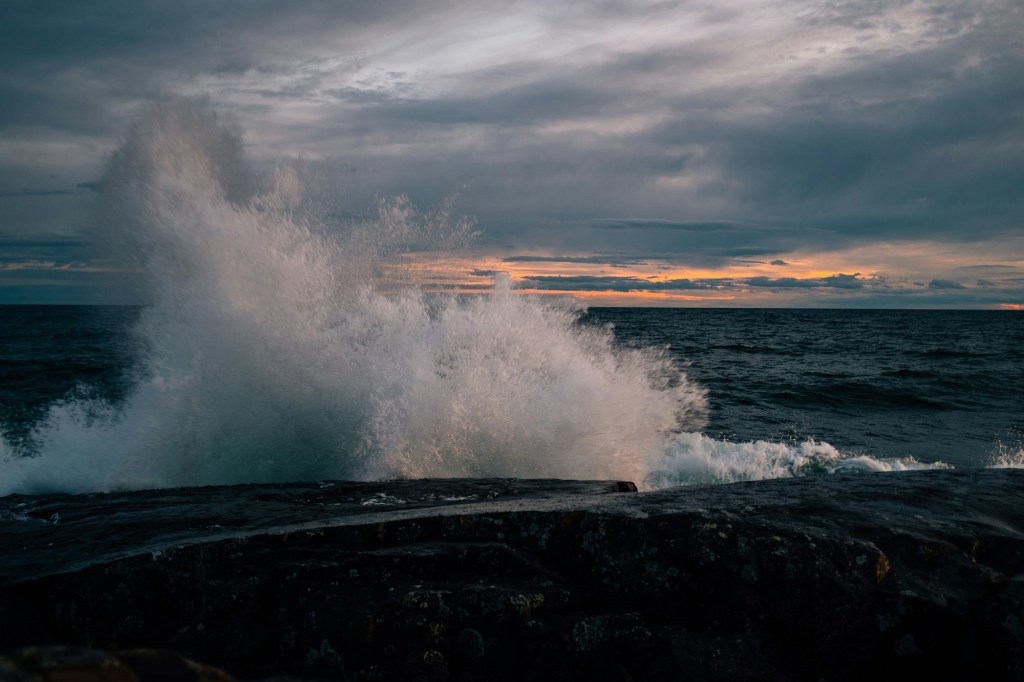
Very bad. By the evening of November 10, a powerful storm was driving gale-force winds across Lake Superior, with gusts of roughly 85 to 90 mph (about 137 to 145 km/h) and waves of about 25 feet (7.5 meters). The freighter Arthur M. Anderson was traveling nearby and was also battered by the storm. Violent weather is one of the oldest dangers at sea, and our ranking of the countries with the most natural disasters shows how widespread it still is.
Where did the Edmund Fitzgerald sink?
The ship went down on Lake Superior, about 17 miles (27 kilometers) north-northwest of Whitefish Point, Michigan, in Canadian waters. The wreck was found within days, after a U.S. Navy aircraft picked up a strong contact on November 14, 1975. Whitefish Point is also home to the Great Lakes Shipwreck Museum, which keeps the ship’s recovered bell.
How deep is the Edmund Fitzgerald wreck?
Most sources give the depth as about 530 feet (160 meters), although a few round it to 535 feet. The wreck lies in two main sections on the lake bottom. The bow sits upright, and the stern is upside down. To picture a different kind of depth, see our article on the deepest hole in the U.S.
What caused the Edmund Fitzgerald to sink?
No one knows for certain. Several investigations reached different conclusions, and each theory has supporters.
Hatch covers. The U.S. Coast Guard marine board, reporting in April 1977, found that the most probable cause was a loss of buoyancy and stability from flooding of the cargo hold. Water entered through hatch covers that did not close effectively, as waves washed over the deck. The National Transportation Safety Board reached a related but different view in 1978: that sudden, massive flooding followed when one or more hatch covers were damaged or collapsed under heavy seas.
Low freeboard. The Coast Guard also noted that changes to the load line rules in 1969, 1971 and 1973 let the ship ride lower in the water than when she was built in 1958. A lower ship takes more water onto the deck.
A shoal. The Lake Carriers’ Association, an industry group, rejected the hatch conclusion and argued that the ship struck Six Fathom Shoal, near Caribou Island, and flooded from below. The Coast Guard board did consider a light grounding possible, and a later survey found that the shoals extend about one mile farther east than the charts showed. The board, however, could not reconstruct the ship’s exact course.
Extreme waves. Some researchers suggest the ship was overwhelmed by very large waves, including a sequence sailors call the “Three Sisters.” This remains a theory, not a finding.
Breaking apart on the surface. A few explorers have argued that the hull split in two before sinking. Most investigators do not accept this, and both the Coast Guard and the NTSB concluded that the ship broke up after hitting the bottom.
Why was there no distress call?
The leading explanation is that the ship went down so suddenly that the crew had no time to call for help. Because there were no survivors and no witnesses, the final minutes remain unknown, and that silence is a big part of why the mystery has lasted. Life aboard a large working ship can look very different from the outside, as we explain in what happens to unsold cruise ship food at the end of a voyage.
What happened to the crew of the Edmund Fitzgerald?
All 29 men aboard were lost. Their remains were never recovered, and the wreck is protected under Canadian law as a grave site. The ship’s 200-pound (91-kilogram) bronze bell was recovered on July 4, 1995, and a replica bell engraved with the names of all 29 men was left on the wreck. The original bell is now at the Great Lakes Shipwreck Museum at Whitefish Point. In Detroit, Mariners’ Church rang its bell 29 times for the crew, and a 30th toll was later added for all sailors lost on the Great Lakes. Gordon Lightfoot’s 1976 song about the wreck helped keep the story alive, which is a large reason the Fitzgerald is remembered when other ships are forgotten.
What changed after the Edmund Fitzgerald sank?
The sinking led to real safety changes on the Great Lakes. Depth finders were required on larger vessels from 1977, and survival suits became part of the safety gear aboard ships. The 1973 load line amendment that had allowed reduced freeboard was rescinded, and the Coast Guard began an annual inspection of vessels before the November storm season.
Frequently asked questions
Did anyone survive the Edmund Fitzgerald?
No. All 29 crew members died, and no survivors were found.
What was the Edmund Fitzgerald carrying?
About 26,000 tons of taconite pellets, loaded at Superior, Wisconsin, and bound for Detroit.
Was the Edmund Fitzgerald ever raised?
No. The wreck lies in two sections on the bottom of Lake Superior and is protected as a grave site. Only the ship’s bell was recovered, in 1995.
Can you dive the Edmund Fitzgerald wreck?
The wreck is protected as a grave site under Canadian law, so disturbing it is not allowed. It also lies about 530 feet (160 meters) down, far beyond ordinary recreational diving.
If you enjoy history like this, browse more in our History and Facts sections and subscribe to Mr Global Rankss on YouTube (https://www.youtube.com/@mrglobalrankss) for more science, history and rankings.
Related reading: What happens to unsold cruise ship food at the end of a voyage?, The deepest hole in the U.S. and Countries With the Most Natural Disasters
Sources
- National Weather Service Marquette: Edmund Fitzgerald
- WorldAtlas: Why the Edmund Fitzgerald was never raised
- WXYZ: How crews raised the Edmund Fitzgerald’s bronze bell
- The Maritime Executive: Anniversary of the Edmund Fitzgerald sinking
- gCaptain: Gales of November, the storm that sank the Edmund Fitzgerald
- U.S. Coast Guard Marine Board report (1977), conclusions
- Old Salt Blog: The unsolved mystery of the Edmund Fitzgerald
- Professional Mariner: The Edmund Fitzgerald
- Fox News: Edmund Fitzgerald sinking remains a Great Lakes mystery
- PBS Wisconsin: Wreck of the Edmund Fitzgerald still resonates 50 years later
- The Mining Gazette: The legend lives on
- Great Lakes Commission: Edmund Fitzgerald safety legacy


Leave a Reply