
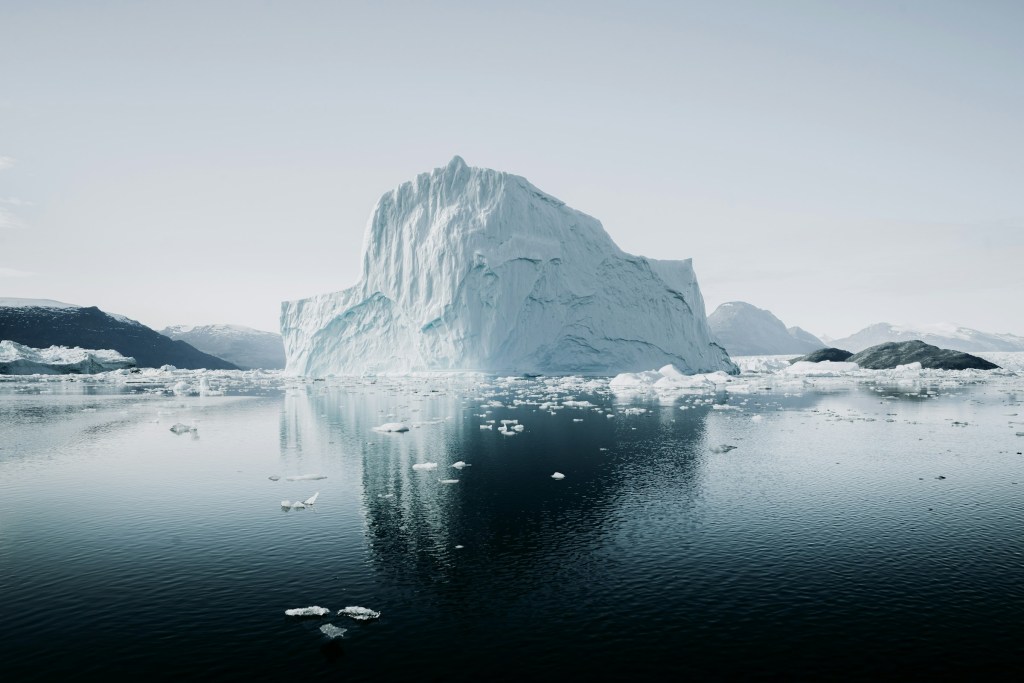
What happened to the iceberg that sank the Titanic? The short answer is that it melted, most likely within a year or two of the collision, and that nobody can say for certain which iceberg it was. The Titanic struck an iceberg late on the night of April 14, 1912, and sank in the early hours of April 15. Researchers think the Titanic iceberg began as snow on a Greenland glacier, drifted south on the Labrador Current and melted away in warmer water. Photographs said to show the real Titanic iceberg exist, but none has been confirmed. This article explains what happened to the iceberg, where it came from, how big it was and what the disaster changed.
What happened to the iceberg after the Titanic hit it?
It drifted on, and then it melted. Icebergs in the North Atlantic usually last about two to three years from the day they break off a glacier until they disappear. Estimates of when the Titanic iceberg broke away range from 1910 to the fall of 1911, so by April 1912 it was already well into the last stage of its life. The water it was drifting into grew warmer the farther south it went, and accounts of its fate agree that it melted away by late 1912 or 1913 at the latest.
No one tracked it, so there is no record of its end. That part of the story is an estimate based on how icebergs behave, not an observation. It is also a reminder that icebergs are temporary objects, which is why the Titanic iceberg cannot be visited or found today.
Where did the Titanic iceberg come from?
Almost certainly from Greenland. Glacier ice there is made from snow that has been compressed over centuries, and it flows slowly toward the sea, where chunks break off as icebergs. The Titanic iceberg is thought to have drifted from the west coast of Greenland into Baffin Bay, down through the Davis Strait and into the Labrador Sea, and then south on the Labrador Current toward the shipping lanes off Newfoundland.
Which glacier it left is less certain. A 2012 study suspected the Jakobshavn Glacier (also spelled Jacobshavn) near Disko Bay, a suggestion that remains speculative. A later modeling study by Grant Bigg and a colleague instead pointed to southwest Greenland, with the iceberg breaking free in the fall of 1911. Both agree on the general picture: a Greenland iceberg carried south by cold ocean currents.
How big was the Titanic iceberg?
Nobody measured it, so every size is an estimate. Survivors guessed its height from the deck of a moving ship in the dark, and their guesses varied widely. Modeling by Bigg and his colleague, based on witness accounts and how icebergs melt, put the iceberg at roughly 125 meters (about 410 feet) long and about 2 million metric tons (about 2.2 million U.S. tons) at the moment of the collision. A second estimate points the same way: the iceberg shown in a photograph taken by the cable ship Minia is described as about 394 feet (120 meters) long and 98 feet (30 meters) wide.
It is also worth remembering that most of an iceberg sits below the surface. The part the lookouts saw was only a fraction of the whole, which helps explain why the ice was so hard to spot in time and why it did so much damage below the waterline.
Was the real Titanic iceberg ever identified?
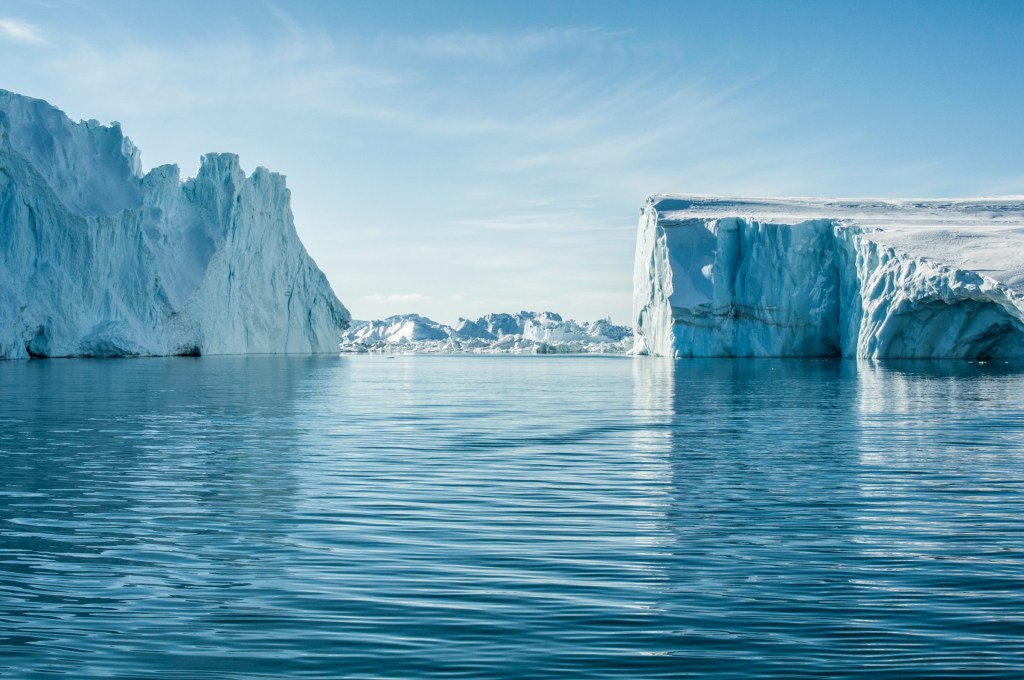
No. Hundreds of icebergs drifted south of the 48th parallel that spring. One count puts nearly 400 in April 1912 alone, and a separate study found 1,038 that year. Several ships photographed icebergs near the site in the following days, and each photograph has had its supporters, but there is no way to match any of them to the iceberg the Titanic actually struck. Even the auctioneer who sold one of the best-known pictures said there is no definitive answer about which iceberg was responsible.
What is the Titanic iceberg red paint photograph?
It is a photograph taken on the morning of April 15, 1912, by the chief steward of the German liner Prinz Adalbert as it passed the area. The iceberg in the picture has a streak of red along its base, and a note that came with the photograph describes red paint that looks as if a ship had scraped along the ice. The picture was given to the law firm defending the Titanic’s owner, White Star Line, hung in that firm’s office for decades and was sold at auction in 2015.
The claim is unverified. Grant Bigg, an environmental scientist at the University of Sheffield, has said that a different photograph, taken from the Minia the day after the collision, is the more likely candidate because its shape and size better match survivors’ descriptions. Researchers have also noted a possible red streak in that picture. Writers who have compared the two conclude that neither photograph confirms the identity of the iceberg, so both should be treated as possibilities rather than proof.
Why were there so many icebergs in 1912?
It was not an unusually bad year, but the weather pushed the ice south. A study of the 1912 season concluded that iceberg numbers were high but not exceptional, and that winds from northeastern Canada together with the Labrador Current carried ice farther south than usual for the time of year. Reconstructions of the weather describe cold northwesterly winds driving icebergs south just before the sinking. The result was a dangerous field of ice on the route the Titanic was following. For another look at how cold and ice shape a region, see our guide to Alaska in winter, and for the wider picture of hazards around the world, our ranking of countries with the most natural disasters.
Does the Titanic iceberg still exist?
No. With a lifespan of only two to three years and a start in 1910 or 1911, the Titanic iceberg is long gone. It melted into the Atlantic more than a century ago, and the ice that fell as snow on Greenland has returned to the ocean as water.
What did the Titanic iceberg change?
It led directly to the International Ice Patrol. The patrol was set up in 1914 through an international agreement among nations with shipping interests in the North Atlantic, after the sinking showed how deadly drifting ice could be. It is operated by the U.S. Coast Guard, which uses radar-equipped aircraft to find icebergs, tracks their drift with computer models and floating buoys, and warns ships. The patrol follows about 1,000 icebergs a year.
Frequently asked questions
What happened to the iceberg that sank the Titanic?
It most likely melted within a year or two of the collision as it drifted into warmer water. No one recorded its end.
Where did the Titanic iceberg come from?
It almost certainly broke off a glacier in Greenland and drifted south on the Labrador Current. The exact glacier is uncertain.
How big was the Titanic iceberg?
Estimates put it at roughly 400 feet (120 meters) long, though no one measured it.
Was the Titanic iceberg ever found?
No. Several photographs have been proposed, including one showing red paint, but none has been confirmed as the iceberg the Titanic hit.
Does the Titanic iceberg still exist?
No. North Atlantic icebergs last only a few years, so it melted long ago.
If you enjoy history like this, browse more in our History and Facts sections and subscribe to Mr Global Rankss on YouTube (https://www.youtube.com/@mrglobalrankss) for more science, history and rankings.
Related reading: What Killed the Dinosaurs?, the Black Death and Atomic Annie
Sources
- Wikipedia: Iceberg that sank the Titanic
- Gizmodo: Whatever happened to the iceberg that sank the Titanic?
- EARTH Magazine: 1912 not an exceptional iceberg year
- Live Science: Photo of iceberg that sank Titanic for sale
- Britannica: International Ice Patrol
- U.S. Coast Guard: International Ice Patrol, 11 decades of monitoring the northern Atlantic


Leave a Reply