
The lost colony of Roanoke was an English settlement of about 115 men, women and children that vanished from an island off the coast of what is now North Carolina between 1587 and 1590. When their governor came back after three years away, the houses were gone, the people were gone, and the only clue was a single word carved into a post: CROATOAN. So what happened to the lost colony of Roanoke? Nobody knows for certain, but the evidence points to a few strong possibilities. This article walks through the story, the clues and the leading theories, and it says plainly what is still unproven.
Where was the lost colony of Roanoke?
Roanoke Island sits between the mainland and the Outer Banks, the chain of barrier islands off the coast of North Carolina. The National Park Service looks after the site today as Fort Raleigh National Historic Site. In the 1580s this was the edge of the English world. It was named for Sir Walter Raleigh, who held a royal charter from Queen Elizabeth I to plant a colony in the New World. England had no permanent settlement there yet, and Spain, its great rival, had been in Florida for decades. For a look at that older Spanish settlement, see the oldest city in the US.
Who were the Roanoke colonists, and why did they come?
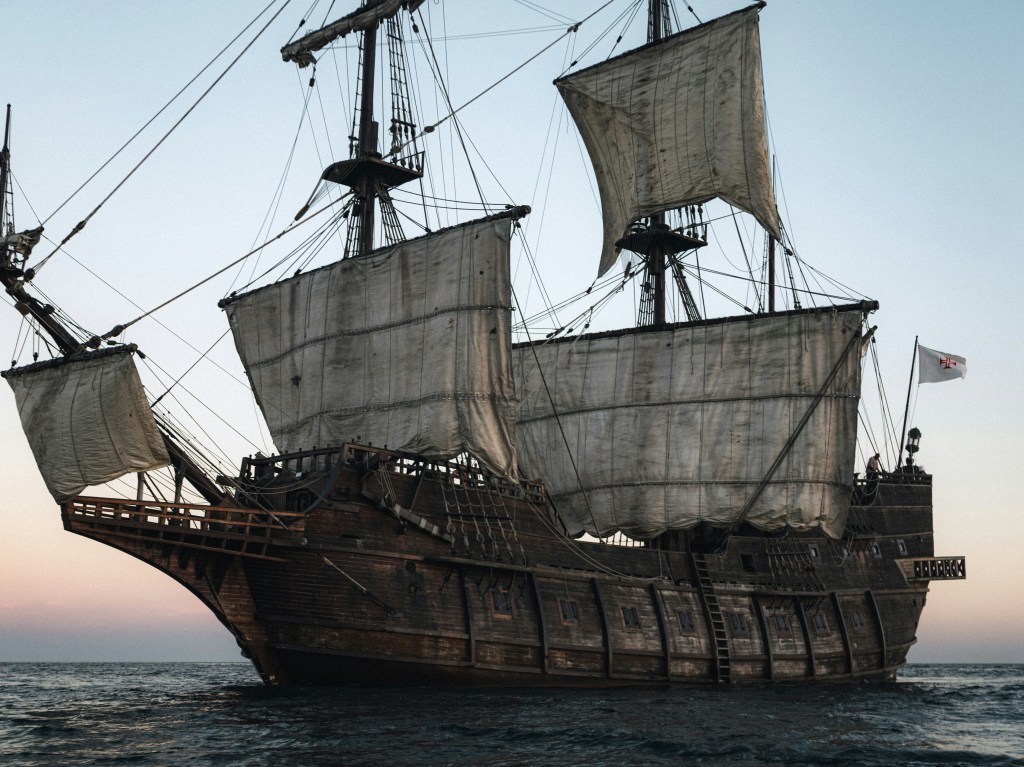
There were actually two attempts. In 1585 a group of mostly soldiers and workers under Ralph Lane settled on Roanoke Island. They struggled with food shortages and tense relations with the local people, and they went home in 1586 aboard a fleet led by Sir Francis Drake. The second attempt, in 1587, was different. It was led by the artist and mapmaker John White and it was made up of families, about 115 people, including women and children. They were meant to build a lasting community, not a military outpost. White had been to the island before and had painted the people and wildlife he found there.
The settlers were supposed to sail on to Chesapeake Bay, to the north, which Raleigh’s planners considered a better place to live. According to the National Park Service, the crew would not carry them any farther, so the colonists were left at Roanoke Island to restart the old settlement.
Who was Virginia Dare?
Virginia Dare was born on August 18, 1587, shortly after the colonists landed. She was the daughter of Eleanor Dare, White’s own daughter, and Ananias Dare, and she is remembered as the first English child born in the New World. She was John White’s granddaughter, which gave him a deeply personal reason to return. Little else is known about her, and no record of her survives after her birth.
Why did John White leave the colony?
The colony quickly ran short of supplies, and the settlers asked White to sail back to England himself to request help. He left at the end of August 1587, only a few weeks after Virginia was born. Before he went, he and the colonists agreed on a signal. If they had to leave the island while he was away, they would carve the name of the place they had gone to on a tree or post. If they were leaving in danger or under attack, they would add a cross above it.
White never got back quickly. England was at war with Spain, and the Spanish Armada of 1588 made it almost impossible to send ships across the Atlantic. Every vessel was needed for defense at home. Although White tried to return in 1588, his small ships were unable to complete the voyage, and it was not until 1590 that he finally reached Roanoke again. By then, three years had passed. The details of this voyage are set out by the National Park Service in its account of the 1590 voyage.
What did John White find when he returned in 1590?
White landed in August 1590 and found the settlement empty. The houses had been taken down and the site was surrounded by a strong palisade. Several of his own chests, which he had left behind, had been dug up and broken open, and his books, pictures and maps were ruined by weather and neglect. On a post at the entrance, he found the word CROATOAN carved in capital letters, and on a nearby tree he found the letters CRO. There was no cross anywhere. By the agreement he had made with the settlers, that meant they had left in an orderly way and not under attack.
White wanted to sail to Croatoan Island to look for them, but a storm damaged the ships and supplies were low. The captains decided to give up the search and head back across the Atlantic. White never saw his daughter or granddaughter again. This is the moment the colony became “lost.”
What does the word Croatoan mean?
Croatoan was the name of an island and of the Native American people who lived there, who were friendly to the English. Historians generally identify Croatoan Island with today’s Hatteras Island, on the Outer Banks, about fifty miles south of Roanoke Island. The carved word was therefore a message that the colonists had gone, or planned to go, to live with or near the Croatoan people. It is the best clue anyone has, and it is the reason the most common theory involves them.
What are the main theories about what happened to the Roanoke colonists?
The National Park Service lists the major theories of the lost colony, and most historians weigh the same few ideas:
- They moved to Croatoan and joined the local people. This fits the carved message and the absence of a cross. The settlers may have gone to a place with more food and a friendly community, and over time merged into it.
- They moved inland or north toward Chesapeake Bay. The Chesapeake had been the original destination, so some or all of the group may have tried to reach it.
- They were attacked or killed. This could have been by Spanish forces or by native groups, but the orderly dismantling of the buildings and the lack of a cross argue against a sudden attack.
- They died of hunger, disease or storms. The colony was short of supplies and had been left to survive on its own for three years.
These theories are not mutually exclusive. The colony may have split into groups, with some going one way and some another. That possibility is discussed in a History.com report on new archaeological clues and in a Live Science article on the vanished colonists.
What have archaeologists found?
Archaeologists have dug at Fort Raleigh and in other places for decades, and they have found pieces of English pottery, tools and other objects from the 1580s. One clue comes from a map John White made. Researchers found that a patch of paper covers a fort-like symbol about 50 miles inland, near present-day Bertie County in North Carolina, and White had left instructions to move 50 miles inland if the colonists ever left the island. Digs in that area since the 2010s have turned up English artifacts. Objects from the colony era have also been found on Hatteras Island, where the Croatoan people lived. The National Park Service stresses the limits of all this: no human remains, graves, buildings or village sites have been definitively linked to the colonists, and many of the objects could have reached Hatteras through trade. National Geographic reported on a possible survivor camp, but none of these finds has proved who the people were or what became of the rest.
Did a drought play a role in the lost colony of Roanoke?
Possibly. A tree-ring study of bald cypress trees in the region found that the years the colonists were stranded fell during one of the worst droughts in about eight hundred years. A drought like that would have made crops fail and fresh water scarce for both the English and the local people, and it may have pushed the colonists to seek food elsewhere. It does not prove what happened, but it adds context to why the colony struggled. The drought research is summarized by NCpedia and in an overview from The Collector.
Why does the Roanoke mystery still matter?
The Roanoke story is the first chapter in the history of English settlement in the New World, and it is a reminder that Jamestown, founded in 1607 in Virginia, was not the first try. Roanoke taught later colonists what to avoid, and it shows how much depended on supply ships, weather and relations with the people who already lived there. It also shows how hard it is to settle a place. For another look at how the English-speaking colonies grew into the states we know today, see why there are 50 states.
What was left out, and why?
Several popular claims about Roanoke rest on a single source, or on sources that disagree, so they are left out here. They include stories that modern families descend directly from the colonists, exact numbers for how many people survived and where they went, and claims that specific carved stones prove the colonists’ fate. Where the sources disagree, as with the exact route the colonists may have taken, this article says so instead of choosing a side. As with our look at daily life in ancient Rome, the evidence is strongest where several independent sources agree.
Frequently asked questions
When did the lost colony of Roanoke disappear?
Sometime between August 1587, when John White sailed for England, and August 1590, when he returned and found the settlement empty.
What does CROATOAN mean?
It was the name of an island and of the Native American people who lived on it, usually identified with today’s Hatteras Island. The carved word is believed to show where the colonists went.
Who was Virginia Dare?
The first English child born in the New World, on August 18, 1587, and the granddaughter of John White. Her fate is unknown.
Was the Roanoke mystery ever solved?
No. The leading idea is that the colonists went to live with the Croatoan people or moved elsewhere on the coast, but no one has found proof.
If you enjoy history like this, browse more in our History and Facts sections and subscribe to Mr Global Rankss on YouTube (https://www.youtube.com/@mrglobalrankss) for more science, history and rankings.
Related reading: What Is the Oldest City in the US?, Why Are There 50 States? and What Did People in Ancient Rome Actually Do All Day?
Sources
- National Park Service: 1587, The Lost Colony
- National Park Service: The 1590 Voyage
- National Park Service: Major Theories of the Lost Colony
- History.com: Archaeologists find new clues to Lost Colony mystery
- Live Science: Vanished colonists at Roanoke
- NCpedia: Lost Colony
- National Geographic: Newfound survivor camp may explain lost colony of Roanoke
- The Collector: The Lost Colony of Roanoke Mystery


Leave a Reply