
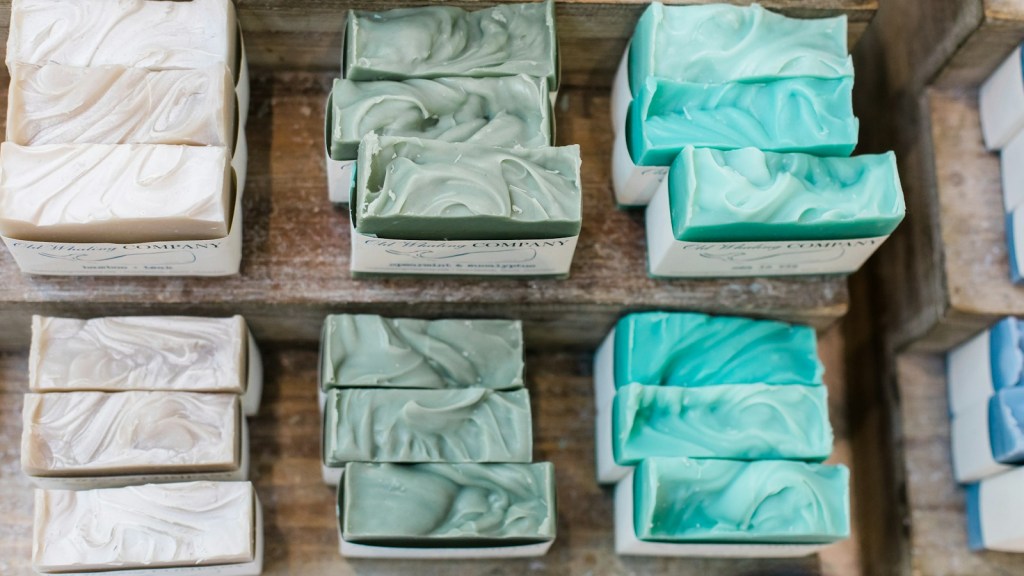
For most of history, people made soap by boiling animal fat with lye, an alkaline liquid drained from wood ashes, and then pouring the thickened mixture into a mold to harden. That was the household method of old fashioned soap, and it remained common until commercial soap spread gradually through the late 1800s and early 1900s, according to the Job Carr Cabin Museum, while Inventors and Inventions places the first manufactured bar soaps in the late nineteenth century. This article explains how that old process worked, how far back soap goes, and how industry changed it. It is a history of the method, not a recipe to follow at home, because lye is caustic and can cause chemical burns.
How old is soap?
The earliest evidence is uncertain. Inventors and Inventions reports clay cylinders from Babylon, dated to about 2800 BC, that contain a soap-like substance, and French Soaps says soap made by boiling fat with ashes was being produced in Babylon as early as 2800 BC, probably only for washing garments. Pompeii, buried in 79 AD, has yielded remains that Inventors and Inventions describes as a soap factory and French Soaps as what might have been one, adding that the site may instead have produced fuller’s earth, a cleaning clay. The English word is often traced to a Roman clay called sapo or to a place called Mount Sapo, but both sources present these stories as legends and not as settled fact.
How did people make lye from wood ash?
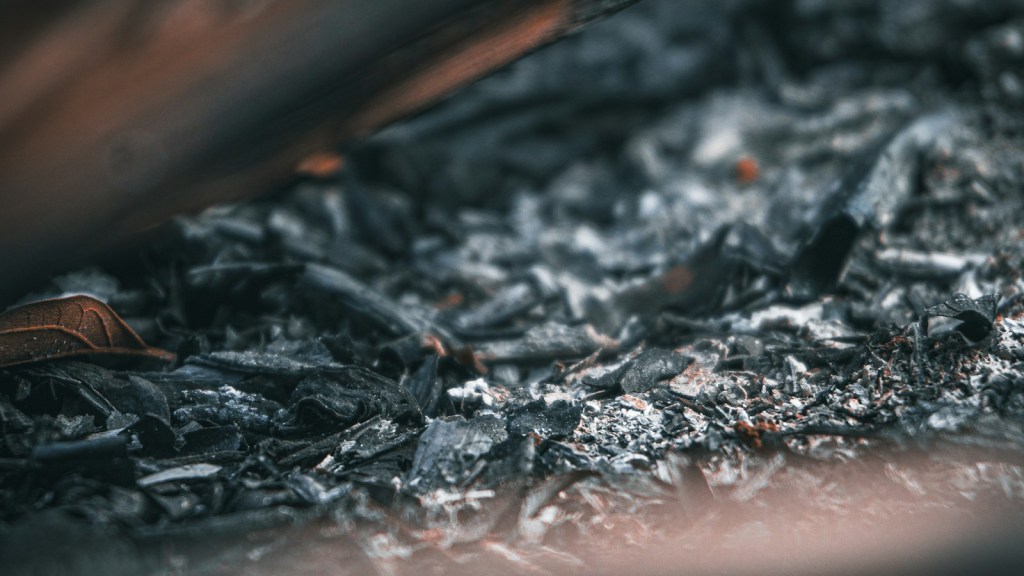
Lye came from an ash hopper. This was a V-shaped wooden structure filled with ashes, sometimes layered with straw, and set above a jug or bucket. Water poured over the top trickled down through the ashes and collected at the bottom as an alkaline liquid, as described by the National Park Service, the Job Carr Cabin Museum and WV Explorer. The ashes came from the household fireplace. Households that made their own soap also did their own laundry, and the Job Carr Cabin Museum describes soap making as the first step before washing clothes, a routine covered in our article on washing clothes before washing machines.
How did people make soap from lye and tallow?
The fat was usually tallow, the rendered fat of cattle or sheep, though pork lard and kitchen grease also served. The National Park Service, the Job Carr Cabin Museum and WV Explorer all name tallow or similar fat as the base. Makers boiled the fat with the lye in a kettle until the mixture thickened, then poured it into a wooden mold or other container and left it to harden, as the National Park Service and WV Explorer explain. Some added fragrance, with the National Park Service naming peppermint oil and the Job Carr Cabin Museum mentioning herbs and fragrances. The result could be hard or soft soap, and the boiling time could be adjusted to change the texture, as noted by the National Park Service and WV Explorer. The historical sources agree on the sequence: ash, water, fat, heat and a mold. Because lye is dangerous, this article leaves out quantities and timings.
Why was lye soap dangerous to make?
Lye is well known for being caustic, as the National Park Service notes, and WV Explorer repeats the point when explaining why an ash hopper was built from wood. Inventors and Inventions warns that caustic lye could cause chemical burns or even blindness. That hazard is the main reason this article describes the old method only in outline. Households treated soap making as a routine chore, but the same chemistry that cleaned clothes could injure the person making it.
How did the industrial age change soap making?
Industry changed two things: the cost of making soap and the supply of alkali. Britain taxed soap by weight. A tax set in 1712 ran from one penny to three pence per pound, according to French Soaps, which adds that the top rate equaled the whole cost of production, and the Runcorn Historical Society reports a duty of three pence per pound when its soap firms began. The Open University likewise describes soap as heavily taxed and, for a time, a luxury readily available mainly to the rich. French Soaps says Gladstone abandoned the duty in 1852, while the Runcorn Historical Society and the Open University place its repeal in 1853, and a parliamentary record of June 1853 shows the excise duty due to expire on July 5 of that year. The sources therefore point to the early 1850s.
Alkali was the other bottleneck. Hard soap needed sodium-rich alkali. In the late eighteenth century commercial soap makers drew it from plant ashes: barilla, grown mainly on Mediterranean shores, and kelp from seaweed around the western Scottish islands and Ireland, according to the Runcorn Historical Society. French Soaps and the Open University both link barilla ash to Spanish soaps such as Castile, and Grace’s Guide supposes that kelp supplied the alkali in the early years of the Runcorn trade. The French chemist Nicolas Leblanc devised a way to make alkali from common salt. French Soaps says its use in Britain began in 1823, and Grace’s Guide records that by 1830 alkali was being made synthetically by the Leblanc process. Thomas Hazlehurst opened a soap works at Runcorn in 1816, an example of the new factory trade described by the Runcorn Historical Society and by Grace’s Guide.
When did people stop making soap at home?
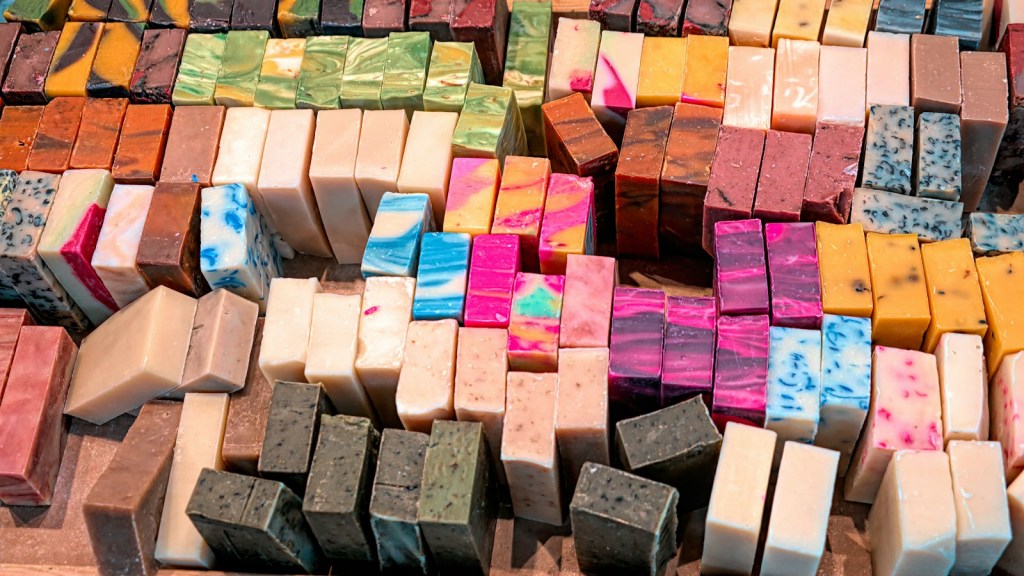
Gradually. The Job Carr Cabin Museum says soap was most often homemade until the mid-1800s and became commercially available over the late 1800s and early 1900s, and Inventors and Inventions also places the first manufactured bar soaps in the late nineteenth century. Branded products then changed buying habits. The Open University notes that people began buying a particular make of soap, such as Sunlight, rather than simply a type of soap, and French Soaps reports that Lever’s Sunlight Soap reached 450 tons a week by 1888. Washing and bathing habits changed alongside, as shown in our look at how people bathed in the 1800s.
What was left out, and why?
Several popular details rest on a single source and are left out here. They include the Egyptian Ebers Papyrus claim, ancient writers on soap for the body, the story that the Gauls taught the Romans, the exact date of the Leblanc patent, and the origin dates of Aleppo, Marseille and Castile soap. Quantities of lye and fat, boiling times and curing periods are omitted on purpose, because lye can cause serious burns. Where sources differ, as with the year the British soap tax ended, this article gives both dates.
Frequently asked questions
What was old fashioned soap made from?
Animal fat, usually tallow, boiled with lye made from wood ashes.
How did people get lye in the old days?
They poured water through wood ashes held in an ash hopper and collected the alkaline liquid that drained out.
Was soap ever taxed?
Yes. Britain taxed soap by weight, at up to three pence per pound, until the duty ended in the early 1850s.
How old is soap?
Soap-like substances may date to Babylon around 2800 BC, though the evidence is limited and the early history is uncertain.
If you enjoy history like this, browse more in our History and Facts sections and subscribe to Mr Global Rankss on YouTube (https://www.youtube.com/@mrglobalrankss) for more science, history and rankings.
Related reading: Victorian Hair Care: How Did Victorians Wash Their Hair?, How Did People in Ancient Greece Bathe? and How Did People in the 1500s Shower?
Sources
- National Park Service: Laundress, Making Soap
- Job Carr Cabin Museum: Log Cabin Living, Laundry Tools
- WV Explorer: West Virginia Lye Soap Making
- Inventors and Inventions: Soap
- French Soaps: A Short History of Soap
- Runcorn Historical Society: Soap and the early chemical industry
- Grace’s Guide: Hazlehurst and Sons
- The Open University: The history of soapmaking
- UK Parliament Hansard: The Soap Duties, June 17, 1853


Leave a Reply