

What did people use before deodorant? For most of history they used washing, perfume and other fragrant preparations, which covered body odor but did not stop it at the source. Deodorant as a commercial product is only about 140 years old. The first one, Mum, was trademarked in 1888, the first antiperspirant followed in 1903 by most accounts, and the product that turned underarm odor into a mass-market worry, Odorono, was on sale by 1912. Before that, nobody had a product built to act on the bacteria that produce the smell. This article explains what people did instead, how the first deodorants worked, and why the idea that everyone simply smelled bad before 1888 is not something the evidence can prove.
What did people use before deodorant?
The short answer is water and fragrance. Smithsonian magazine lists regular washing and the use of perfume to cover body odor among the ways people handled the problem before deodorants, and the Science History Institute makes the same point, noting that perfumes have masked odors for as long as people have existed. PhillyVoice and Mental Floss report that ancient Egyptians, Greeks and Romans used perfumes and other scented preparations to cover body odor.
The ancient record supplies a few specifics. Mental Floss and the Irish Examiner both report that Egyptians applied perfume, or spices and citrus oils, to the armpits, and The Week and the Irish Examiner both describe Romans anointing the body with scented oils, such as rose and lavender, after bathing. Some Romans went further. PhillyVoice, Mental Floss and the Irish Examiner all report that they scented their clothes and even their horses and pets.
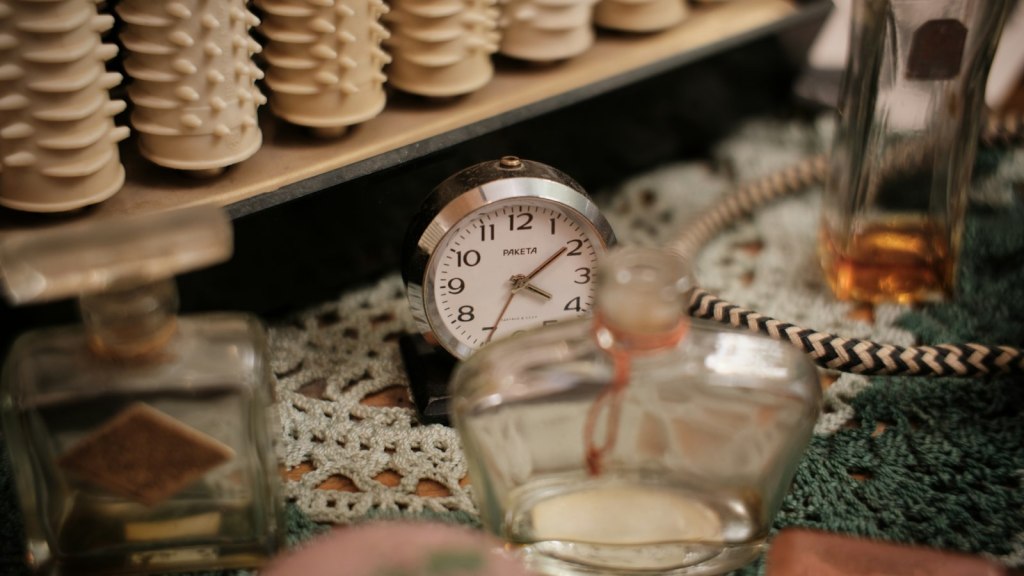
That pattern matters because it shows the goal was different. People were not trying to stop sweat or to prevent odor. They were trying to cover it, and the tools were whatever fragrance and water were available. For a closer look at how one ancient culture washed, see how people in ancient Greece bathed.
What did people do before deodorant?
In practice, people relied on a routine and not on a single product. They washed, they applied scent, and they accepted that some odor was part of ordinary life. Both Smithsonian magazine and PhillyVoice describe perfume as the standard way to hide it. PhillyVoice notes that earlier fragrances only masked odor, while deodorants were designed to act on odor-causing bacteria.
Clothing played a part as well. Smithsonian magazine, the Science History Institute and Wikipedia all describe dress shields, absorbent pads worn between the underarm and the dress, mainly by women. The Science History Institute calls them effective enough but uncomfortable, and Wikipedia explains that they protected fine fabric from sweat stains. They managed the consequences of sweat and did nothing about the smell.
How often a person could wash depended on wealth, climate and the era. In some periods, bathing was an everyday habit, and in others it became rare, as our article on how people washed in the 1500s explains. The Week and the Irish Examiner also report that European bathhouses closed in the face of plague. That variation is one reason there is no single answer about how people smelled. A person in a city with public baths faced a very different situation from a person with only a basin.

What was used before deodorant was invented?
Fragrance did most of the work. Perfume and other aromatic preparations were the tools that Mental Floss and PhillyVoice both describe for the ancient world, and perfume remained the standard answer in later centuries according to Smithsonian magazine and PhillyVoice. What was missing was a product that treated the cause. A deodorant, in the modern sense, works on the bacteria that break down sweat and produce the smell. That idea did not turn into a commercial product until the late 1800s.
When was deodorant invented?
Mum is generally described as the first modern commercial deodorant, and Smithsonian magazine, the Science History Institute, The Week and Wikipedia all place it in the 1880s, with 1888 as the date for its trademark. It was made in Philadelphia and sold as a cream or paste. The Science History Institute, PhillyVoice and the Irish Examiner all report that it was based on zinc oxide, and The Week and the Irish Examiner describe it as waxy and unpleasant to apply. It was designed to deal with odor-producing bacteria and was not an antiperspirant. Sources report the inventor’s name inconsistently, and this article does not name one.
The distinction between the two product types is simple. Wikipedia and PhillyVoice both describe a deodorant as something that targets the odor produced by bacteria, and an antiperspirant as something that works against sweating itself. Smithsonian magazine and Wikipedia both name Everdry, launched in 1903, as the first commercial antiperspirant, although the Science History Institute describes Odorono as the first, and the title is not settled. An antiperspirant aims to reduce sweat as well as slow bacterial growth, which is a different job from simply masking a smell.
What was Odorono, and why did it matter?
Odorono’s origin story is unusual. Smithsonian magazine, the Science History Institute and The Week all explain that it began with a Cincinnati surgeon who made a liquid to keep his hands dry during operations. His daughter, Edna Murphey, saw a business opportunity, and Smithsonian magazine and the Science History Institute both place her early sales in Atlantic City around 1912. The product was an aluminum chloride solution, and the early version was harsh. Smithsonian magazine and PhillyVoice add that it had to be suspended in acid, and all three sources agree that it could irritate skin and damage clothing.
How did advertising change attitudes toward body odor?
Odorono did not win customers on the strength of its chemistry. Its growth owed much to marketing. A 1919 Ladies’ Home Journal advertisement aimed at women framed body odor as a social embarrassment, according to Smithsonian magazine, the Science History Institute and PhillyVoice, and Smithsonian magazine and PhillyVoice both report that sales rose 112 percent. The point is not that people suddenly began to sweat. It is that sweat and odor were reframed as a social problem that a product could solve, and the daily habit of using deodorant grew from that change.
Later products followed the same logic in new forms. Smithsonian magazine reports that sticks, roll-ons, sprays and aerosols appeared between 1940 and 1970, and Wikipedia and The Week both credit Helen Diserens with a roll-on applicator modeled on the ballpoint pen. Sources differ on the year the roll-on reached shops, and this article does not give one.
Did people really smell worse before deodorant?
The honest answer is that no one can measure it. Historical sources describe methods, such as washing and perfume, and they say little about how strong the smell actually was. Smell is also partly a matter of expectation, and a society used to a certain level of body odor may have judged it differently from a modern reader. What can be said is that people took steps to manage odor for thousands of years, that those steps were mostly about masking and washing, and that the arrival of commercial deodorant changed the method more than it changed the underlying biology. For a closer look at Victorian washing routines, see how people bathed in the 1800s.
What was left out, and why?
Several popular claims rest on a single source or on sources that disagree, and they are left out. They include the detailed Egyptian recipes involving pastes of ostrich egg and tortoise shell, the date of the first men’s deodorant, the exact patent history of the first antiperspirant spray, homemade recipes based on carbolic acid, the exact year the roll-on reached shops, and the amount of Odorono’s sales in dollars. Where the evidence is thin, this article says that plainly and does not choose a side.
Frequently asked questions
What did people use before deodorant was invented?
Mostly washing and fragrance. Perfume and scented preparations covered body odor, while water removed some of its source.
What did people do before deodorant?
They bathed or washed when they could, applied perfume or scented preparations, and accepted some odor as normal. Many women also wore dress shields to protect their clothing from sweat.
What was used before deodorant?
Perfumes and other scented preparations in the ancient world, and perfume in later centuries. None of these was designed to act on the bacteria that cause the smell.
When was the first deodorant sold?
Mum, widely described as the first modern commercial deodorant, was trademarked in 1888. Everdry, named by most sources as the first antiperspirant, dates to 1903.
If you enjoy history like this, browse more in our History and Facts sections and subscribe to Mr Global Rankss on YouTube (https://www.youtube.com/@mrglobalrankss) for more science, history and rankings.
Related reading: How Did People in Ancient Greece Bathe?, How Did People in the 1500s Shower? and How Did People in the 1800s Bathe?
Sources
- Smithsonian Magazine: The history of Odorono and deodorant advertising
- Science History Institute: The smell of shame
- PhillyVoice: How deodorant became a daily essential
- Mental Floss: Body odor through the ages, a brief history of deodorant
- The Week: A brief history of body odor
- Irish Examiner: How our ancestors dealt with body odour
- Wikipedia: Deodorant
- Wikipedia: Underarm liners


Leave a Reply