
Why desert people wear more clothes in extreme heat is one of the most common surprises about hot climates. In places where the afternoon air can reach 120 F (49 C), people often cover almost the entire body in long, loose robes and a head cloth, while visitors reach for shorts. The reason is not tradition alone. Loose cloth shields the skin from sun, wind and blowing sand, and it lets the body keep cooling itself through sweat. This guide explains the physics, what a well-known 1980 experiment did and did not show, and how the same garments keep people warm when the desert turns cold after dark.
The short answer: loose cloth beats bare skin
The traditional desert robe is long, wide and light. Occupational health sources describe the same principle for anyone working in heat: thin, loose fabric lets air move around the body and lets sweat evaporate, while heavy or impermeable clothing blocks that evaporation. A loose ankle-length robe also covers the skin from the sun and from wind and sand, which is why it works as protection and not only as modesty.
In other words, the garment is better thought of as a portable shade with ventilation than as a layer that traps heat. The question is not how much fabric a person wears, but how that fabric hangs, how much air can pass through it, and what it keeps off the skin.
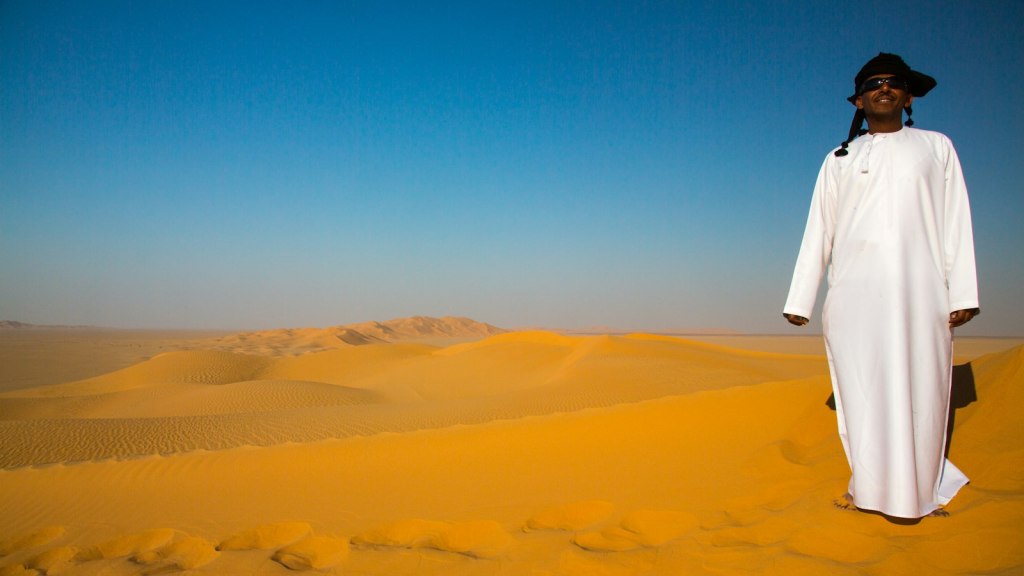
What the 1980 Nature study found about black robes
A frequent follow-up question is why some Bedouin wear black robes in a hot desert, since dark cloth absorbs more sunlight. In 1980 the journal Nature published a paper asking exactly that, by Shkolnik, Taylor, Finch and Borut, titled “Why do Bedouins wear black robes in hot deserts?” Its central finding was that the heat gained by the body was about the same whether the volunteer wore a black robe or a white one.
The explanation was the fit of the garment. Air moving through the loose robe, in what summaries describe as a bellows and chimney effect, carried heat away before it reached the skin. The extra heat absorbed by the dark outer surface was lost to the surrounding air instead of being conducted inward.
It is important to read this result carefully. The test used a single volunteer who stood still in midday sessions of about 30 minutes. It is a small experiment and not a full study of desert life. It also concerns loose robes only. Later textile research that cites the paper stresses that the finding does not apply to tight dark clothing. The lesson is the looseness, not the color.
Sweat is the cooling system, and clothing can help or block it
The human body runs at a core temperature of about 98.6 F (37 C). When the surrounding air is hotter than the skin, evaporating sweat becomes the main way to lose heat, according to physiology references. Evaporation depends on the air: humidity limits it, and dry air helps it. The Sahara has very little humidity, which means sweat evaporates quickly there, and cloth that stays loose and breathable lets that process continue.
This is also why thick, tight or soaked clothing is a poor strategy, especially in humid heat. Fabric that clings to wet skin or seals in moisture interferes with evaporation, and the body loses its most effective tool. A loose robe keeps a small pocket of moving air between cloth and skin, and that pocket is what the wearer relies on.
Sun and sand: coverage is protection
Covering the skin also protects against ultraviolet radiation. Dermatology and cancer organizations explain that clothing rated UPF 50 blocks about 98 percent of ultraviolet rays, and that long sleeves cover the most skin. Fabric construction matters: a tight weave protects better than a loose one, and darker colors generally block more ultraviolet light than lighter ones. Wet or worn-out fabric protects less.
That last point corrects a popular idea that only light colors protect. Light cloth reflects visible sunlight, but a dark or densely woven cloth can block more ultraviolet light. Desert clothing has to manage several jobs at once, and no single color wins every one of them.
The same clothes keep people warm at night
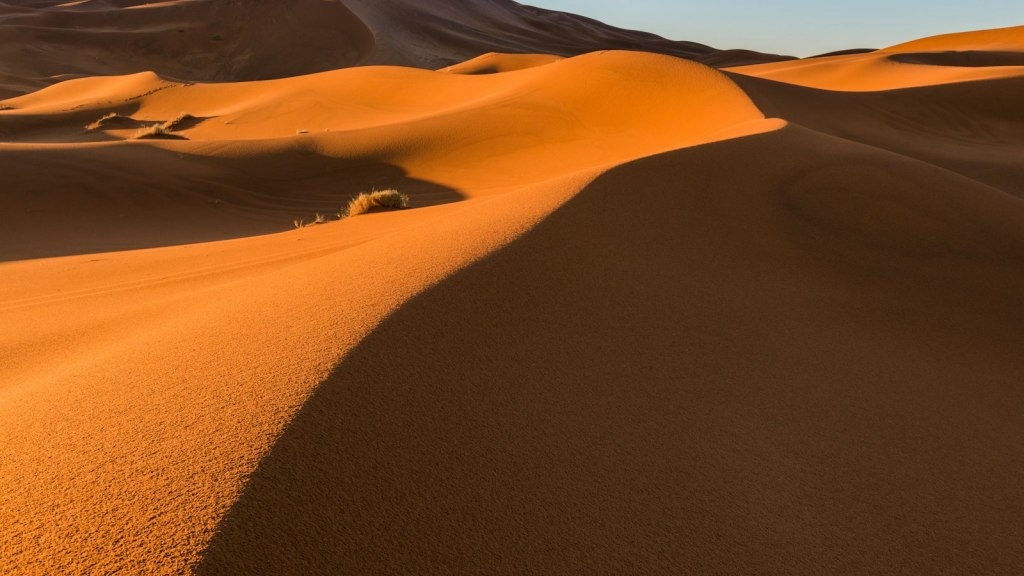
Deserts are known for heat, but they are also known for cold nights. The southern Sahara can reach about 120 to 122 F (49 to 50 C) in the hottest season, yet nights cool quickly and winters can fall below freezing. Explanations from several science sources point to the same causes: dry air holds little heat, sand releases its warmth quickly, and clear skies let heat escape upward.
This is where more clothing makes sense. The same long robe that ventilates in the afternoon can be wrapped or layered in the evening, and descriptions of traditional Arab dress note that cloth is worn lighter in summer and heavier in winter. One garment system covers a very wide range of temperatures.
The head cloth: hat, veil and shawl in one
The head covering is the clearest example of multi-purpose design. The ghutra or kufiyya, worn with an agal or iqal cord in many Arabian regions, works as a hat against the sun, a veil against dust and a shawl when the temperature drops. Men’s robes known as thobes are typically white, which reflects sunlight.
In the Sahara, the Tuareg tagelmust (also called a cheche or litham) is a long cotton cloth, traditionally dyed indigo, wound as a turban and drawn across the face. Museum and reference sources note that the dye can rub off onto the skin, which is why the Tuareg are sometimes called the “blue men” or “blue people”. Tuareg men wear the veil, while women traditionally do not.
Why black and white can both be right
Bedouin women’s outdoor cloaks are traditionally black, and sources on Bedouin dress also tie this to modesty norms, so color is not only a question of heat. Men’s white thobes reflect sunlight. The 1980 study suggests that a loose black robe does not necessarily add heat, while the white thobe shows the other common solution. Both rely on the same underlying idea: wide, flowing cloth with air moving through it.
Three myths about desert clothing
Myth one: black is always hotter. Not when the garment is loose. The 1980 result showed similar heat gain in black and white robes, although it was a small test and does not apply to tight dark clothing.
Myth two: wearing less is always cooler. Bare skin takes the full force of sun, wind and sand, and it loses the layer of moving air that a loose robe creates.
Myth three: only light colors protect. For ultraviolet protection, weave and fabric matter, and darker cloth can block more than lighter cloth.
What this means for hot weather anywhere
The CDC’s occupational heat guidance recommends light-colored, loose and breathable clothing, and university extension sources add a broad hat to shade the head. Those recommendations match what desert dress has done for centuries: keep the sun off the skin, keep air moving, and let sweat evaporate. For hiking or outdoor work, a loose long-sleeved shirt and a wide-brimmed hat are the modern version of the robe and head cloth.
Frequently asked questions
Why do desert people wear long sleeves in extreme heat?
Long sleeves shield the skin from sun, wind and sand, and loose sleeves let air and sweat vapor move. Covering the skin also reduces ultraviolet exposure, since long sleeves cover the most skin.
Is a black robe hotter than a white one?
In the 1980 Nature experiment, heat gain was about the same in a loose black robe and a loose white one. That was a small test with one volunteer standing still, and it applies to loose robes, not tight dark clothing.
Why do deserts get cold at night?
Dry air holds little heat, sand releases its warmth quickly, and clear skies let heat escape. The southern Sahara can reach about 120 to 122 F (49 to 50 C) by day, and winters can fall below freezing.
Why is the Tuareg turban blue?
The tagelmust is traditionally cotton dyed with indigo. The dye can rub off onto the skin, which is why the Tuareg have been called the “blue men”.
If you enjoy stories like this, browse more in our Facts section, and subscribe to Mr Global Rankss on YouTube for more of the world’s stories.
Related reading: How ancient Inuit igloos stayed warm in extreme cold, how people heated their homes in the 1700s and how people washed clothes before washing machines.
Sources
- Nature (1980): Why do Bedouins wear black robes in hot deserts? (abstract)
- Bal, Hes and Bajzik (2017), Indian Journal of Fibre and Textile Research
- ScienceABC: Why construction workers wear dark hoodies in extreme heat
- Skin Cancer Foundation: Sun-Protective Clothing
- Cancer.org: How to Protect Your Skin from UV Rays
- ILO Encyclopaedia: Physiological response to the thermal environment
- CDC NIOSH: Heat Stress in Construction
- Rutgers NJAES: Beat the heat, clothing matters
- Britannica: Climate of the Sahara
- Live Science: Why do deserts get cold at night
- PBS: Lawrence of Arabia, Arab clothing
- Aramco World: Fashion in the Sand
- Wikipedia: Litham
- GKToday: Blue People of Mali


Leave a Reply