
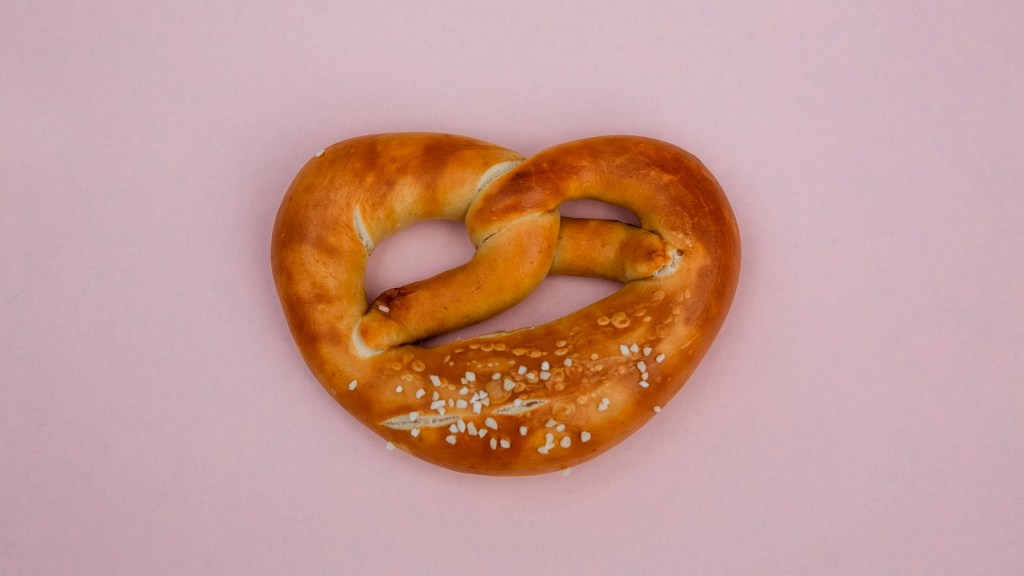
Why are pretzels twisted into a knot? The short answer: the most widely repeated explanation is that the loops imitate a pair of arms folded across the chest in prayer, a design linked to medieval European monasteries and to the fasting season of Lent, but no surviving document proves who twisted the first pretzel or exactly why. Practical reasons also helped the shape endure, because bakers could hang the open loops on poles for display. This article separates what historians can document from what remains tradition, covering how pretzels got their shape, where the name comes from, what the knot came to symbolize, why the form suits the oven and how pretzels reached the U.S. in the 1800s.
Why are pretzels shaped the way they are?
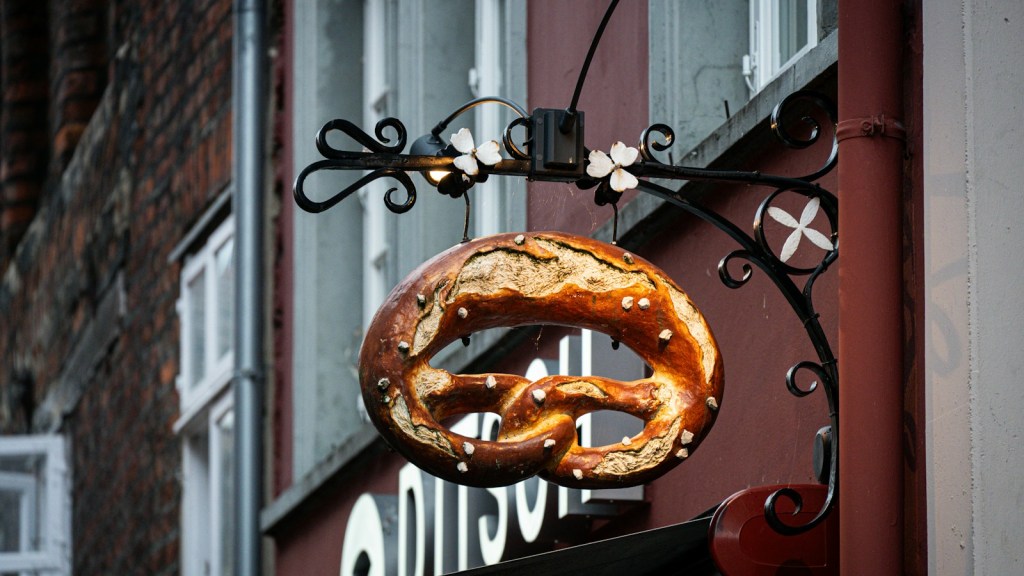
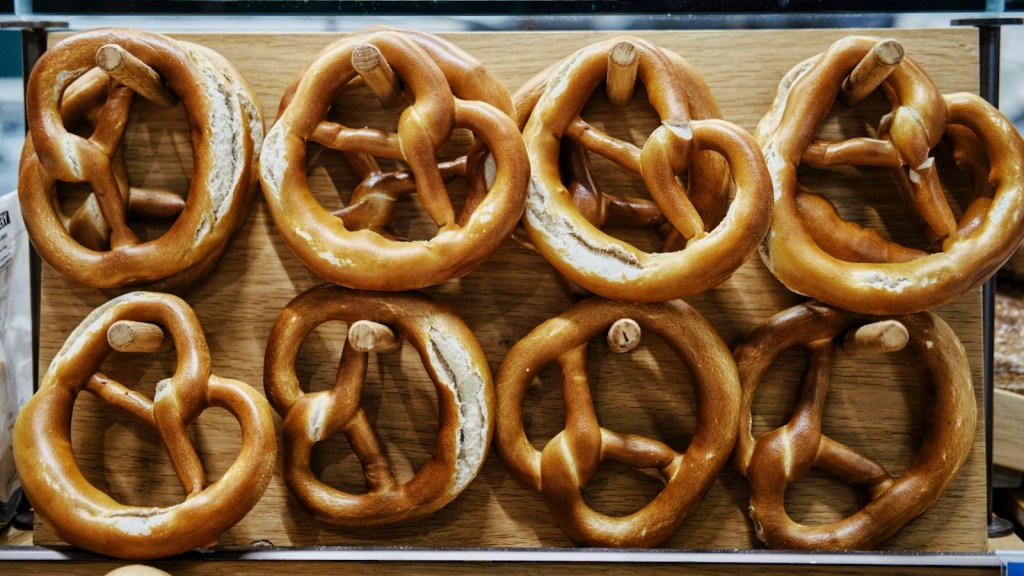
A classic pretzel is a single strand of dough whose two ends are crossed, twisted together and folded back onto the rounded body. Wikipedia describes the traditional form as a long strip of dough with its ends intertwined and then twisted back onto itself. The finished outline has a thick lower curve, three openings and a crossed center, the feature most people recognize at a glance.
The explanation repeated most often is religious. According to Mental Floss and KQED, the twists were meant to suggest arms folded in prayer, and both Mental Floss and Atlas Obscura describe a related reading in which the three openings stand for the Christian Holy Trinity. These interpretations are traditional rather than proven, yet they remain the closest thing to a standard answer for why pretzels are twisted and why pretzels are crossed in the middle.
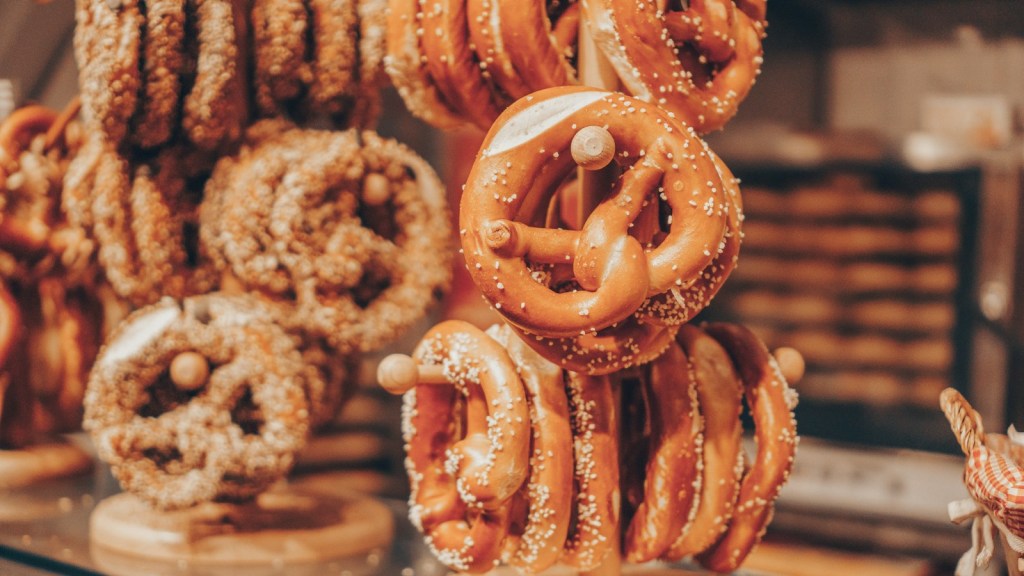
The shape may also have had a practical side. Both Wikipedia and Mental Floss suggest that the loops allowed bakers to hang pretzels on poles or in shop windows. A ring with open spaces is easy to thread onto a stick, which may help explain the lasting appeal of the open-loop form.
Did monks really invent the pretzel?
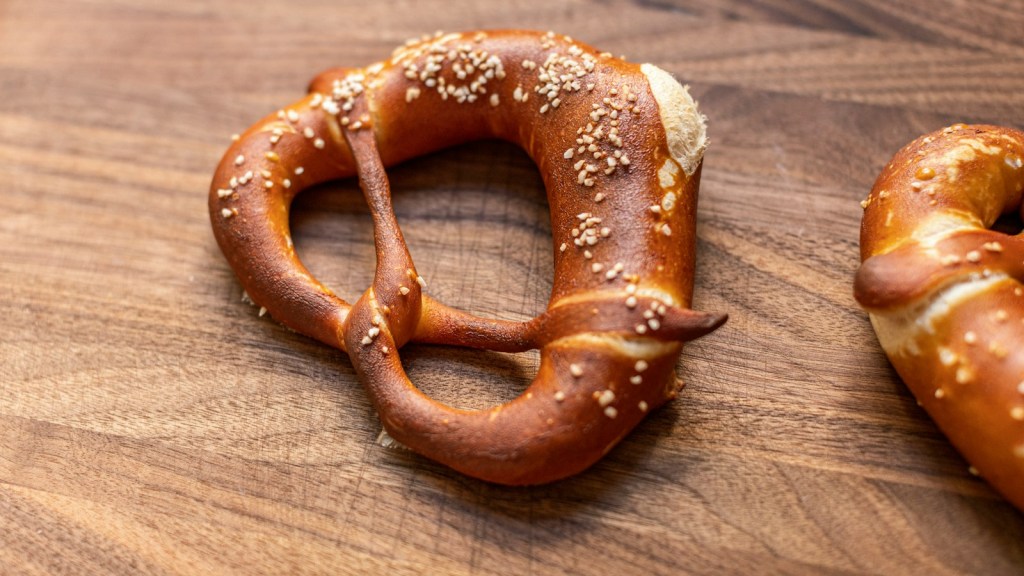
The best-known origin story places the invention in a monastery around the year 610. In the version reported by Wikipedia and Mental Floss, a monk shaped leftover dough to resemble arms crossed in prayer and handed the pieces to children who had learned their prayers, calling the treats pretiola, or little rewards. The setting varies from telling to telling: Mental Floss and Wikipedia place the monk in Italy, while Atlas Obscura and Wikipedia also record a version set in a monastery in southern France.
Historians treat this account with caution. Food historian William Woys Weaver told Atlas Obscura that there is “no documentation whatsoever” for a monk inventing the pretzel in 610, and Mental Floss describes the origin of the pretzel as much debated. The Goethe-Institut likewise presents the monk story as one of many legends and states plainly that the true origins are unknown. The honest position is that the prayer story is a tradition, not a recorded event, and no one knows for certain who shaped the first pretzel.
What can be documented is that pretzels were familiar in medieval Europe. Wikipedia and Atlas Obscura both cite the twelfth-century manuscript Hortus deliciarum as containing an early depiction of a pretzel, and Atlas Obscura and Mental Floss both mention medieval images of the Last Supper with pretzels on the table. Those images show that the knotted bread was already part of religious life and art in the Middle Ages, even if its inventor remains anonymous.
Why are pretzels called pretzels?
The English word comes from German. Dictionary.com traces pretzel to the German Pretzel, a variant of Bretzel, and from there to the Old High German brizzila and the Medieval Latin bracellus, meaning bracelet. The standard modern German word is Brezel, as both Wikipedia and Mental Floss note, and it is still the name used in German-speaking bakeries.
Several of the proposed Latin roots point back to arms. Wikipedia lists bracchiola, meaning little arms, as a possible source, Mental Floss cites bracellae with the same meaning, and Dictionary.com connects the German word to a Medieval Latin term glossed as a biscuit in the shape of folded arms. The exact spelling differs between these references, but the shared idea is consistent: the name itself appears to describe a pastry that looks like folded arms, which fits neatly with the prayer tradition.
What did the pretzel symbolize in medieval Europe?
Lent gave the pretzel a lasting place in the Christian calendar. During the forty-day fast before Easter, many Christians were expected to avoid eggs and dairy, and a dough made from flour and water fit within those rules. Wikipedia, Mental Floss and Atlas Obscura all connect the pretzel with Lenten eating in the Middle Ages, which offers the best documented answer to why pretzels were made and eaten in medieval Europe.
The knot also became a trade emblem. Wikipedia reports that bakers’ guilds in southern German-speaking regions have used the pretzel as their emblem since at least the twelfth century, and a museum director interviewed by the Goethe-Institut said it has been the sign of the bakers’ guild for more than 700 years. The two figures differ in detail, but both describe a symbol that has identified bakers for many centuries.
Over time the pretzel gathered other meanings as well. KQED describes it as a symbol of good fortune, and Wikipedia records a custom in some areas of exchanging sweetened pretzels on New Year’s Day for good luck. KQED, Wikipedia and the Goethe-Institut also describe courtship and wedding customs in which a pretzel served as a token of affection or commitment.
Why does the knot shape work so well for baking?
The shape is practical as well as symbolic. Bakers roll the dough into a long rope that tapers toward the ends, bend it into a U, cross the ends and press them onto the rounded base. King Arthur Baking instructs bakers to twist the ends together twice before pressing them down, and Saveur likewise tells readers to cross the ends and then cross them again. The recipe from delicious. magazine recommends leaving a slight bulge in the middle of the rope, which produces slender arms joined to a thicker body.
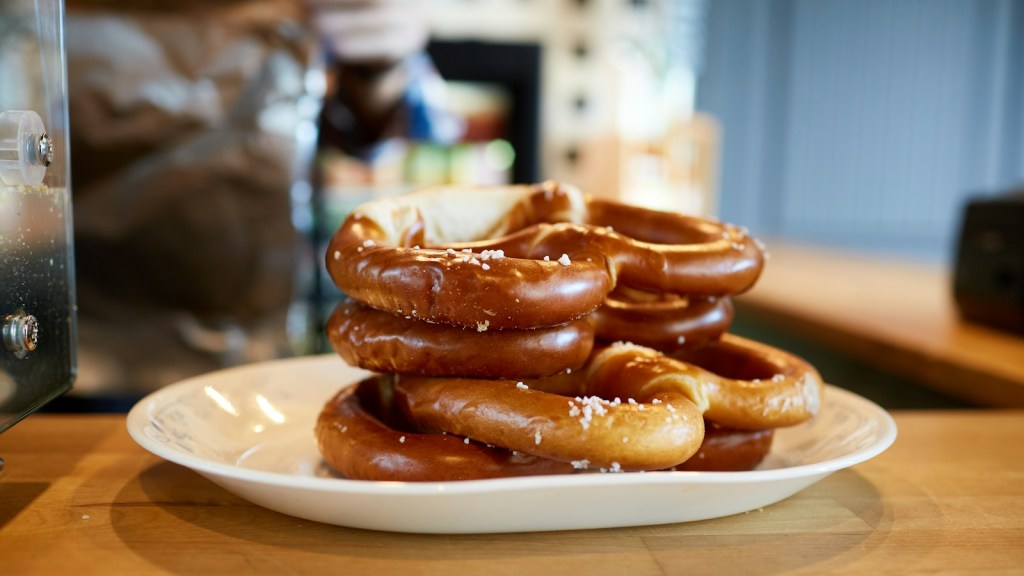
The glossy brown crust comes from a step that happens before baking. Traditional bakers dip shaped pretzels in a diluted alkaline bath, usually made with lye. NPR explains that this bath changes the Maillard reaction, the heat-driven reaction between sugars and amino acids that browns baked goods, and both Wikipedia and the Goethe-Institut credit the alkaline treatment with producing the pretzel’s characteristic skin, color and flavor.
Because food-grade lye is caustic and can be difficult to buy, many home recipes use baking soda instead. King Arthur Baking, NPR and delicious. magazine all describe a hot baking soda bath as the common substitute, and the recipes cited here bake pretzels in a hot oven of roughly 400°F to 500°F (about 200°C to 260°C) until they turn deep brown. In either case, it is the alkaline bath, not the knot itself, that produces the dark and glossy crust.
How did pretzels come to the U.S.?
Pretzels crossed the Atlantic with German-speaking immigrants. Wikipedia reports that southern German and Swiss German settlers, who became known as the Pennsylvania Dutch, brought the pretzel with them, and Mental Floss notes that German immigrants settled in Pennsylvania during the 1700s and 1800s.
The first commercial pretzel bakery in the U.S. opened in Lititz, Pennsylvania, in 1861. The Julius Sturgis Pretzel Bakery states that Julius Sturgis, then 26, founded the business that year, and both The Clio and Mental Floss give the same year and location. The bakery building is listed on the National Register of Historic Places, according to both the bakery and The Clio.
A popular story claims that Sturgis received his recipe from a traveler he fed at his table. The Clio calls it a legend that “contains very little actual fact,” and Mental Floss describes a version of the tale as dodgy, which is reason enough to treat it as folklore. The documented part is simpler: a baking tradition with German roots found a commercial home in Pennsylvania, and the twisted knot came with it. For another chapter in the history of bread in the U.S., see our article on why the U.S. banned sliced bread in 1943.
What was left out, and why?
Several details were left out because only one source supported them or because the sources disagreed. KQED translates the Latin pretiolae as little prayers, while Wikipedia and Mental Floss give little rewards, the version used here. Wikipedia lists both 1850 and 1861 for the Sturgis bakery; this article uses 1861, which the bakery itself, The Clio and Mental Floss all support. Atlas Obscura’s report that the monk story spread during Prohibition and was later promoted by the pretzel industry, and its link between the pretzel and the Gaulish goddess Sirona, appeared in that source alone. The same applies to a Mental Floss reference to an 1854 newspaper describing hard pretzels, the claim that most U.S. pretzels are made in Pennsylvania, the Vienna siege legend, the pH values given for lye and baking soda, the idea that thin ends bake crisp while the center stays soft, the date the word entered English and the story of a baker discovering the lye bath by accident. Recipes also disagree on the number of twists: two of our sources cross the ends twice, while delicious. magazine describes a single twist, and no fixed count exists.
Frequently asked questions
Why are pretzels twisted?
Tradition holds that the twist imitates arms folded in prayer, a shape associated with medieval monasteries and Lent. The open loops also let bakers hang pretzels on poles, which may have helped the design endure. No surviving document confirms who created the first one.
Why are pretzels crossed?
The crossed center forms when the two ends of a dough rope are twisted together and pressed onto the rounded base. In the prayer tradition, that crossing represents arms folded across the chest.
How many twists are in a pretzel?
There is no fixed number. King Arthur Baking and Saveur both describe crossing the ends twice, while other recipes use a single twist. Once shaped, a traditional pretzel shows three openings.
Why were pretzels made?
The surviving evidence links pretzels to medieval Christian practice, particularly Lent, when a simple dough of flour and water fit fasting rules that excluded eggs and dairy. The popular story that a monk invented them as rewards for children is a legend without documentation.
What are twisted pretzels called in German?
In German the pretzel is called a Brezel. The English word pretzel comes from the German variants Pretzel and Bretzel, which most references trace to Medieval Latin words for a bracelet or for little arms.
Pretzels are a reminder that everyday foods often carry long histories, some recorded in manuscripts and some passed down as stories. For more surprising origins, read our collection of everyday facts you didn’t know, browse our Facts and History sections, and subscribe to Mr Global Rankss on YouTube (https://www.youtube.com/@mrglobalrankss) for more history, science and rankings.
Related reading: Everyday Facts You Didn’t Know: Weird Facts About Everyday Things, Why Did the U.S. Ban Sliced Bread in 1943?
Sources
- Wikipedia: Pretzel
- Goethe-Institut: A centuries-old history full of myths and stories
- Mental Floss: Pretzel food history
- Atlas Obscura: Pretzels for Lent
- KQED Bay Area Bites: The pretzel, tying knots
- Dictionary.com: Pretzel
- NPR The Salt: For a proper pretzel crust, count on chemistry and memories
- King Arthur Baking: German-style pretzels
- Saveur: How to twist pretzels
- delicious. magazine: How to make pretzels
- Julius Sturgis Pretzel Bakery: Sturgis history
- The Clio: Julius Sturgis Pretzel Bakery


Leave a Reply