
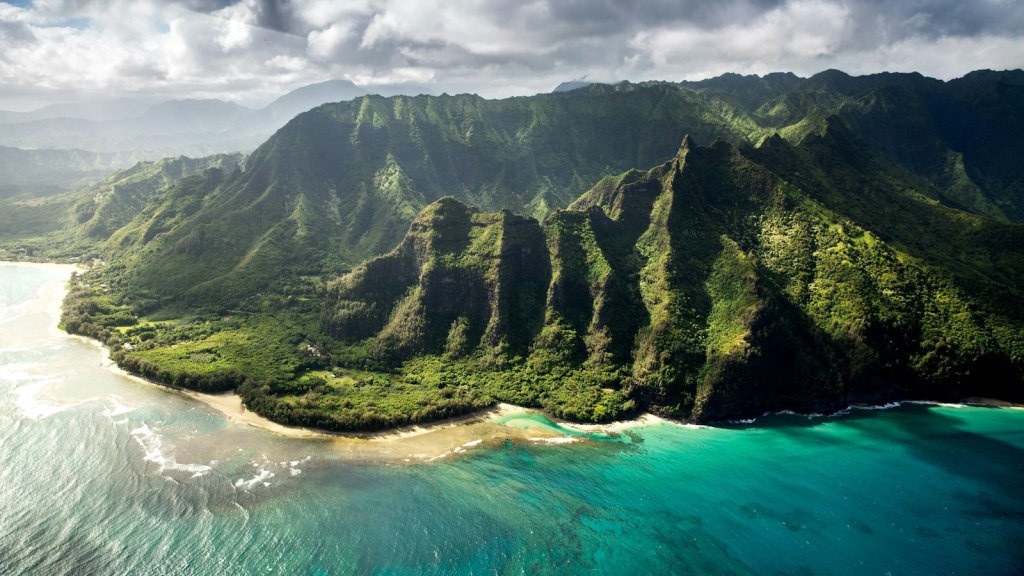
Why are there no snakes in Hawaii? The short answer: Hawaii is a chain of volcanic islands that rose from the floor of the Pacific Ocean, was never joined to any continent, and lies more than 2,000 miles from the nearest mainland, a distance no land snake could cross on its own. The phrase “no snakes” needs one qualification, however. Hawaii has no native land snakes, but it is not literally snake-free. A tiny burrowing snake arrived with imported plants, a venomous sea snake occasionally washes ashore, and state inspectors still catch escaped or smuggled pets. This article explains each of these exceptions, the strict law that keeps snakes out, and why officials watch the island of Guam closely. Every fact below was checked against at least two independent sources, which are listed at the end.
Why are there no native snakes in Hawaii?
The answer begins with geology. According to the U.S. Geological Survey, the Hawaiian Islands formed as the Pacific Plate moved over a stationary hotspot, where rising magma built volcanoes up from the sea floor one after another. Papahānaumokuākea Marine National Monument describes the same hotspot origin and states that the islands have no geologic connection to any continent. WorldAtlas makes the same point: the islands rose from the open ocean and were never linked to a mainland or a continental shelf. Readers interested in another island shaped by volcanic activity may find our explanation of how Iceland’s volcanic zones work a useful comparison.
That origin matters because many animals reach new land by walking across connections that once existed between landmasses. Hawaii never had such a bridge. Every native plant and animal had to cross open ocean to get there, and the distances involved are enormous. Papahānaumokuākea Marine National Monument calls the archipelago the most remote island chain on Earth, with the nearest continental landmass roughly 2,600 miles away, while WorldAtlas puts the gap at about 2,300 miles. The two figures differ, but both place the islands well over 2,000 miles from any continent.
For a land snake, that distance is effectively impassable. WorldAtlas and HowStuffWorks both explain that Hawaii’s isolation made a natural arrival extremely unlikely, and Haleakalā National Park lists reptiles among the groups that were unable to complete the long ocean crossing. The result is the situation Hawaii has today: the islands developed a full ecosystem of plants, birds and insects without a single native land snake.
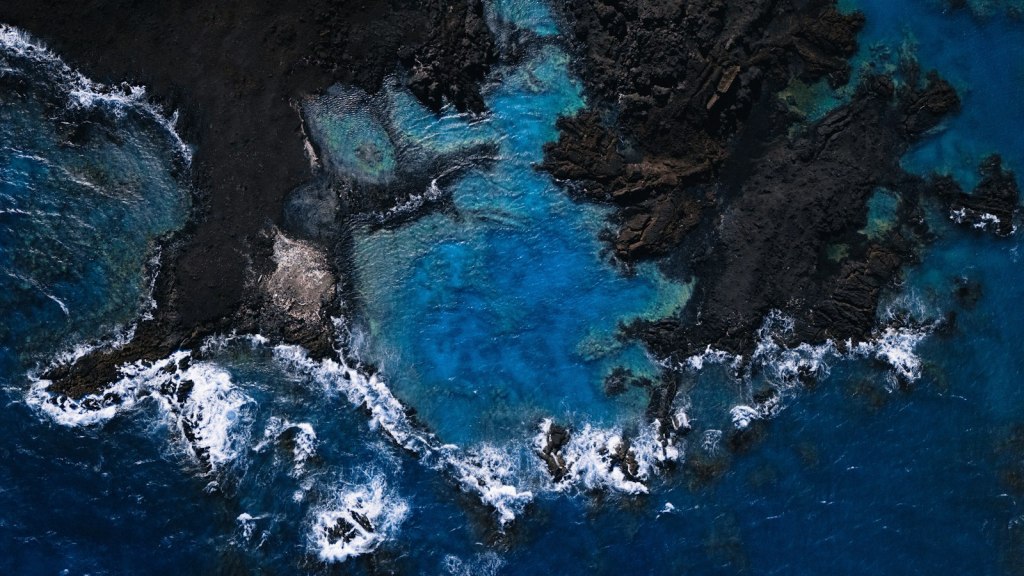
How did other animals reach the islands?
Scientists often summarize Hawaii’s colonization with three words: wind, wings and waves. Haleakalā National Park and Papahānaumokuākea Marine National Monument both describe how seeds, spores, insects and spiders drifted in on the wind, how birds carried small organisms in their feathers or arrived themselves, and how ocean currents delivered marine life, floating seeds and rafts of debris. Each of these routes favors small, light or airborne organisms, which is why the native life of Hawaii looks the way it does.
Even with those routes available, success was rare. Both Haleakalā National Park and Papahānaumokuākea Marine National Monument estimate that, on average, only one new species successfully established itself in the islands about every 35,000 years. A colonist had to survive the journey, arrive alive and find a way to reproduce, and most attempts failed somewhere along that chain.
Snakes were poorly suited to any of these routes. They cannot fly, they are too heavy to drift on the wind, and a crossing of thousands of miles on floating debris would be an extreme ordeal for any land animal. Haleakalā National Park notes that amphibians, reptiles and nearly all land mammals could not make the journey, a pattern WorldAtlas also describes. Geography decides which animals can live in a place as much as climate does, a theme explored in our article on what might happen if eagles had evolved in Antarctica.
Are there any snakes in Hawaii at all?
Yes, and the honest answer to “are there really no snakes in Hawaii” is that one small species has made a permanent home there. The National Wildlife Federation reported that Hawaii has no land snakes except the Brahminy blind snake, a harmless species introduced from Asia, and WorldAtlas notes that, of the other snakes recorded in the state, none has established a lasting population.
The Brahminy blind snake, known scientifically as Indotyphlops braminus, looks far more like an earthworm than a typical snake. CaliforniaHerps.com describes it as small, dark and worm-like, with only light spots where its eyes would be, and the National Wildlife Federation makes the same earthworm comparison. It lives underground and feeds on tiny soil invertebrates such as ants and insect larvae, and CaliforniaHerps.com classifies it as not dangerous to people.
Its route to Hawaii explains why it is often called the flowerpot snake. HowStuffWorks reports that the species is carried accidentally in potted plants, CaliforniaHerps.com says it has spread around the world by hiding in the soil of nursery plants, and HowStuffWorks identifies plant imports as the way it reaches Hawaii. The species has one further advantage as a stowaway: it is parthenogenetic, meaning females reproduce without males. CaliforniaHerps.com, HowStuffWorks and WorldAtlas all confirm this, which means a single snake hidden in a single pot can start a new population.

Are there any sea snakes in Hawaii?
Hawaii’s waters receive an occasional marine visitor, the yellow-bellied sea snake. This species lives in the Pacific Ocean, and both WorldAtlas and HowStuffWorks describe it as a rare arrival that drifts into Hawaiian waters from time to time. It is fully marine and is not a land snake, which is why it does not change the basic answer to why there are no snakes in Hawaii.
Sightings on land are uncommon. In February 2025, a live yellow-bellied sea snake about 3 feet long was found pinned under a log at Honoliʻi Beach in Hilo, according to both the Hawaii Department of Agriculture and Biosecurity and the Honolulu Star-Advertiser. Both sources explain that these snakes usually appear onshore only when strong winds or currents push them toward the coast. Lifeguards contained the animal in a bucket until state inspectors collected it, and no one was hurt.
The species deserves caution. Both sources quote the chair of the state Board of Agriculture, who said the snake “can be more venomous than a cobra.” The state advises anyone who finds a sea snake on the beach not to touch it and to call the Pest Hotline at 808-643-PEST (7378). Importing or possessing the species is illegal in Hawaii.
Why are snakes not allowed in Hawaii?
Hawaii treats snakes as a serious threat to its wildlife, and the law reflects that view. Importing or possessing snakes is illegal in the state, as Hawaiʻi Public Radio and HowStuffWorks both report. Under a 2017 release from the state agriculture department, possessing or transporting illegal animals is a class C felony carrying a maximum fine of $200,000 and up to three years in prison, figures that FOX Weather and HowStuffWorks repeat. One news report gave a longer maximum prison term; that difference is noted in the section on what was left out.
The reasoning is ecological. Because snakes are not native to Hawaii, they have no natural predators there, and officials warn that they would compete with native animals for food and habitat and prey on birds and their eggs, including endangered species. The state agriculture department, Hawaiʻi Public Radio and FOX Weather all list these same risks. HowStuffWorks and WorldAtlas add that Hawaii’s wildlife evolved without snake predators, which leaves native birds poorly prepared to defend themselves.
The state also offers a practical way out for anyone holding an illegal animal. Under its amnesty program, people can surrender snakes and other prohibited animals without penalty. The state agriculture department accepts them at agriculture department offices, zoos and Humane Society locations with “no questions asked and no fines assessed,” and both Hawaiʻi Public Radio and FOX Weather add that the amnesty applies when the animal is surrendered before an investigation begins.
Escaped or released pets still turn up. Ball pythons, which are common in the pet trade on the U.S. mainland, appear regularly in these reports. Hawaiʻi Public Radio described a docile ball python about 3.5 feet long found in a Kaimukī backyard on Oʻahu in 2025 and identified it as a likely escaped pet, and FOX Weather reported a male ball python about 45 inches long captured at Camp Waiʻanae on Oʻahu in October 2026. These cases explain why the state asks residents to report any snake they see.
Why does Guam’s brown treesnake worry Hawaii?
Officials in Hawaii point to the island of Guam as an example of what a single invasive snake can do. The brown treesnake is native to parts of Australia, New Guinea and nearby islands, and it reached Guam as a stowaway in cargo, according to the U.S. Geological Survey, the Hawaii Invasive Species Council and WorldAtlas. The U.S. Geological Survey and WorldAtlas both state that it was first sighted on Guam in the 1950s.
With no natural predators to control it, the snake spread across the island and devastated native wildlife. The U.S. Geological Survey, the Hawaii Invasive Species Council, the National Wildlife Federation and WorldAtlas all report that it eliminated most of Guam’s native forest bird species. The snakes also climb power lines, and both the Hawaii Invasive Species Council and WorldAtlas report more than 1,600 power outages on Guam between 1978 and 1997.
Hawaii has seen this species before. The Hawaii Invasive Species Council records eight brown treesnakes found in Hawaii between 1981 and 1998, all linked to cargo or vehicles arriving from Guam, and the National Wildlife Federation reported seven by 1998. Both the Hawaii Invasive Species Council and HowStuffWorks state that the snake is not known to be established in Hawaii. That record explains the state’s vigilance at ports and airports. Readers interested in rare and threatened birds elsewhere can explore our list of the rarest birds in the world.
What was left out, and why?
Several details were left out because only one source supported them or because the sources disagreed. The distance between Hawaii and the nearest continent is given as about 2,300 miles by one source and 2,600 miles by another, and this article says only that it is more than 2,000 miles. The maximum prison term for illegal snake possession is given as three years by the state agriculture department, FOX Weather and HowStuffWorks, but as five years by Hawaiʻi Public Radio; the three-year figure from the state is used here. A 1998 magazine article cited a much lower fine of $25,000, which appears to reflect an older penalty, and the current $200,000 figure is used instead. Estimates of how many of Guam’s native forest bird species the brown treesnake eliminated vary between sources (nine of 11, nine of 12, nine of 13 and 10 of 12), and estimates of what an established brown treesnake population would cost Hawaii each year range from tens of millions of dollars to more than $2 billion, which is why neither number is stated. The exact size range of the Brahminy blind snake, the year it first reached Hawaii, specific physiological reasons that snakes cannot survive long ocean crossings, and individual sightings mentioned in only one source were also omitted.
Frequently asked questions
Are there really no snakes in Hawaii?
Hawaii has no native land snakes, but it is not completely snake-free. The tiny, harmless Brahminy blind snake arrived in imported plant soil and is established in the islands, the yellow-bellied sea snake occasionally drifts into Hawaiian waters, and escaped or smuggled pet snakes are caught from time to time.
Are there any native snakes in Hawaii?
No. Hawaii’s islands formed from volcanoes in the middle of the Pacific Ocean and were never connected to a continent. Every native species had to arrive across thousands of miles of open water, and land snakes were not able to make that crossing.
Are there any invasive snakes in Hawaii?
The Brahminy blind snake is the only snake known to have established a lasting population on land. Other species, including ball pythons, boa constrictors and the brown treesnake, have been found individually, but sources report that none of them has become established.
Why are snakes not allowed in Hawaii?
Snakes have no natural predators in Hawaii and could prey on native and endangered birds and their eggs while competing with native animals for food and habitat. Possessing or transporting an illegal snake is a class C felony with a fine of up to $200,000, although an amnesty program lets people surrender illegal animals without penalty before an investigation begins.
Are there any sea snakes in Hawaii?
Yes, occasionally. The highly venomous yellow-bellied sea snake lives in the Pacific Ocean and sometimes washes ashore after strong winds or currents. Anyone who finds one should not touch it and should call the state Pest Hotline at 808-643-PEST (7378).
Hawaii’s lack of native snakes is a product of geography, time and careful protection, and it remains one of the clearest examples of how isolation shapes island life. For more animal facts, science and rankings, subscribe to Mr Global Rankss on YouTube (https://www.youtube.com/@mrglobalrankss) and browse our Animals and Facts sections.
Related reading: What If Eagles Evolved in Antarctica? The Science Explained, Iceland Volcanoes: How Many Active Volcano Zones Does Iceland Have?, The Rarest Birds in the World: 15 Most Beautiful Species Ranked
Sources
- U.S. Geological Survey: Hawaiian-Emperor chain and the Hawaiian hotspot
- Papahānaumokuākea Marine National Monument: Wind, waves and wings
- National Park Service, Haleakalā National Park: Wind, wings, and waves
- WorldAtlas: Why Hawaii has no native snakes
- HowStuffWorks: Does Hawaii have snakes? It's complicated
- National Wildlife Federation, National Wildlife (1998): Exotic species
- CaliforniaHerps.com: Brahminy blindsnake (Indotyphlops braminus)
- HowStuffWorks: A female blind snake can produce offspring without males
- Hawaii Department of Agriculture and Biosecurity: Highly venomous sea snake found ashore on Hawaii Island (2025)
- Honolulu Star-Advertiser: State collects highly venomous sea snake from Hilo beach (2025)
- Hawaii Department of Agriculture: Snake turned in under amnesty (2017)
- Hawaii Public Radio: Python captured in Kaimuki was likely an escaped pet (2025)
- FOX Weather: Illegal snake captured in Hawaii, punishable with $200K fine and prison time (2026)
- Hawaii Invasive Species Council (DLNR): Brown tree snake
- U.S. Geological Survey: What is a brown treesnake?


Leave a Reply