
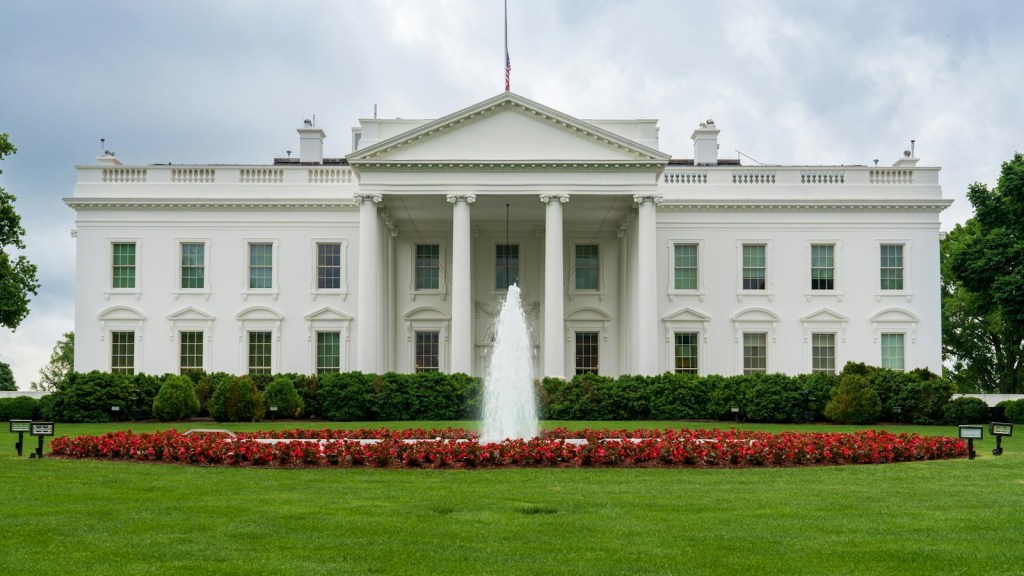
Why was the White House painted white? The short answer: the building was first coated with a lime-based whitewash in 1798 to protect its porous sandstone walls from moisture and freezing, and the white color was a practical result of that protection, not a decision about appearance. The popular story that the house was painted white to cover scorch marks after British troops burned it in 1814 does not hold up, because the whitewash came 16 years earlier and the nickname “White House” was already in use by 1812. This article explains what the walls are made of, how the color became the building’s identity, when the name became official, and how often the exterior is repainted today. Every claim below was checked against at least two independent sources, which are linked in the text and listed at the end.
Why was the White House painted white in the first place?
The reason was protection. The walls of the President’s House were built from sandstone, a stone that absorbs water. When water inside stone freezes, it expands and can crack the surface. The White House Historical Association states that the house was first made white with a lime-based whitewash in 1798, when its walls were finished, to protect the porous stone from freezing. Mental Floss, History.com and Reader’s Digest give the same date and the same purpose.
Washington winters regularly fall below the freezing point of water, 32°F (0°C), which made the risk a real one for a stone building. A lime coating helped keep water out of the stone, as both Mental Floss and Reader’s Digest explain. In the words of Mental Floss, the white color was “a serendipitous side effect” of a practical decision. Snopes likewise describes the coating as a measure to protect the locally quarried sandstone from winter freeze damage.
The answer to why the White House was painted white is therefore an engineering answer rather than a political or symbolic one. A building made of soft, absorbent stone needed a protective skin, and the protective coating its builders chose happened to be white.
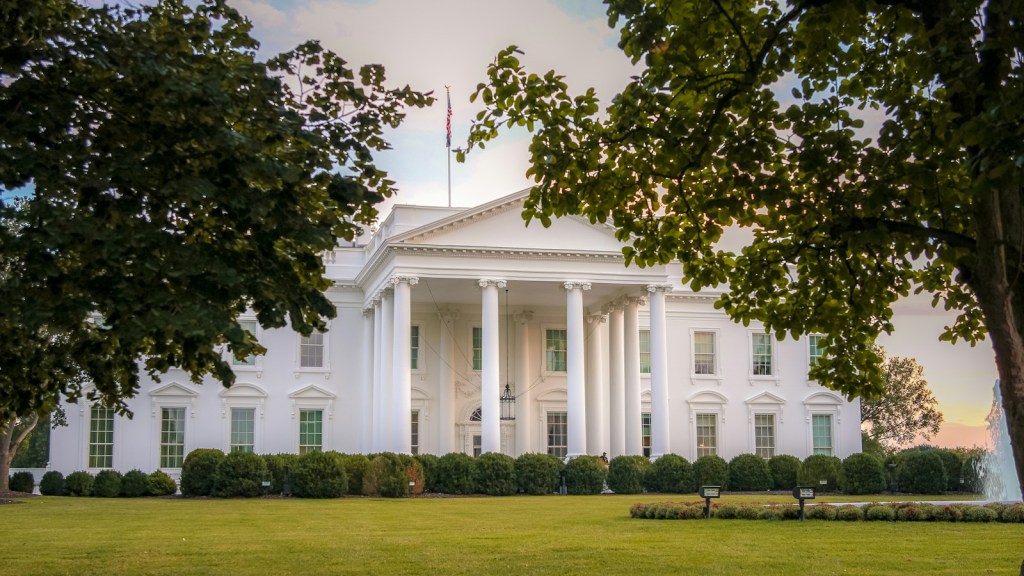
Was the White House originally white?
Not when the stone was first laid. The walls are sandstone quarried at Aquia Creek in Stafford County, Virginia. Wikipedia’s entry on Aquia Creek sandstone names the White House as one of the most significant buildings made from this stone, and Reader’s Digest also identifies the source as Aquia Creek, Virginia. Fox Business confirms that the building is made of sandstone from Virginia. Construction began in 1792, according to Fox Business and Reader’s Digest, and for its first several years the house showed the natural color of its stone.
Once the whitewash went on in 1798, the house was white, and it has been white ever since. Snopes reports that white coatings were used on the exterior from that point on. After the fire of 1814 and the rebuilding that followed, the lime coating gave way to paint. The White House Historical Association states that the building was painted with white lead paint in 1818. Mental Floss gives the same year for the switch to white lead paint.
For anyone asking whether the White House was always white, the most accurate answer is this: it has been white since 1798, about six years after construction began, and it has been kept white with lime wash and then paint for more than two centuries since.
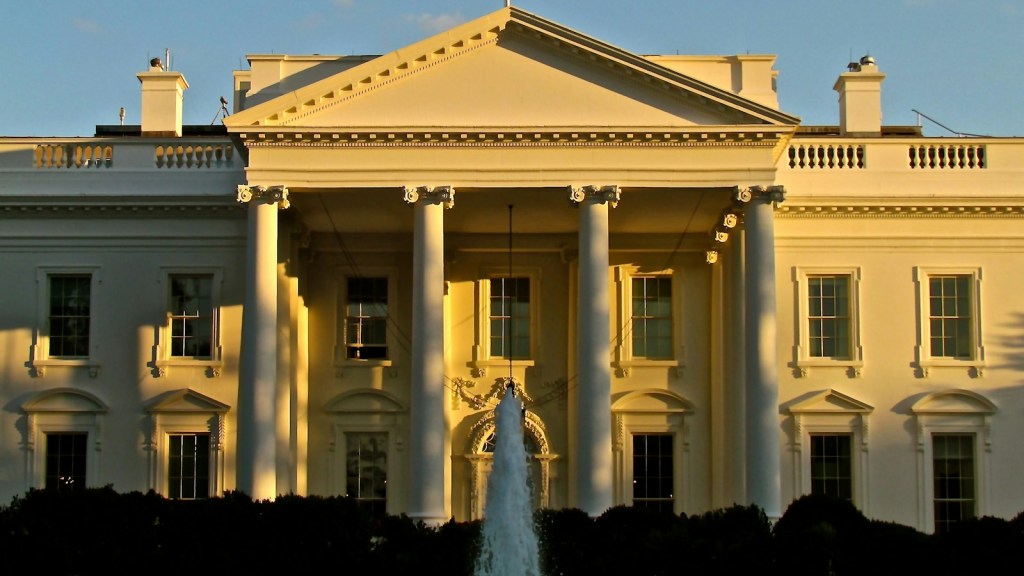
Was the White House painted white to hide damage from the 1814 fire?
No, although the story is one of the most widely repeated myths about the building. In August 1814, during the War of 1812, British troops captured Washington and set fire to public buildings, including the Capitol and the President’s House. History.com and Snopes both describe the attack. The damage reached the stone itself: Wikipedia reports that the fire cracked and pitted the sandstone, and The Christian Science Monitor notes that restoration workers in later years found stone still scorched by that fire.
The legend holds that the house was painted white afterward to cover the burn marks, and that this is how it got its name. The dates do not support it. The whitewash had been applied in 1798, 16 years before the fire, as the White House Historical Association, History.com and Reader’s Digest all state. The White House Historical Association says directly that white paint has nothing to do with covering the burning of the house. Snopes reaches the same conclusion and calls the story a legend that does not match the historical record.
The strongest evidence comes from a letter. On March 18, 1812, more than two years before the fire, Massachusetts congressman Abijah Bigelow referred to trouble at “the White House, as we call it,” meaning the president’s residence. This letter is cited by the White House Historical Association, Snopes, Mental Floss and Reader’s Digest. It shows that the white color, and the nickname that came from it, were well established before British troops ever reached Washington.
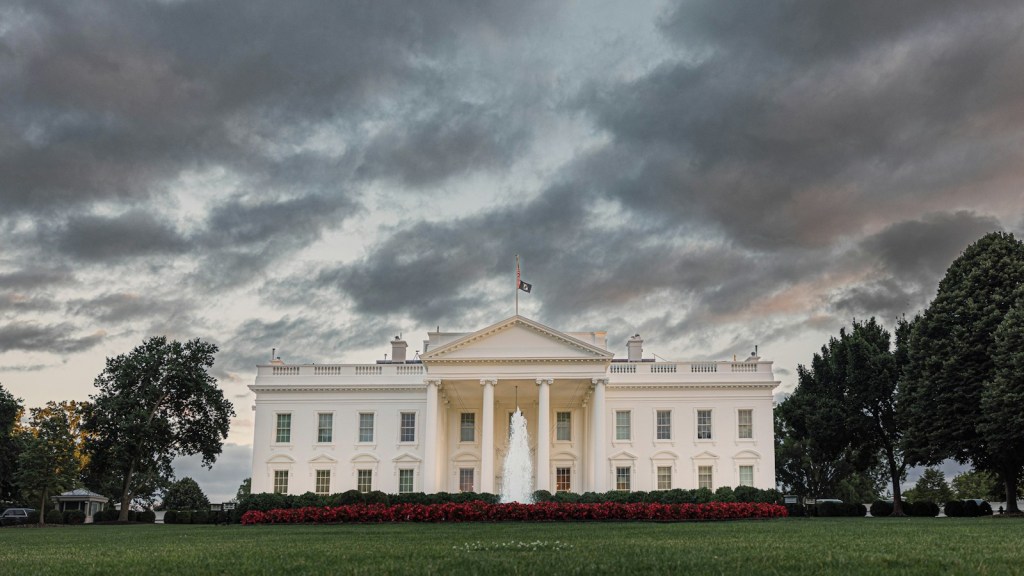
Why is the White House called the White House?
The name came from the color. For most of the nineteenth century, the building had different official names. According to Snopes and an Associated Press report carried by the Southeast Missourian, it was formally known as the President’s House, and the term Executive Mansion began appearing on official documents around 1850. In everyday speech, however, people called it the White House because of its distinctive white walls.
The nickname became the official name under Theodore Roosevelt. The White House Historical Association states that “White House” remained a nickname until October 1901, when Roosevelt made it official. The Associated Press report in the Southeast Missourian dates the change to October 17, 1901, and Snopes, History.com, Mental Floss, Reader’s Digest and Fox Business all agree on the year 1901.
Roosevelt’s change therefore did not create the name. It formalized a term that the public had used for decades, and it tied the building’s identity permanently to the color that had first been chosen for practical reasons.
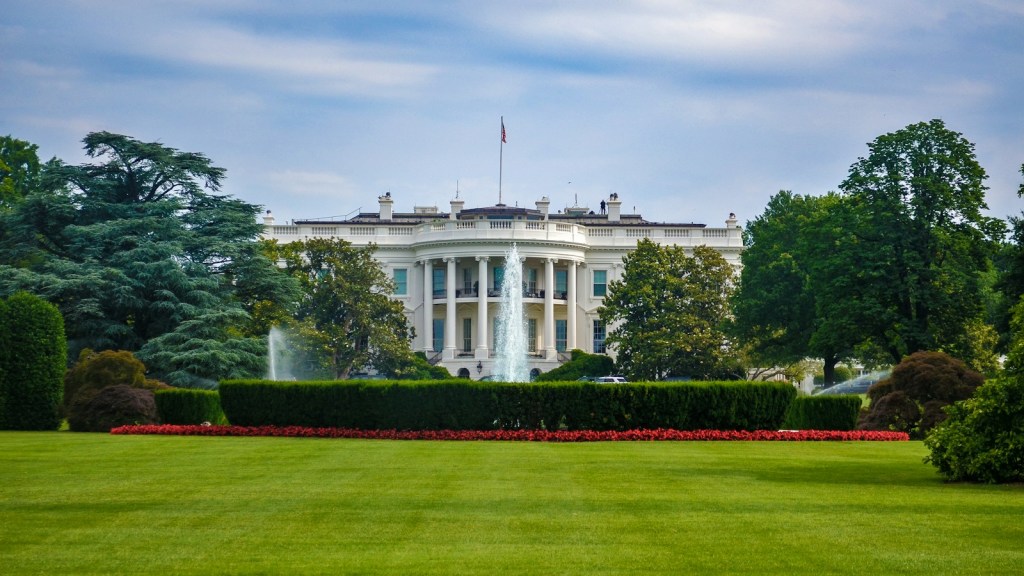
How often is the White House painted, and what color white is it?
The exterior is maintained on a regular cycle. The White House Historical Association states that the residence is cleaned and touched up every year, with a full coat applied approximately every four to six years. History UK gives the same four-to-six-year interval. Reader’s Digest similarly describes touch-ups in most years and full coats every few years.
A full coat is a large job. The White House Historical Association reports that it takes 570 gallons of white paint to cover the exterior of the residence, not counting the East and West Wings. Reader’s Digest and Atlas Obscura cite the same figure of about 570 gallons for a coat. When the house was repainted in 2019, Fox Business and Reader’s Digest reported that the paint was Duron’s “Whisper White,” a specialty paint made in Germany that costs about $150 per gallon. That is the most direct answer to the question of what color white the White House is.
Two centuries of coatings also created a problem of their own. Over time, paint built up on the walls in dozens of layers. The Christian Science Monitor reported that the paint was as many as 58 layers thick in places, and Discover Stafford records that 42 layers were removed from the entrance at the North Portico. A long restoration in the 1980s and 1990s stripped the old paint and repaired the decaying sandstone beneath it, according to The Christian Science Monitor and Discover Stafford. The Christian Science Monitor and Atlas Obscura both place the end of that project in 1996.
What does the White House’s color tell us about early Washington?
The history of the White House’s color reflects the conditions under which the capital was built. Builders used Virginia sandstone that was vulnerable to weather, and they protected it with a lime coating. The result was a white building, and the public named it accordingly. The building’s later history, from the 1814 fire to the twentieth-century restorations, has been shaped by the same need to protect and maintain that original stone.
Readers interested in the building’s practical history may also want to read our article on when the White House got flush toilets, which follows the same theme inside the house, and our piece on the most visited house in the U.S. answers a related question about famous homes. For a comparison with another head of state’s residence, see our overview of the royal homes of Queen Elizabeth II.
What was left out, and why?
Several details were left out because only one source supported them or because the sources disagreed. One source states that the stone was light gray before it was whitewashed; no second source confirmed the exact shade. An earlier use of the name “White House” by a British diplomat in 1811 and newspaper use as early as 1810 each appeared in only one source. The date paint was first applied after the fire differs slightly: two sources give 1818 for white lead paint, while Snopes associates oil-based white paint with the completion of the rebuilding in 1817. Wikipedia states that the house was whitewashed and later painted partly to hide fire damage, which conflicts with the White House Historical Association and other sources; the better-supported version is used here. Atlas Obscura gives 1902 rather than 1901 for the official name, and every other source used gives 1901. The exact form of Roosevelt’s 1901 order is described differently by different sources, so it is not detailed here. Repainting intervals also differ: Discover Stafford mentions a paint that lasts about ten years, while two sources give four to six years for a full coat. Several smaller details could not be confirmed by two sources and are not included: the amount of paint needed for the West Wing, the length of the 2019 repainting, the number of coats needed for a full renovation, the reasons Roosevelt preferred the name, how the lime wash was maintained between coats, and the carved stonework uncovered during the restoration.
Frequently asked questions
Was the White House originally white?
No. The walls are Aquia Creek sandstone from Virginia, and the building showed the natural color of that stone until a lime-based whitewash was applied in 1798. It has been kept white ever since, first with whitewash and from 1818 with white lead paint.
Was the White House painted white to cover the 1814 fire?
No. The whitewash was applied in 1798, 16 years before British troops burned the building, and a congressman’s letter from March 1812 already used the name “White House.” The story about covering burn marks is a myth.
Is the White House actually white?
The surface is white, but the structure underneath is sandstone. The color comes from the protective coatings that have been applied since 1798; the paint used in the 2019 repainting was a specialty white called Whisper White.
Why is the White House called the White House?
People began calling it the White House because of its white coating, which was applied in 1798. The name remained informal while the building was officially known as the President’s House and later the Executive Mansion, until Theodore Roosevelt made it official in October 1901.
How often is the White House painted?
The exterior is cleaned and touched up every year, and a full coat is applied about every four to six years. A full coat for the residence requires roughly 570 gallons of paint.
For more history, landmarks and rankings explained in a clear and reliable way, subscribe to Mr Global Rankss on YouTube (https://www.youtube.com/@mrglobalrankss) and browse more articles in our History and Buildings sections.
Related reading: When did the White House get flush toilets?, What is the most visited house in the U.S.?, Which Palace Did Queen Elizabeth II Live In?
Sources
- White House Historical Association: Why is the White House white?
- White House Historical Association: White House dimensions
- Snopes: Was the White House painted white to cover fire damage?
- Mental Floss: Why the White House is white
- History.com: White House renovations through history
- Reader's Digest: Why is the White House white?
- Fox Business: White House's new paint job, color, cost and other facts
- Southeast Missourian (Associated Press): TR named White House in one of his first orders
- Wikipedia: Aquia Creek sandstone
- The Christian Science Monitor: Restoring the White House walls (1996)
- Atlas Obscura: Secrets of the White House
- Discover Stafford: White House stone carving uncovered
- History UK: How long it took to paint the world's most iconic buildings


Leave a Reply