
How did people in early times make clay pots? They dug clay, mixed it with water, shaped it by hand into a vessel, added sand or other material to keep it from cracking, let it dry, and then fired it in an open fire or a pit. The potter’s wheel came much later, and the oldest known pottery, found in a cave in China, is roughly 20,000 years old.
This article explains the age of the earliest pots, the hand-building methods used before the wheel, how firing worked without a kiln, and when the wheel appeared. It also lists the details left out because only one source supported them.
How old is the oldest pottery?
Pottery is far older than farming in many regions. A 2012 study in the journal Science dated pottery fragments from Xianrendong Cave in China to about 20,000 years ago. Science News Explores and a Boston University report on the same research describe the find as the oldest known pottery, made by hunter-gatherers well before agriculture.
That result changed a common assumption. Many people had thought pottery arrived with farming and settled villages, but these vessels were made by mobile groups, probably for cooking and holding food. The finding fits what we know about daily life in the ancient world, a subject we explore in our article on what ancient humans did for pleasure.
How were pots shaped before the wheel?
Early potters shaped clay entirely by hand. Wikipedia’s overview of pottery and JSTOR Daily describe the main hand-building methods. In pinch pottery, the potter pushes a thumb into a ball of clay and thins the walls by pinching. In coiling, long ropes of clay are stacked in rings and smoothed together. In slab building, flat pieces of clay are cut and joined.
Potters also added a material called temper, such as sand, crushed shell or ground fired clay, to the wet clay. Temper helps the clay dry evenly and resist cracking during firing. The potter then smoothed or decorated the surface, and left the vessel to dry slowly in the shade, since a pot that dries too fast can crack before it is ever fired.
How did people fire pots without a kiln?
Firing turns soft clay into a hard, durable material. Early potters used simple methods. Wikipedia and Science News Explores describe pit firing and open bonfire firing, where dried pots were stacked, covered with fuel such as wood, dung or grass, and burned. The pots were left to cool slowly in the ashes. The results were less controlled than modern kiln firing, and some pots cracked or came out unevenly colored.
Over time, potters built enclosed kilns, which hold heat better and allow more consistent results. We have left out firing temperatures, as explained below, because the sources gave different figures.
When did the potter’s wheel appear?
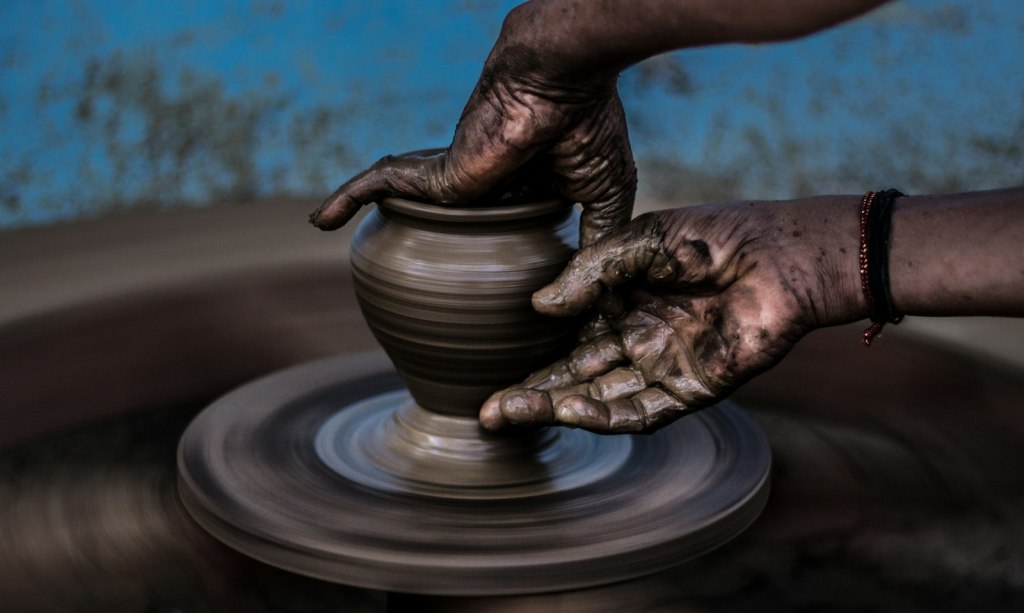
The wheel came long after hand-building. Wikipedia and JSTOR Daily place the first use of a turning device for pottery in the fourth millennium BCE in the ancient Near East, and note that the technique spread widely afterward. A wheel lets a potter spin the clay while shaping it, which produces more symmetrical vessels faster. Pots, once made, were useful for storing grain, carrying water and cooking, a role also seen in other household crafts such as soap making.
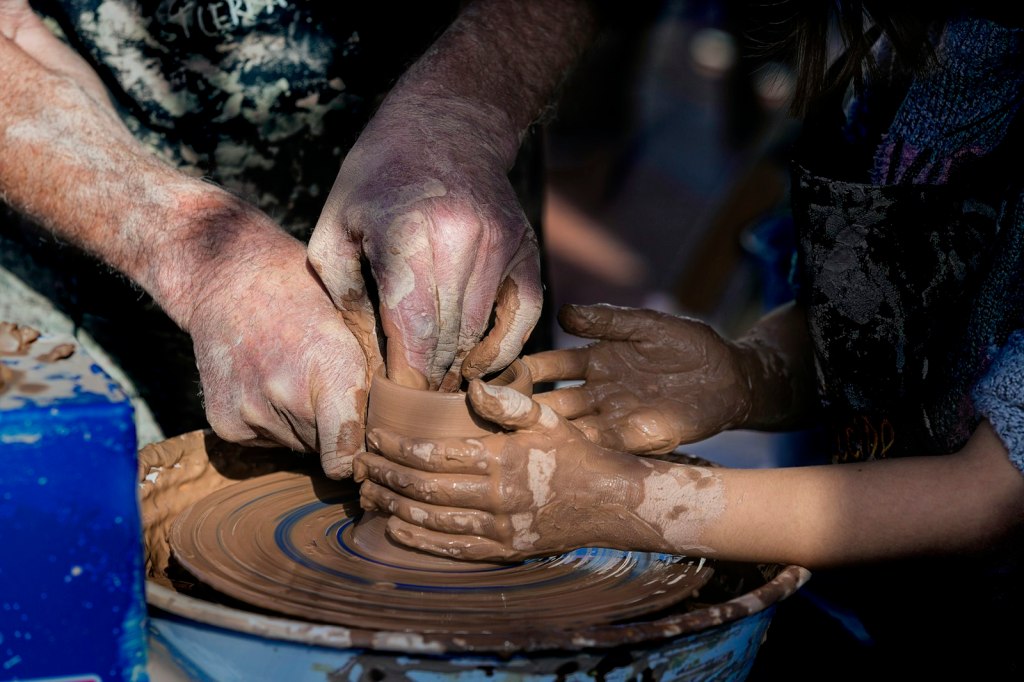
What makes early pottery so valuable to researchers is that clay, once fired, lasts almost indefinitely. Wood, cloth and food rot away, but broken pieces of pots can survive in the ground for thousands of years. Each fragment records choices made by its maker: the clay that was used, what was mixed into it and how it was shaped and fired. That is why archaeologists study pottery so closely, and why a few small pieces from a cave can change what we understand about people who lived long before any written record.
What was left out, and why?
Firing temperatures for pit and bonfire firing were left out, since the sources did not agree. We also left out the exact purpose of the oldest vessels, because researchers offer different views, and claims that pottery appeared independently in specific other regions at precise dates, because we could not confirm each with two sources. The precise date for the first potter’s wheel was removed for the same reason, so the article gives only the broad period.
Frequently asked questions
What is the oldest pottery ever found?
Fragments from Xianrendong Cave in China, dated to about 20,000 years ago, according to Science, Science News Explores and Boston University.
What is temper in pottery?
A material such as sand, shell or ground fired clay mixed into wet clay to reduce cracking as it dries and fires.
Did early potters use a wheel?
No. The earliest pots were shaped by hand. The wheel appeared much later, in the fourth millennium BCE.
How were pots fired before kilns?
In pits or open fires, where stacked pots were covered with fuel and burned.
Why was pottery important?
It allowed people to cook, store food and carry water in durable containers.
A vessel made from mud and fire changed how people lived. If you enjoy history explained clearly, subscribe to the channel at https://www.youtube.com/@mrglobalrankss.
Related reading: What ancient humans did for pleasure, daily life in ancient Rome, and how people made soap in the old days.


Leave a Reply