
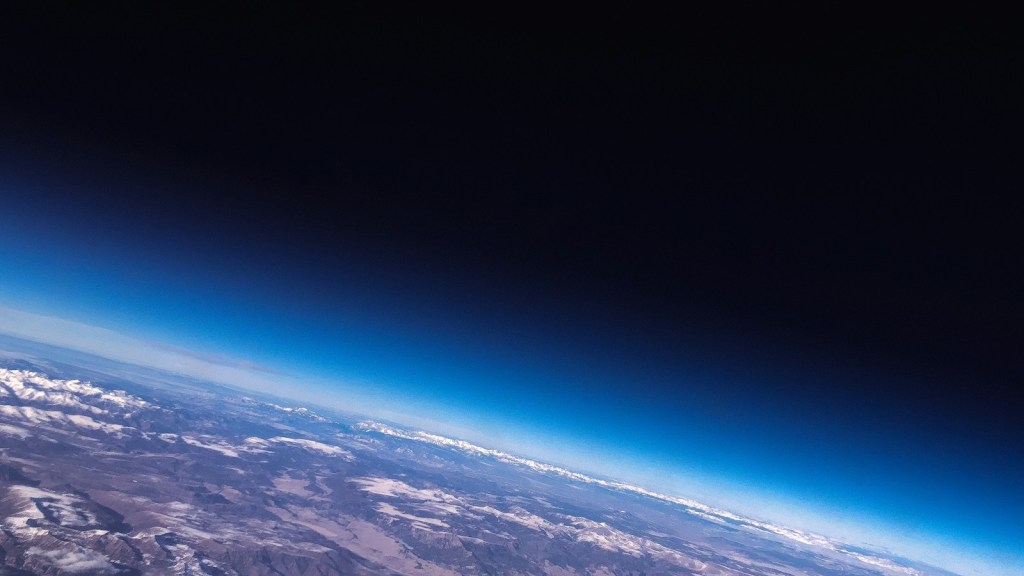
What happens to a body in space without a suit? An unprotected person would lose consciousness within about 10 to 15 seconds, because the body is starved of oxygen, and would die within minutes if nobody rescued them. The body would swell as moisture turns to vapor, but it would not explode, and it would not freeze solid at once. Films and games have taught many people the opposite, so this article sets out what researchers, space agencies and the record of a real accident say about the human body in a vacuum. It covers how long you would stay conscious, what happens to the lungs, whether blood boils, why the body does not burst or freeze instantly, and whether anyone has ever survived exposure to a near-vacuum.
How long would you stay conscious in space without a suit?
You would stay conscious for roughly 10 to 15 seconds. Stefaan de Mey, a senior strategy officer at the European Space Agency, told Space.com that unconsciousness would come in a matter of 10 to 15 seconds. Live Science reports that a 2013 review of earlier animal and human vacuum exposures found that subjects lost consciousness within 10 seconds, and Scientific American places the figure at under 15 seconds.
The first cause is a lack of oxygen, not the cold. In a vacuum the lungs cannot pass oxygen into the blood, and the blood that is already circulating is quickly used up. Jay Buckey, a professor at Dartmouth Medical School and a former NASA astronaut, explained to Scientific American that when the pressure becomes very low there is simply not enough oxygen. Death follows soon after. NASA researcher Kris Lehnhardt told Live Science that death is likely in under two minutes, while Space.com says brain death would follow within minutes unless the person were returned to a pressurized spacecraft and resuscitated.
What happens to your lungs in a vacuum?
The lungs are the most vulnerable organ. According to Live Science, which cites NASA’s bioastronautics data book, the vacuum first pulls air out of the lungs in a rush and then keeps drawing out gas and water vapor. The danger is greatest for anyone who holds their breath. Space.com says the expanding air would rupture the lungs, which is why de Mey advises emptying them as far as possible before exposure. Scientific American agrees that expanding air tears lung tissue, especially if the breath is held.
Does your blood boil in space?
Water in the body’s soft tissues would begin to turn to vapor, a process called ebullism, because the pressure around it is close to zero. The picture for blood is more nuanced. Live Science notes that blood in the veins boils more slowly than water in other tissues because the circulatory system maintains its own internal pressure. Space.com describes saliva and tears starting to boil and, in a person who held their breath, blood bubbling after the lungs rupture. Scientific American adds that bubbles in the veins block circulation after about one minute. The sources differ in emphasis, but they agree that the effects on the fluids of the body are serious and that they unfold after the first loss of consciousness.
Would your body explode or swell up?
The body would swell, but it would not burst. De Mey told Space.com that skin is elastic enough to cope with the expansion and that movie scenes of bodies exploding are inaccurate. Scientific American likewise says water in soft tissues vaporizes and causes swelling, but that the skin prevents bursting. Live Science explains the practical danger: gas expanding in the muscles can constrict blood flow to the heart and brain, acting like a vapor lock in the circulation.
Would you freeze instantly in space?
No. Space has almost no matter, so there is very little to carry heat away from the body by contact. Space.com says freezing would not be immediate because body heat does not conduct away easily in a vacuum. Live Science adds that the main way the body loses heat is by radiation, which is slow, although evaporating moisture absorbs heat and can nearly freeze the nose and mouth. Scientific American also describes rapid cooling of the mouth and airways as gas and vapor escape. In other words, the cold would be a local effect long before it became a whole-body one.
Has anyone ever been in space without a suit?
No person is known to have been in space without a suit, but a real accident in the mid-1960s came close. A NASA test subject was working in a vacuum chamber when the hose supplying his suit failed. Scientific American says he lost consciousness after 12 to 15 seconds and woke at about 27 seconds, once the chamber had been repressurized to roughly half of sea-level pressure. He reported that moisture on his tongue had begun to boil, and he lost his sense of taste for four days but was otherwise unharmed. A NASA account quoted by Gizmodo gives the same outline: about 14 seconds of awareness, a last memory of saliva bubbling, and repressurization within 15 seconds. Live Science recounts the same story and mentions the bubbling saliva. Accounts differ on the year, giving it as 1965 or 1966, so it is best described as a mid-1960s event.
Could you survive if someone rescued you quickly?
Survival is possible only for a very short exposure. Scientific American concludes that animal experiments and human accidents suggest a person could survive at least a couple of minutes with prompt rescue and repressurization. Space.com sets the limit in the same range, saying that brain death would follow within minutes unless the person were returned to a pressurized environment and resuscitated. The 1960s accident fits this pattern: the technician recovered because the chamber was repressurized within seconds.
What was left out, and why?
Several details were dropped because only one source supported them or the sources conflicted. They include the name of the technician in the 1960s accident, the results of specific animal experiments, the temperature figures one source gives for low Earth orbit (its Fahrenheit and Celsius ranges do not match), and claims about solar radiation and micrometeoroids.
Frequently asked questions
Can you survive in space without a suit?
Only briefly. Scientific American and Space.com both indicate that survival is possible for about a couple of minutes at most, and only with prompt rescue and repressurization.
What does it feel like to be in space without a suit?
The only first-hand account in these sources comes from the 1960s chamber accident. The technician sensed air escaping from his suit and felt moisture on his tongue begin to bubble before he lost consciousness, according to Gizmodo and Live Science.
Would your head explode in space?
No. Space.com and Scientific American both say the skin is strong and elastic enough to hold the body together even as tissues swell.
Why is holding your breath dangerous in a vacuum?
Air trapped in the lungs expands as the outside pressure drops. Space.com and Scientific American both say this can rupture lung tissue.
Thanks for reading. If you enjoy clear explanations of how the world works, subscribe on YouTube at https://www.youtube.com/@mrglobalrankss.
Related reading: Why airplane windows have a tiny hole and What is the deepest hole in America?


Leave a Reply