
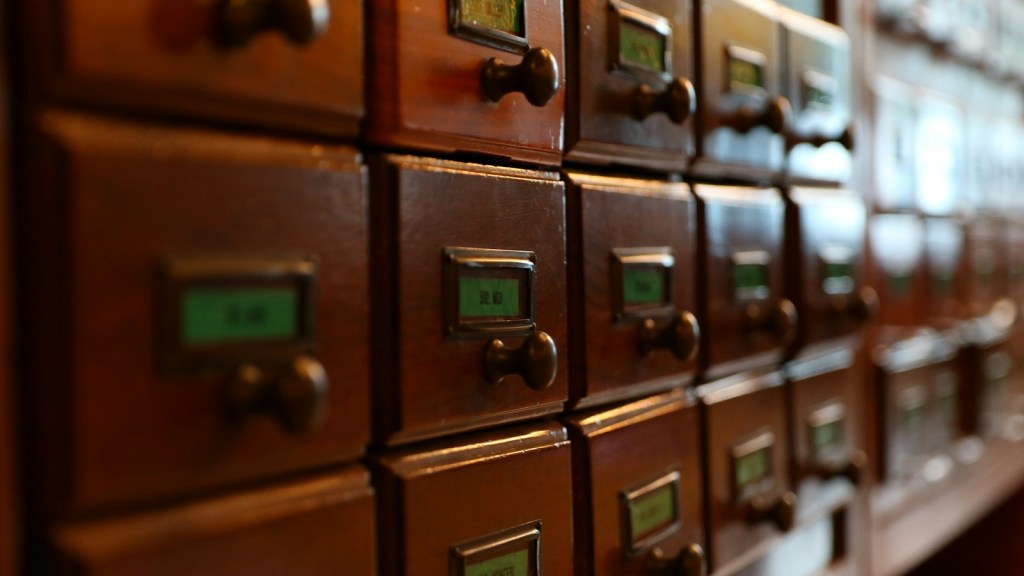
How did people learn before the internet? They relied on physical institutions and printed material: libraries and their card catalogs, encyclopedias, newspapers, manuals, mailed correspondence courses, recorded language lessons and, for early programmers, code printed in books and magazines. Learning took more planning and patience than a quick search, but the system was organized, and it worked.
This article explains how people studied before the internet, how they found out information, how they learned languages, how they learned to code, and how they learned new things in general. Where the sources disagree or only one source supports a detail, we have left it out, and a closing section lists those omissions.
How did people find out information before the internet?
The answer began with a trip to a library or a bookshelf. An Oxford University Press blog post on information before Google and the University of Missouri’s open textbook chapter, Information Before the Internet, both describe a world in which books, newspapers, libraries and printed manuals were the main routes to facts. The Oxford post notes that people turned to manuals for everything from household tasks to computing, and it mentions titles such as DOS for Dummies as a typical way of learning software.
Finding something meant knowing where to look. A person with a question about a medical symptom, a legal rule or a historical event would consult a reference book, ask a librarian or write to an organization. The effort was real, but so was the structure: libraries organized knowledge so that a patient reader could trace a subject from a broad category down to a specific page. We describe a related challenge in our article on how people navigated before GPS.
How did people find a book? The card catalog
The card catalog was the search engine of the library. The Library of Congress blog, Inquiring Minds: The Unheralded Story of the Card Catalog, and the Missouri chapter both explain that cards could be searched by title, author and subject, so a reader could approach a book from several directions. The Harvard Library preservation blog, in its history of the card catalog, dates the modern catalog card to around 1876 and links it to Melvil Dewey.
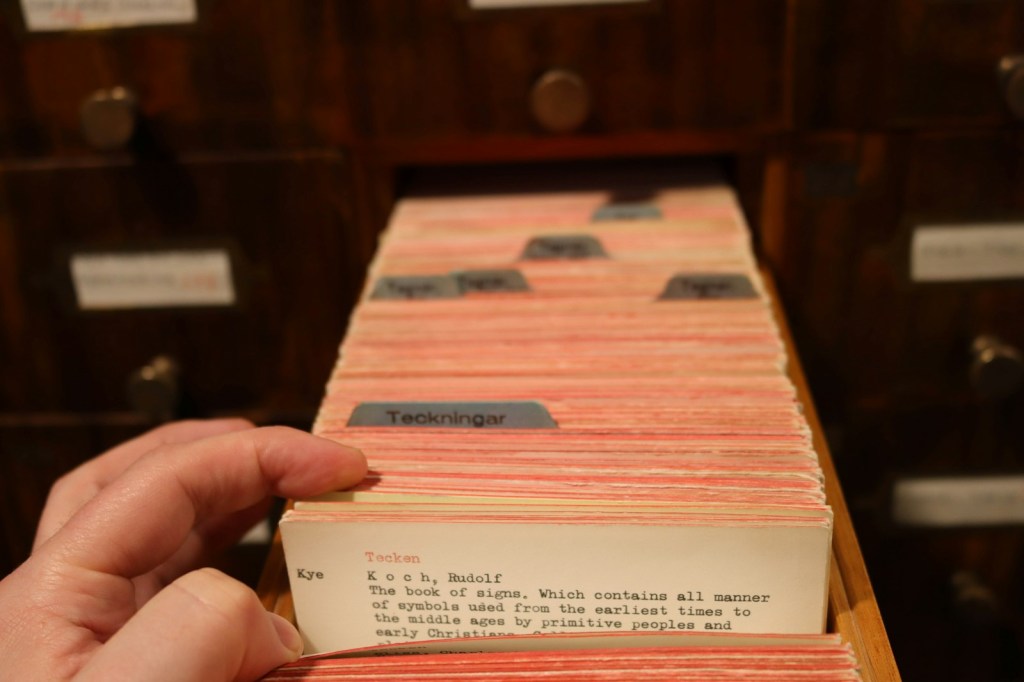
Catalogs eventually moved onto computers. The Library of Congress and the Missouri chapter both connect the change to the MARC cataloging format, which arrived in the 1960s and 1970s and made it possible to share catalog records electronically. For many readers, though, the drawer of cards remained the everyday tool for years afterward.
Magazines and journals had their own finding tools. Encyclopedia.com’s entry on the H. W. Wilson Company and Wikipedia both report that the Readers’ Guide to Periodical Literature was first published in 1901 by H. W. Wilson, giving readers an index to articles in popular magazines.
What was the role of the encyclopedia?
For a general answer, many households turned to an encyclopedia. The Encyclopaedia Britannica was first printed in Edinburgh in 1768. Al Jazeera and TechCrunch both reported in March 2012 that the company would stop printing the set after 244 years, and both note that the final print edition, from 2010, ran to 32 volumes and sold for $1,395.
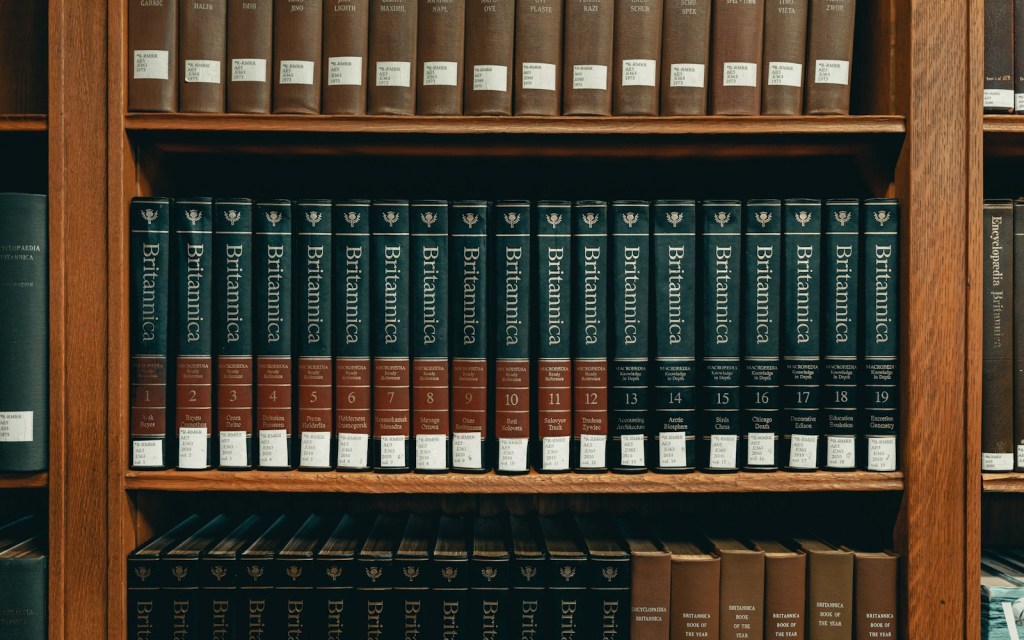
The price shows why libraries mattered. A household might own one set, but a library could offer many, along with the staff to help a reader use them.
How did people study before the internet?
Students without access to a classroom studied by mail. The University of Wisconsin’s history of correspondence course programs and JSTOR Daily’s three centuries of distance learning both report that Caleb Phillips advertised weekly mailed shorthand lessons in the Boston Gazette in 1728, one of the earliest known examples of distance education. Both sources also describe how the International Correspondence Schools grew out of a correspondence course on mine safety for workers. The sources disagree on the founding date, so we do not give one.
Such courses suited people who could not leave work or home to attend lessons. Lessons arrived by post, students completed exercises and returned them, and a teacher replied. The cycle was slow, but it opened education to people whom a conventional school could not reach. A similar reliance on written exchange shaped everyday life, as we explain in our article on how people communicated before phones.
How did people learn languages before the internet?
Wikipedia and Utah Communication History both report that Linguaphone was founded in 1901 by Jacques Roston and paired recordings with books, so learners could hear a language, not only read it. Later, language laboratories spread widely after the Second World War. Peterson’s history of the language laboratory, published by the University of Kansas, and the Language Museum both place that growth in the 1950s and 1960s.
How did people learn to code before the internet?
Early home computer users learned from printed pages. Two-Bit History and IEEE Spectrum both describe how enthusiasts typed BASIC programs from magazines and books, such as BASIC Computer Games, and learned by changing the lines and watching the result. Manuals supplied with machines such as the Commodore 64 and the BBC Micro taught the language directly, and most home computers of the period started up with BASIC built into their read-only memory, so a user could begin programming the moment the machine was switched on.
Typing a listing line by line taught precision, because one wrong character stopped the program. For many people, that routine was a first lesson in how software works. Learning to apply for work followed similarly practical lines, as we describe in our article on how people applied to jobs before the internet.
How did people learn things before the internet, in summary?
Four habits stand out. People went to institutions, mainly libraries, where trained staff and catalogs guided them. They used printed reference works that were edited and organized in advance. They learned at a distance through mail and recordings when a classroom was out of reach. And they practiced by hand, whether copying code or repeating phrases from a record. The internet made each of these faster, but it did not invent the underlying need to find, check and practice information.
What was left out, and why?
We left out details supported by only one source or where sources conflict. These include the Library of Congress printed card service dates, the year Pitman shorthand was introduced, the number of students enrolled with the International Correspondence Schools, radio language classes, Linguaphone enrollment figures, Britannica sales totals, the dates of early Chautauqua and university extension programs, and the details of military language methods.
Frequently asked questions
How did people study before the internet?
They studied from books, library collections and encyclopedias, and those who could not attend classes took correspondence courses by mail, a method advertised as early as 1728.
How did people find out information before the internet?
They used libraries, card catalogs searchable by title, author and subject, periodical indexes such as the Readers’ Guide, encyclopedias, newspapers and printed manuals.
How did people learn languages before the internet?
They used books paired with recordings, such as the Linguaphone courses begun in 1901, and later language laboratories, which spread widely in the 1950s and 1960s.
How did people learn to code before the internet?
They typed BASIC programs printed in magazines and books and read the manuals supplied with their computers, many of which started up with BASIC already built in.
Learning has always been about curiosity and effort, whatever the tools. If you enjoy clear explanations of how people lived and learned, subscribe to the channel at https://www.youtube.com/@mrglobalrankss for more from Mr Global Rankss.
Related reading: How people communicated before phones, how people navigated before GPS and how people applied to jobs before the internet.
Sources
- Oxford University Press blog: information before Google
- University of Missouri: Information Before the Internet
- Library of Congress blog: The Unheralded Story of the Card Catalog
- Harvard Library preservation blog: the card catalog
- Encyclopedia.com: The H. W. Wilson Company
- Wikipedia: Readers’ Guide to Periodical Literature
- Al Jazeera: Britannica to end print editions
- TechCrunch: Encyclopaedia Britannica ends its print edition
- University of Wisconsin: A History of Correspondence Course Programs
- JSTOR Daily: Three centuries of distance learning
- Wikipedia: Linguaphone (company)
- Utah Communication History: The Linguaphone Group
- Peterson: Origins of the Language Laboratory (University of Kansas)
- Language Museum: language laboratories
- Two-Bit History: Learning BASIC
- IEEE Spectrum: The Golden Age of BASIC


Leave a Reply