
How did people purify water in the past? Long before chemistry and treatment plants, people used a small set of practical methods: letting water settle so that mud sank, straining it through cloth, sand and gravel, boiling it, exposing it to sunlight, and adding natural substances such as alum to clear it. The earliest documented treatment comes from ancient Egypt, around the 15th century BC, and the Romans later built settling basins and ranked their water sources by clarity.
This article explains how water was purified in ancient times, how the Romans handled it, what we can and cannot say about early humans, what people in the olden days understood about clean water, and when the modern turn toward chlorination began. It closes with the claims we left out because the sources did not agree.
How did people purify water in ancient times?
The oldest written evidence points to Egypt. The University of Wisconsin ancient engineering project describes Egyptian use of alum to make water clearer, and JSTOR Daily reports that researchers suggest Egyptians added alum to settle suspended particles. Both place the earliest documented treatment at about the 15th century BC. A university engineering lecture from Rowan University also describes alum and the seeds of the moringa tree as early coagulants, meaning substances that make fine particles clump together and fall to the bottom.
Notably, the goal was usually clarity. Cloudy water looked, smelled and tasted unpleasant, and clearing it was the visible sign of improvement. The invisible threats, which we now know to be microscopic organisms, were not understood for thousands of years.
An ancient Sanskrit medical text, the Sushruta Samhita, recommended a combination of steps. According to JSTOR Daily, the Rowan lecture and the Wisconsin project, these included boiling water, heating it in sunlight, dipping heated iron into it, and filtering it through sand and gravel. We do not state a date for the text here, because the sources disagree on when it was written.
Greek medicine contributed a famous device. All three of the same sources credit the physician Hippocrates with a cloth bag, later called the Hippocratic sleeve, used to strain boiled rainwater. It is an early example of a filter designed for drinking water rather than for cooking or craft work.
How did the Romans purify water?
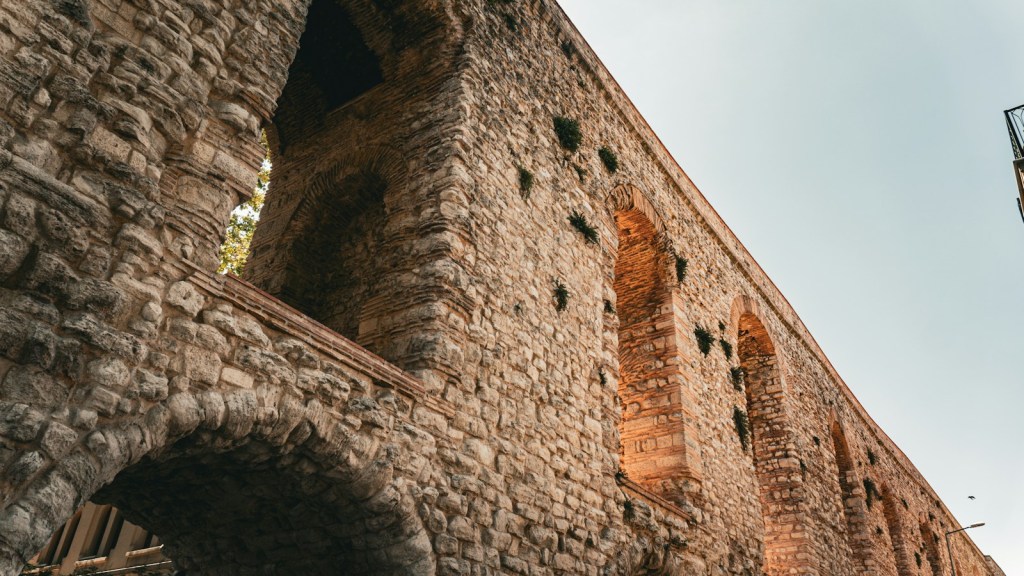
The Romans relied less on treating water than on choosing it well and letting it settle. PBS Nova explains that Roman engineers built settling basins along their aqueducts and ranked sources by quality, and it notes that the engineer Frontinus wrote about the system around AD 100. National Geographic describes the settling tanks, called piscinae limariae, in which sediment dropped out as the water slowed.
Frontinus himself is an unusually direct source. In his work on the aqueducts, available in the Bennett translation at LacusCurtius, he distinguishes between clearer and muddier supplies and reserves the Marcia for drinking. In other words, quality was matched to purpose. Clearer water went to people, and muddier water was used for other needs.
The Romans also used pipes, and both Nova and National Geographic report that many of them were made of lead. We do not claim that lead caused any particular harm in Rome, because the sources we checked do not establish that, and the popular story that lead poisoning ended the empire is a claim we left out.
Roman water engineering sat inside a broader culture of public life, from baths to fountains, which we describe in our article on daily life in ancient Rome.
How did early humans purify water?
The honest answer is that we do not know. There is no direct evidence that early humans purified water on purpose. What we do have is evidence of a tool that made later treatment possible. BU Today and Science News both report on pottery fragments about 20,000 years old from Xianrendong Cave in China, some of which carry soot marks that suggest the vessels were used over fires for cooking.
A vessel that can sit on a fire is a vessel that can heat water, but that is an inference rather than a finding. We therefore treat boiling by early humans as a reasonable possibility, not a documented fact.
How did they purify water in the olden days?
In the centuries between the ancient world and the modern one, the methods were largely the ones already described: settling, straining, boiling and choosing the best source available. The key limitation was that nobody could see the cause of waterborne illness. Clear water was assumed to be safe water.
That assumption was challenged in 1854. According to the Science History Institute and EBSCO, the London physician John Snow traced a cholera outbreak to the water pump on Broad Street, an investigation now regarded as a founding moment in public health. It showed that water could carry disease even when it looked acceptable.
Household practices of the era also overlapped with other daily skills. Keeping things clean, for example, is covered in our article on how people made soap in the old days, and keeping food safe is covered in our article on how people preserved meat before refrigeration.
When did humans start purifying water?
The answer depends on what counts as purification. The earliest documented treatment, the use of alum in Egypt, dates to about the 15th century BC according to the Wisconsin project and JSTOR Daily. Earlier practices may have existed, but they left no clear evidence, so we cannot date them.
The modern chapter begins with chlorine. The Centers for Disease Control and Prevention reports that Jersey City began chlorinating its water supply in 1908, and EBSCO describes final chlorination as standard practice by that year. Together, these accounts show that the shift from clearing water to disinfecting it came only in the early 20th century.
What was left out, and why?
Several popular claims were left out because only one source supported them or the sources disagreed. These include the date of the Sushruta Samhita, which varies widely between sources; a 1746 patent for a water filter; the dates and inventors of early city filtration plants, which were only partly supported; typhoid death figures, which rested on a single source; and the exact date of the first Roman aqueduct and the number of aqueducts serving the city, which appeared in only one source. We also left out the claim that lead poisoning caused the fall of Rome and any specific boiling time or temperature that ancient writers supposedly recommended.
Frequently asked questions
How did people purify water in ancient times?
They let water settle, strained it through cloth, sand and gravel, boiled it, heated it in sunlight, and added substances such as alum, with Egypt providing the earliest documented example around the 15th century BC.
How did the Romans purify water?
They used settling basins along their aqueducts and ranked sources by quality, reserving supplies such as the Marcia for drinking.
How did early humans purify water?
There is no direct evidence that they did. Pottery about 20,000 years old with soot marks suggests cooking vessels existed, but boiling water for safety remains an inference.
How did they purify water in the olden days?
Mostly by settling, straining and boiling, and by choosing clear sources, until John Snow’s 1854 investigation showed that clear water could still carry disease.
When did humans start purifying water?
The earliest documented treatment is the use of alum in ancient Egypt around the 15th century BC, and chlorination of public supplies, as in Jersey City, came in 1908.
Clean water is one of the quiet foundations of history. If you enjoy history explained clearly, subscribe to the channel Mr Global Rankss at https://www.youtube.com/@mrglobalrankss.
Related reading: Daily life in ancient Rome, how people made soap in the old days, and how people preserved meat before refrigeration.
Sources
- University of Wisconsin: Ancient Egypt water engineering
- JSTOR Daily: Before Brita
- Rowan University: Environmental engineering lecture (history of water treatment)
- PBS Nova: Roman aqueducts
- National Geographic: Roman aqueducts, engineering innovation
- LacusCurtius: Frontinus, De Aquis (Bennett translation)
- BU Today: A prehistoric pottery barn
- Science News: Oldest pottery
- Science History Institute: John Snow hunts the Blue Death
- EBSCO Research Starters: Chlorination of the U.S. water supply begins
- CDC: History of drinking water treatment


Leave a Reply