
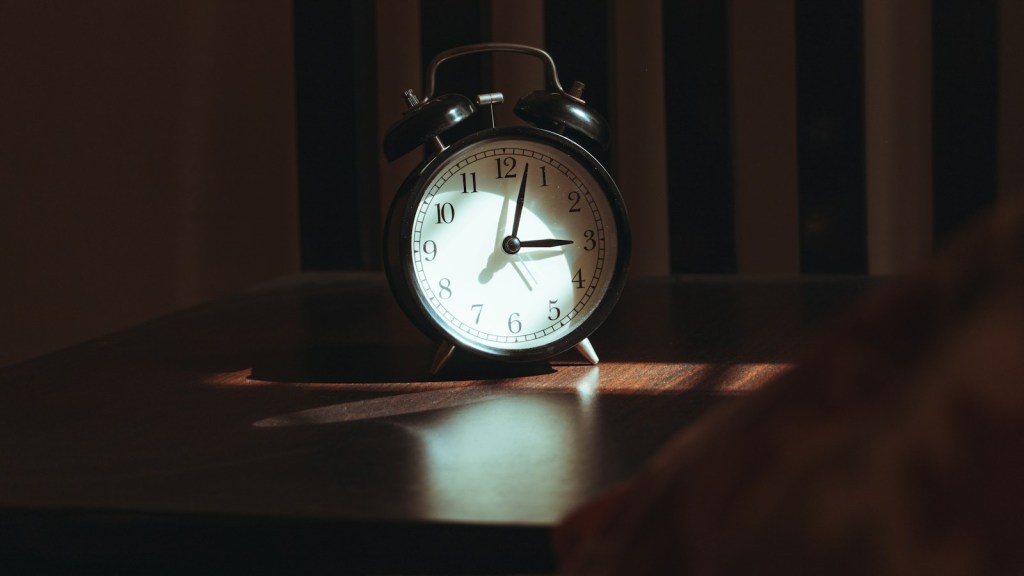
How did people wake up before alarm clocks were invented? For most of history they relied on daylight, the crowing of roosters and the ringing of church bells, and later on clever devices such as water clocks and candles that dropped a nail, or on a paid human alarm known as a knocker-upper. Mechanical alarms arrived only in the late eighteenth century and took another hundred years to become affordable. This article follows that long road from the natural signals of the countryside to the bedside clock, using sources that agree with one another and noting honestly where they do not.
What woke most people before alarm clocks existed?
For most people, the answer was the day itself. Sleep researcher Fatima Yaqoot notes in The Business Standard that daylight was among the strongest cues for sleep and waking in many pre-industrial societies, and that the dawn chorus of birds marked the start of the morning. Crowing roosters served the same purpose, a point also made by Live Science, where historian Sasha Handley observes that roosters and cows waiting to be milked would have interrupted sleep in an agricultural society.
Life in a farming community needed no printed timetable. Work began when there was light to see by and ended when it faded, and the animals kept a schedule of their own. For these households, waking up on time was less a matter of machinery than of habit and surroundings.
Did the body clock do some of the work?
Partly, yes. Sleep scientist Melinda Jackson explains in Live Science that the circadian rhythm, regulated by the hypothalamus and shaped by light and dark, governs alertness and sleepiness across the day. Sleep that has accumulated overnight, combined with morning light, can bring a person awake without any outside prompt.
This helps explain why regular routines and exposure to daylight mattered a great deal. For earlier generations, the body and the sun were a reasonably dependable pair, and no device was needed to coordinate them.
Were church bells and town clocks early alarms?
They were, at least for those who lived within earshot. Live Science quotes Handley as saying that church bells functioned as a kind of early alarm clock, and The Business Standard reports that in medieval Europe bells rang regularly to mark the hours and guide daily activity. The Australian Catholic University adds that early mechanical clocks were large objects housed in churches and town belfries.
Personal timekeeping, by contrast, was out of reach for ordinary families. According to History.com, mechanical clocks appeared in European church towers in the late thirteenth century and remained largely confined to churches, palaces and wealthy homes through at least the seventeenth century. A bell in the square was therefore a shared alarm, not a private one.
What was Plato’s water alarm?
The ancient Greeks used water clocks, called clepsydras, and Plato is credited with adapting one into an alarm. History.com says he reportedly built a water clock that sounded a whistle to wake him for morning lectures, while The Business Standard describes the mechanism as rising water pressure forcing air through a tube to produce a loud, kettle-like sound.
Accounts differ on details. History.com places the device in the fifth century B.C., whereas Atlas Obscura refers to the fourth century B.C., and the word “reportedly” appears in several tellings. It is best read as a credible tradition rather than a fully documented invention, but it shows that the idea of a timed sound is very old.
How did a candle become an alarm clock?
Candle clocks, which Live Science and The Business Standard trace to ancient China, burned at a steady pace, and some were built to wake the sleeper. A nail or metal pin was set into the wax at the chosen point, and as the candle burned down it dropped into a metal tray with a clatter.
The method was inexpensive and also gave light, which suited a household that already made its own candles. It was never precise, since the burn rate depended on the wax and the room, but for rising a little before dawn it was good enough for those who could afford the candle.
What exactly was a knocker-upper?
A knocker-upper, sometimes called a knocker-up, was a person paid to wake workers in industrial towns. Wikipedia’s entry on the knocker-up notes that the trade developed in Britain, Ireland and the Netherlands during the Industrial Revolution, when alarm clocks were neither cheap nor reliable. Flashbak adds that night shifts disrupted sleep and that London dock work followed the tides, so start times could change from day to day.
The tools were plain. Knockers used long poles or canes to tap upstairs windows, and some used peashooters. The best remembered is Mary Smith of East London, photographed in the 1930s, who fired dried peas at bedroom windows. Both Stephen Liddell’s account and Flashbak record that she charged sixpence a week and began her rounds around three in the morning. Wikipedia’s entry on the knocker-up says some workers stayed until the client was awake, while others tapped a few times and moved on, and that police constables sometimes earned extra money this way on early patrols.
Who made the first mechanical alarm clock?
The first known mechanical alarm of the modern kind is credited to Levi Hutchins, a clockmaker in Concord, New Hampshire. Wikipedia’s biography of Levi Hutchins states that in 1787 he built a wooden cabinet clock with an extra gear that rang a bell at 4 a.m. Both History.com and Atlas Obscura add that he never patented it. It could ring at only one hour, which was all he needed to rise for work.
The French clockmaker Antoine Redier is credited with the first patent for an adjustable alarm, in 1847, as noted by Atlas Obscura, History.com and Wikipedia’s entry on the alarm clock. Seth E. Thomas then patented an alarm clock in 1876, and the company that bore his name became a mass producer, according to Atlas Obscura. With History.com placing mass production around the turn of the twentieth century, the bedside alarm became common only about a century after Hutchins built his.
When did the knocker-upper disappear?
The trade faded as cheap, reliable alarm clocks reached ordinary homes, but the sources do not agree on when. Some place its decline in the 1920s, others in the 1930s and 1940s, and one notes pockets of industrial England where it survived into the early 1970s. Because those dates conflict, no single year can be given with confidence.
What the accounts do share is the reason. The paid human alarm existed to fill a gap that technology had not yet closed, and it faded as cheaper clocks became available. For a glimpse of daily routines in other eras, you can read about what people in ancient Rome actually did all day.
What does this history show?
It shows that waking on time has always been a shared project. Sunlight, animals, bells, and eventually neighbors and clocks all played a part, and the rise of factory schedules turned a natural rhythm into a commercial service. Understanding that shift also adds context to other everyday routines of the past, such as how people in the 1800s bathed or how people heated their homes in the 1700s.
It also shows how gradual invention can be. The first mechanical alarm in 1787 rang at only one hour, the first adjustable patent came sixty years later, and mass production followed decades after that.
What was left out, and why?
Some popular claims appeared in only one source we could open, and they are not included. These cover the monastery water clocks and the specific monastic rulebook recommendations, the Roman use of nail candles, and King Alfred’s candle clocks. We also omitted incense clocks and alarms that lit lamps, as well as the claim that knocker-uppers served mainly wealthier families, because other sources describe working-class districts. Finally, the exact end date of the knocker-upper trade is left open because accounts conflict.
Frequently asked questions
How did people wake up before alarm clocks?
Mostly with daylight, roosters and church bells, and later with water clocks, candles that dropped a nail, or a paid knocker-upper tapping on the window.
What is a knocker-upper?
A knocker-upper was a person paid to wake workers, usually in British industrial towns, by tapping windows with a long pole or firing dried peas through a pipe.
Who invented the first alarm clock?
Levi Hutchins of Concord, New Hampshire, built a mechanical alarm in 1787 that rang at 4 a.m. Antoine Redier patented an adjustable version in France in 1847.
When did alarm clocks become common?
After Seth Thomas patented a model in 1876, mass production put them in ordinary homes around the turn of the twentieth century.
If you enjoy history like this, browse more in our History and Facts sections and subscribe to Mr Global Rankss on YouTube (https://www.youtube.com/@mrglobalrankss) for more science, history and rankings.
Related reading: What Did People in Ancient Rome Actually Do All Day?, How Did People in the 1800s Bathe? and How People Heated Their Homes in the 1700s
Sources
- Live Science: How did people wake up before alarm clocks?
- The Business Standard: How people woke up before alarm clocks
- History.com: Who invented the alarm clock?
- Atlas Obscura: A 2,000-year history of alarm clocks
- Wikipedia: Alarm clock
- Wikipedia: Levi Hutchins
- Wikipedia: Knocker-up
- Stephen Liddell: The secret world of knocker-uppers
- Flashbak: When the alarm clock was a person
- Australian Catholic University: Waking up to the history of alarm clocks


Leave a Reply