
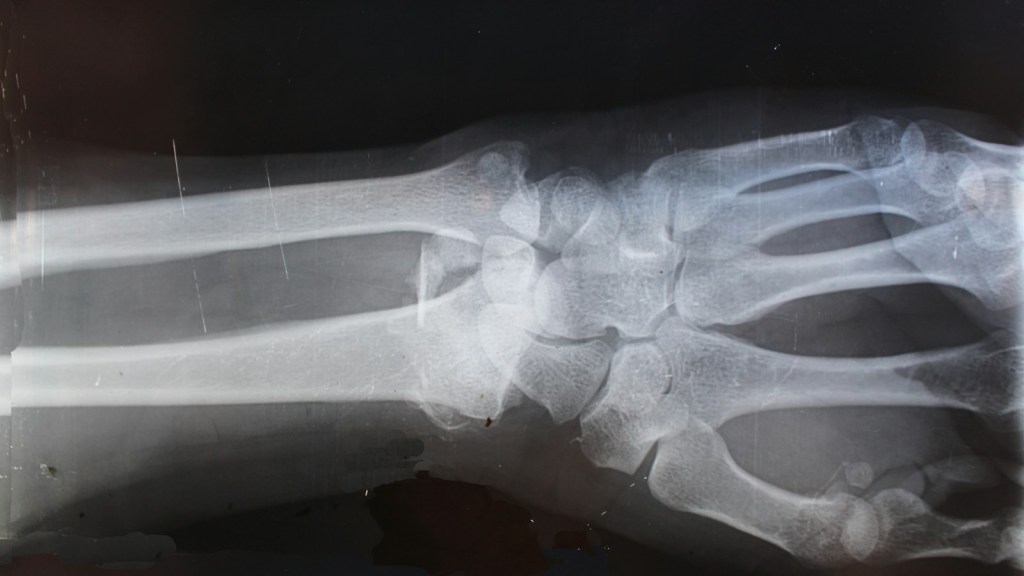
How did people heal broken bones in the past? For most of history the method was the same: pull the broken ends back into line, wrap the limb, and hold it still with splints until the bone knitted together. Ancient Egyptian physicians splinted fractures with linen-padded wood, Greek physicians refined bandaging and traction, and around 1852 a Dutch army surgeon introduced the plaster bandage that became the modern cast.
This article follows that story from the splints of ancient Egypt to the plaster of the 1800s. It explains how broken bones were treated in the past, how ancient people healed broken bones, how broken bones were treated in medieval times, and how people healed broken bones in the 1800s. Where the historical sources disagree, we say so, and a closing section lists what we left out.
How were broken bones treated in ancient times?
The oldest direct evidence comes from ancient Egypt, where physicians splinted broken limbs. Egyptian splints were made of bark or wood and padded with linen, according to a 2013 article on orthopaedics in ancient Egypt and Encyclopedia.com.
Egyptian treatment was also written down. The Edwin Smith Papyrus, a surgical text that survives in a copy made around 1600 BC, covers fractures among its cases. A 2017 review in The Open Orthopaedics Journal and Brewminate’s survey of treating broken bones in the ancient world both place it in that period, and Brewminate notes that for some upper-limb fractures the healer reduced the break by traction and bound it with linen.
Some Egyptian bandages were designed to stiffen. The 2013 article reports bandages dipped in a mixture that included honey and resins and hardened as it dried, and the 2017 review describes self-setting bandages that were probably derived from embalming practice. In effect, these were early casts made from linen.
The greatest danger was a break that pierced the skin. The 2013 article says infected open fractures accompanied by fever were regarded as grave, and Brewminate notes that without any understanding of germs, open fractures remained very dangerous in every ancient tradition. A closed fracture could heal with splinting and patience. An open one could lead to infection and, in some cases, amputation.
How did ancient people heal broken bones in Greece and India?
Greek physicians left the most detailed instructions. The Hippocratic writings include a treatise called On Fractures, available in Francis Adams’s English translation, which begins with extension: the physician pulls the limb straight, often with the help of assistants, before aligning the bone by hand. Brewminate confirms that Greek reduction used traction and countertraction, and the overview in mdedge likewise credits Hippocrates with a keen understanding of those two forces.
Bandaging followed straightening. A 2025 history of the orthopedic splint says the Greeks used waxes and resins on bandages, and the 2017 review says Hippocrates described wrapping an injured limb in bandages soaked in wax and resin.
Traction could be mechanical as well as manual. Brewminate notes that straps, benches, levers and other devices could help apply controlled force, and Encyclopedia.com says the ancient Greeks pulled a broken limb with weights and pulleys, a practice that later fell out of use.
In India, the Sanskrit surgical text known as the Sushruta Samhita belongs to the same early tradition of treating injuries. Brewminate describes splints made of bamboo, wood or bark, and Encyclopedia.com likewise notes that ancient Hindus used bamboo splints. The shape of the treatment was the same across these cultures, even though the materials differed.
How did they treat broken bones in medieval times?
Much of the ancient knowledge survived in the medieval period through physicians writing in Arabic. The Open Orthopaedics Journal review says the tenth-century surgeon al-Zahrawi, who was born near Córdoba, described casting materials such as clay and gum mixtures and flour with egg white. The 2025 splint history says Arab surgeons hardened bandages with lime from seashells and egg whites, and Brewminate says Islamic physicians, among them al-Razi, Ibn Sina and al-Zahrawi, extended Greek methods and used hardening bandage mixtures. Brewminate stresses that these were forerunners of casts, not true plaster casts.
In medieval Europe, fractures were usually handled by barber-surgeons and traditional bonesetters rather than university physicians. A reconstruction of fourteenth-century fracture treatment published by EXARC describes a barber-surgeon who had helpers pull on the limb while he pushed the fragments together, then bandaged and splinted it. An article on medieval bone setting likewise describes manipulating displaced bones into position and immobilizing them, and notes that many bonesetters learned through apprenticeships or family tradition.
Traction was revived by the French surgeon Guy de Chauliac (1300 to 1368), according to both Encyclopedia.com and EXARC, which also notes that he drew on the earlier writings of al-Zahrawi, whom the Latin world called Albucasis. The medieval period is sometimes described as a time of little progress in surgery. For fractures, the more accurate picture is one of careful preservation: the main ancient ideas of reduction, bandaging and splinting stayed in use, and traction returned to the toolkit. For a look at another area of medieval health, see our article on the Black Death.
How did they heal broken bones in the 1800s?
The most important change of the century was the plaster bandage. Around 1852, the Dutch army surgeon Antonius Mathijsen introduced roller bandages filled with plaster of Paris that hardened to hold the bones in place, as the 2017 review and Encyclopedia.com both report. The 2017 review adds that bandages soaked in water and plaster hardened within minutes. A 2012 historical study of wrist fractures, published in Hand Clinics, confirms that plaster of Paris became popular in Europe for casting in the 1850s. The sources give the exact year as 1851 in some places and 1852 in others, so we say “around 1852.”
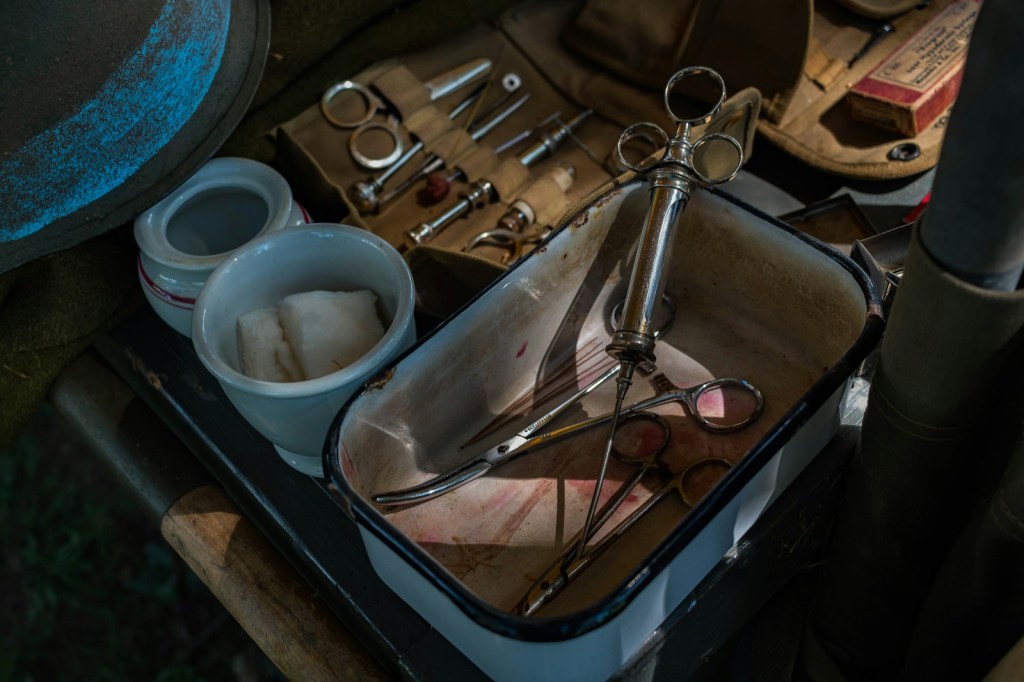
Plaster stayed the standard material for generations. The 2025 splint history says it became the standard fracture-stabilization material in the early 1900s, while Encyclopedia.com says plaster casts remained standard until the early 1980s, when fiberglass replaced them. Both reports also agree that commercially manufactured plaster bandages appeared in the 1930s, replacing the practice of preparing them by hand.
Another 1800s figure was the Welsh-born Liverpool surgeon Hugh Owen Thomas, who died in 1891. The Science Museum Group describes him as coming from a long line of bonesetters, but unlike earlier generations he was medically qualified. He believed that rest and immobilization were best for injured limbs and designed adjustable splints. His name is attached to the Thomas splint, which came into wide use only after his death, when his nephew Sir Robert Jones championed it during the First World War. The Robert Jones and Agnes Hunt Orthopaedic Hospital’s account of the Thomas splint says the same, and both credit it with lowering deaths from thigh-bone fractures.
Finally, in 1895 Wilhelm Röntgen discovered X-rays, as World History Encyclopedia and the Hand Clinics study both report. The Hand Clinics authors explain that this allowed fractures to be assessed in living patients, and the 2017 review notes that plaster is transparent enough to X-rays that a limb can be examined while it is in a cast. For the first time, a doctor could check that a bone was healing in the right position without removing the splint. For another example of how people coped with pain and injury before modern medicine, see our article on how people dealt with wisdom teeth before dentistry.
What did every era have in common?
Looking across more than three thousand years, the same four ideas keep returning. First, the broken ends are brought back into line, by hand or by traction. Second, the limb is wrapped to control swelling. Third, a rigid support holds the bone still, whether it is bark, bamboo, wood or plaster. Fourth, the patient rests while the bone heals. Hugh Owen Thomas expressed the fourth idea most clearly when he argued for rest and immobilization, but it is implicit in the Egyptian splint and the Greek bandage as well.
What changed was how reliably the support could be made, how well the doctor could see the bone, and how safe the patient was from infection. The plaster bandage made the support easy to mold and quick to harden, and the X-ray made healing visible. Even so, a modern cast follows the same logic as an Egyptian linen splint. That continuity is a reminder that careful observation of how the body repairs itself, rather than any single invention, produced most of the progress.
What was left out, and why?
Several details appear in only one source or in sources that disagree, so we left them out. They include the Egyptian burial finds with splinted fractures and their dates, the number of fracture types in the Sushruta Samhita, the exact timing of splints in Hippocratic practice, the specific traction machines attributed to the Greeks, the year plaster of Paris was first used in Persia, specific healing times in the Hippocratic text, the mortality figures for the Thomas splint, the details of Roman treatment, and claims about Lister’s antiseptic methods and the early use of steel plates. As with the question of which era had the worst hygiene, the evidence is strongest where independent sources agree.
Frequently asked questions
How were broken bones treated in the past?
The bone was pulled back into line, the limb was bandaged, and splints held it still while it healed. The materials changed from linen-padded wood and bamboo to plaster, but the method stayed much the same.
How were broken bones treated in ancient times?
Egyptian healers used bark or wooden splints padded with linen, Greek physicians used traction and wax-and-resin bandages, and Indian surgeons used bamboo, wooden or bark splints.
How did they treat broken bones in medieval times?
Barber-surgeons and bonesetters set the bone by hand, then bandaged and splinted it, and the surgeon Guy de Chauliac used traction in the fourteenth century. Islamic physicians also used bandages hardened with egg white mixtures.
How did they heal broken bones in the 1800s?
Around 1852 the Dutch army surgeon Antonius Mathijsen introduced plaster of Paris bandages that hardened into a cast. Splints such as the Thomas splint and, from 1895, X-ray images also changed fracture care.
Every cast and splint in a hospital today descends from those first linen wraps. If you enjoy history explained clearly, subscribe to the channel at https://www.youtube.com/@mrglobalrankss for more science, history and rankings from Mr Global Rankss.
Related reading: How people dealt with wisdom teeth before dentistry, the Black Death and which era had the worst hygiene.
Sources
- Szostakowski, Smitham and Khan: Plaster of Paris, a short history of casting (The Open Orthopaedics Journal, 2017)
- Surabhi, Surabhi and Ganti: The Orthopedic Splint and Its Origins (Orthopedic Reviews, 2025)
- Said: Orthopaedics in the dawn of civilisation, practices in ancient Egypt (International Orthopaedics, 2013)
- Diaz-Garcia and Chung: The Evolution of Distal Radius Fracture Management (Hand Clinics, 2012)
- MDedge: An Overview of the History of Orthopedic Surgery
- Encyclopedia.com: Fractures, Treatments and Devices
- Brewminate: Treating Broken Bones in the Ancient World
- MIT Internet Classics Archive: Hippocrates, On Fractures (trans. Francis Adams)
- EXARC: Medieval fracture treatment reconstruction
- HistoryRise: Medieval spinal manipulation and bone setting techniques
- Science Museum Group: Hugh Owen Thomas
- Robert Jones and Agnes Hunt Orthopaedic Hospital: The Thomas splint
- World History Encyclopedia: Discovery of X-Rays


Leave a Reply