
How did people tell time before clocks? By day they read the sun, using the length and direction of a shadow. At night they watched the stars, or relied on devices that ran at a steady rate, such as water clocks, marked candles, burning incense and sand glasses. None of these methods was precise by modern standards, but together they organized work, worship and daily life for thousands of years before the mechanical clock appeared.
This article explains how each method worked, how people measured time at night, and what finally replaced them. Where our sources disagreed, or only one could be found, the detail has been left out and is listed near the end.
How did people measure time before clocks?
The earliest clock was the sky. People noticed that the sun climbs, peaks and falls each day, and that shadows shorten and lengthen with it. Scientific American notes that people probably used simple tools, such as an upright stick in the dirt, or no tool at all, and that such methods left no archaeological trace.
Monuments soon joined the sun to the calendar. History.com and the National Institute of Standards and Technology both report that Egyptian obelisks, built as early as 3500 BCE, may have worked as shadow clocks. NIST adds that their moving shadows let people divide the day into morning and afternoon and that they marked the longest and shortest days of the year.
What was used to tell time before the clock?
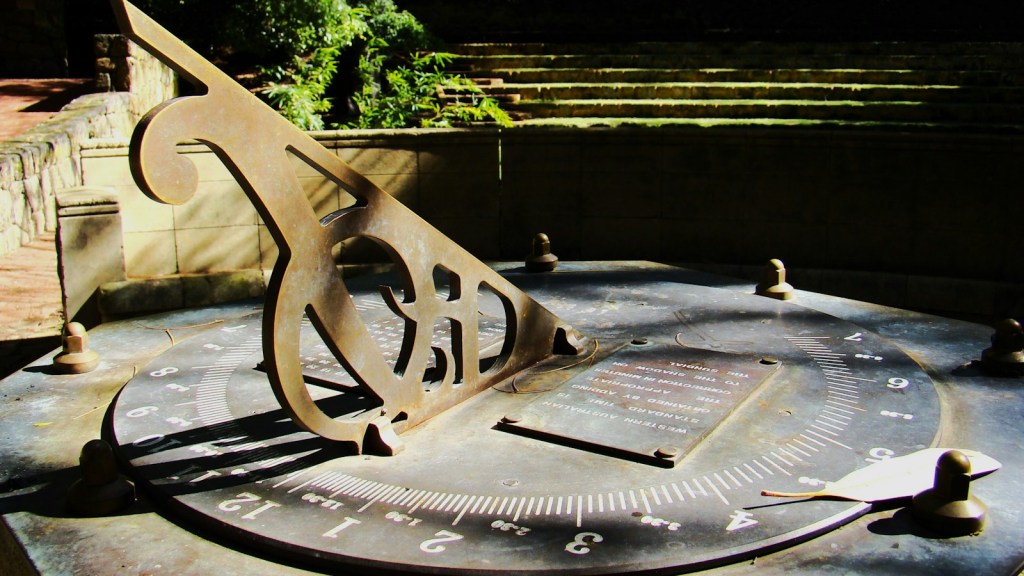
The first dedicated instrument was the shadow clock, followed by the sundial. Scientific American and History.com both place the oldest surviving sundials in Egypt around 1500 BCE, and the Metropolitan Museum of Art agrees that evidence for sundials and shadow clocks begins in the New Kingdom, around the same date. Scientific American describes an early example with an upright stick and a semicircular base divided into twelve sections. NIST describes a portable Egyptian shadow clock of about the same age that split the sunlit day into ten parts plus two twilight hours.
The idea spread widely. History.com lists Rome, Greece, Carthage, China and the Middle East among the cultures that used sundials. A sundial is simple, cheap and reliable, but it has an obvious limit: it needs sunlight, which is why the question of how people told time at night mattered so much.
How was time kept before clocks? Hours that changed length
Ancient timekeeping did not use the fixed sixty-minute hour. The Metropolitan Museum of Art explains that the Egyptian day began at dawn and had 24 hours, twelve for daytime and twelve for night. StarDate notes that because daytime and nighttime each had twelve hours, the length of an hour changed between day and night and with the seasons. Scientific American calls these seasonal hours and observes that such systems divided daylight and darkness into twelve segments each, so a summer daytime hour was long and a winter daytime hour was short.
The same logic shaped the calendar. Both Scientific American’s account of Egyptian star charts and StarDate describe a civil year of thirty-six ten-day weeks, each headed by a star group called a decan, a system that matters for the answer to the next question.
How did people tell time at night before clocks?
The first answer was the stars. Scientific American’s overview of timekeeping says that at night people tracked time by the apparent movement of the stars across the sky, and the Metropolitan Museum of Art reports that the Egyptians apparently reckoned the hours of the night by the movement of the decans. StarDate gives the mechanism: an hour was the interval between the rising times, or the setting times, of two prominent stars, and each star held its place for about ten days before the next took over.
Scientific American’s article on Egyptian star charts adds a note of caution. Tables found in coffins list twelve rows for the hours of the night, and researchers once called them star clocks, but one scholar now argues that “star tables” is a better term because they behave more like almanacs than precise clocks. The night hours they describe would have been irregular, tied to celestial events rather than to a fixed interval.

Clouds, of course, can hide the stars, and devices that kept their own rhythm filled the gap. History.com points out that sundials do not work at night, which made water clocks especially useful, and that candle and incense clocks also measured the night hours.
Water, candles, incense and sand
A water clock measures time by the flow of water from or into a marked vessel. NIST, History.com and Scientific American all trace the earliest examples to Egypt around 1500 BCE, with NIST citing a water clock found in the tomb of Amenhotep I. The weakness was accuracy. NIST observes that water flow is hard to control precisely, which kept water clocks from ever becoming truly accurate and sent people looking for other approaches.
Burning devices solved some of those problems. History.com and the Seiko Museum both describe candle clocks in England around the ninth century, made of candles marked in even sections that burned for about four hours each. NIST and the Seiko Museum also mention oil lamps with marked reservoirs, which measured time by how much oil was left and, as the Seiko Museum adds, gave light at the same time.
Incense clocks were more elaborate. History.com and JSTOR Daily both date their use in China to at least the sixth century, and History.com notes that they were also used in Japan and Korea. Both describe alarm versions: a weight or a set of metal balls was attached by thread to a mark on the incense path, and when the burning reached the thread, the object dropped into a basin with a clatter that woke the sleeper. For a related story, see our article on how people woke up before alarm clocks.
The hourglass, or sand glass, completed the set. NIST lists sand glasses among the early devices that measured time by a regulated process, and History.com notes that hourglasses remained useful at sea for centuries because early mechanical clocks were not suited to ships.

How did people tell time before clocks were invented?
In short, they combined methods. A farmer in the Nile valley might read a shadow at noon, a priest might watch a star group rise before dawn, and a household might light a marked candle in the evening. Our article on daily life in ancient Rome shows how another civilization organized an entire day around the light and the sun rather than a clock face.
The mechanical clock arrived near the turn of the fourteenth century. World History Encyclopedia says mechanical clocks were invented at the end of the thirteenth century and used mostly in church bell towers and town halls, while NIST reports that large weight-driven clocks appeared in the towers of several large Italian cities in the first half of the fourteenth century. Scientific American adds that Christians in fourteenth-century Europe developed them to schedule prayer. Those early clocks were not accurate: World History Encyclopedia says they lost an appreciable amount of time and usually had to be reset at noon by the sun.
Accuracy improved dramatically in the 1650s, when Christiaan Huygens built the first practical pendulum clock. NIST reports an error of less than a minute a day, and World History Encyclopedia puts the loss at no more than fifteen seconds a day. Both sources date the invention to the middle of the 1650s. That leap, and the mechanical clocks that followed, ended the long reign of the water clock. The history of navigation is closely tied to it, and our article on how people navigated before GPS explains why.
Shared time came last. The Library of Congress and History.com both explain that, before standardization, each community set its clocks by the sun, which meant that local times differed from town to town. The railroads adopted a standard time system on November 18, 1883, and the Standard Time Act of 1918 made time zones part of federal law in the U.S.
What was left out, and why?
Several details were dropped because only one reliable source supported them, or because sources disagreed. These include the merkhet and its use with the Pole Star, the date the Greeks adopted water clocks, the date of the earliest Egyptian star tables, the exact year of Huygens’s first pendulum clock (sources give 1656, 1657 and 1658), the date of Su Song’s water-driven clock tower (1088 in one source and 1194 in another), the first documented hourglass, the story of King Alfred’s candles, and the number of separate local times used in nineteenth-century North America, which the sources report differently.
Frequently asked questions
How did people tell time at night before clocks?
They watched the stars, and they used devices that ran at a steady rate, such as water clocks, marked candles and incense, according to Scientific American, StarDate and History.com.
What was the first device used to measure time?
Shadow-based tools came first. Egyptian obelisks may have served as shadow clocks as early as 3500 BCE, and the oldest surviving sundials date to about 1500 BCE, according to History.com and NIST.
Were hours always sixty minutes long?
No. Many ancient systems used seasonal hours, with twelve for daylight and twelve for night, so the length of an hour changed with the season, according to Scientific American and StarDate.
When were mechanical clocks invented?
Around the turn of the fourteenth century, according to World History Encyclopedia, NIST and Scientific American. Early examples stood in church towers and city towers.
When did the U.S. adopt standard time zones?
Railroads adopted a standard time system on November 18, 1883, and federal law made time zones official with the Standard Time Act of 1918, according to the Library of Congress and History.com.
Telling time has always been a mix of watching the sky and inventing clever machines. If you enjoy history and science explained clearly, subscribe to the channel Mr Global Rankss at https://www.youtube.com/@mrglobalrankss.
Related reading: How people woke up before alarm clocks, how people navigated before GPS, and daily life in ancient Rome.
Sources
- Scientific American: Who invented the measurement of time?
- History.com: Ancient timekeeping
- NIST: A walk through time, early clocks
- Metropolitan Museum of Art: Telling time in ancient Egypt
- StarDate: Marking time
- Scientific American: Decoding the star charts of ancient Egypt
- Seiko Museum: The combustion clock
- JSTOR Daily: Keeping time with incense clocks
- World History Encyclopedia: Clocks in the Scientific Revolution
- NIST: Mechanical clocks and the pendulum
- Library of Congress: A brief history of standardized time zones in the U.S.
- History.com: When did the U.S. start using time zones?


Leave a Reply